
Sleep trainer clock guide: find the best ok-to-wake clock


This guide helps you understand how a sleep trainer clock works, compare key features across leading models, and choose the device best suited to your child's age and temperament. It covers colour-coded wake signals, night lights, and connected options that can grow alongside your family. Whether you are considering your first purchase or planning an upgrade, you will find practical information to support a confident decision. For detailed reviews, consult the LittleHippo Mella sleep trainer clock review, the smart wake-up clock guide, and the best kids'alarm clock guide.
How a sleep trainer clock helps kids wake
Young children do not yet have a reliable internal sense of clock time. Before they can read a display, they cannot distinguish between 5:30 AM and 7:00 AM, even though that difference can affect the entire household. A dedicated sleep clock replaces abstract numbers with vivid visual signals that a toddler can recognise, turning the question “Can I get up?” into a clear answer from the device.
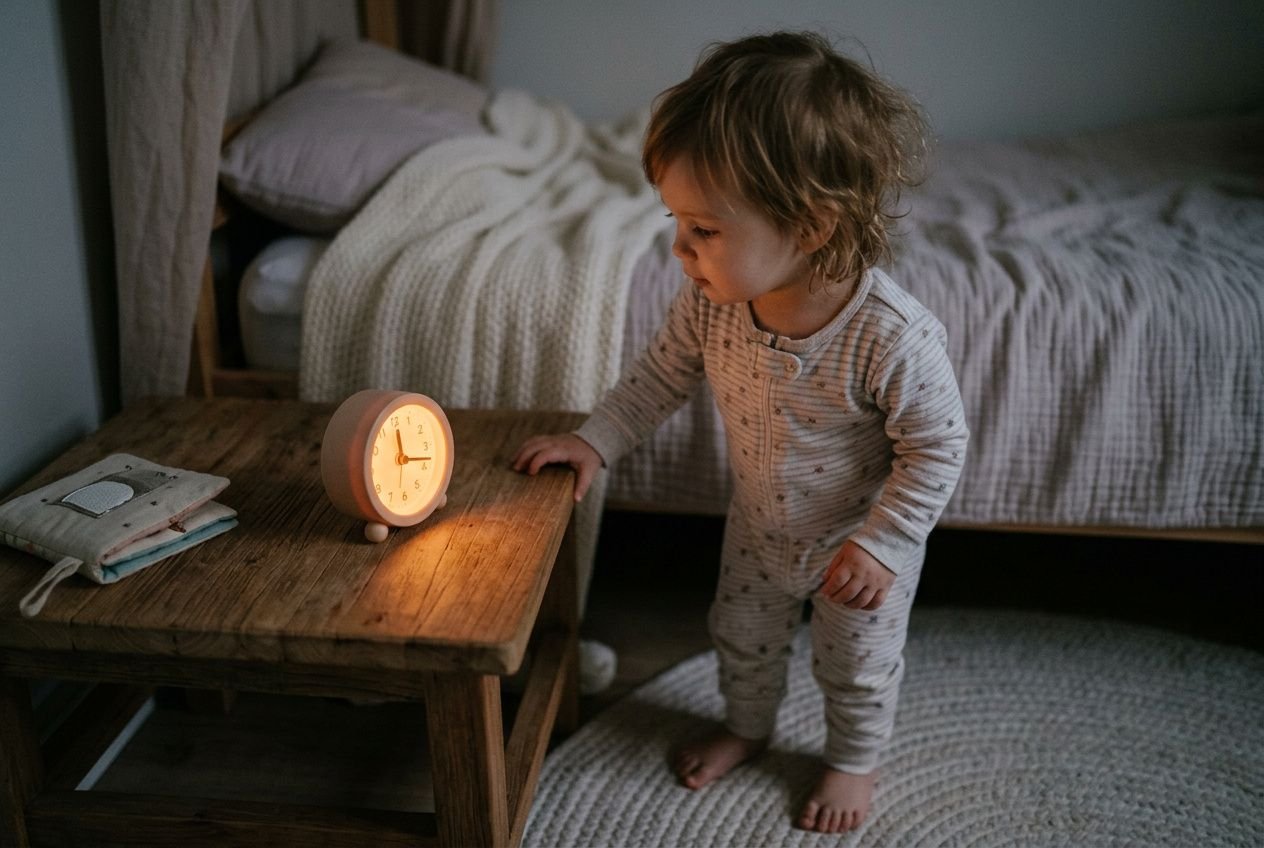
What an OK-to-wake clock signals
The principle behind a sleep training clock is simple: one signal tells the child to remain quietly in bed, while another marks the beginning of the morning. Because the cue is visual rather than numeric, it does not depend on reading ability and can suit children from around age two. This gives your child a reliable reference for moving from night-time rest to the start of the day.
- Bedtime signal A red or amber display, often combined with a sleeping face, shows that it is time to sleep and that the child should stay in bed, even after a brief night waking.
- Transition phase An optional yellow or amber signal, usually set 5 to 30 minutes before wake time, allows quiet independent play without disturbing the rest of the household.
- Wake signal A green light or smiling face confirms that the day has begun. On Mella, this signal remains visible for a full hour, giving the child an unhurried window for getting up.
- Sound reinforcement Gentle music or a soft chime can support children who sleep deeply, while families with several children may prefer a silent, visual-only setting.
When the signal stays consistent and requires no parental intervention each morning, your child gradually learns that wake-up time is set by the clock rather than by calling out or leaving the room. Repetition gives this routine lasting strength beyond the initial novelty.
Faces, colours and gentle wake signals
Colour-coded systems often work from around age two, when children begin connecting colours with expected behaviours. Existing associations, such as red meaning stop and green meaning go, can make the message easier to understand. An OK-to-wake clock that combines colour with a familiar facial expression adds another layer of meaning: a sleeping face communicates rest without requiring interpretation. REMI extends this approach with sleeping and awake faces, giving the device a companion-like presence during the child's night.
A gradual increase in light combined with soft sound is usually less startling than a sudden alarm beep and supports a gentler passage through the final light sleep stages. Light reaching the eyes signals the body's internal clock to move from sleep toward wakefulness, so a slow sunrise-style brightening can begin the process before sound is introduced. For bedtime, a warm amber or red light is preferable to blue or white light because warmer wavelengths are less likely to interfere with melatonin production.
Why a kid-friendly alarm clock works
A standard alarm clock tells a child only that time has passed. It does not explain what to do next. A dedicated kid-friendly alarm clock links the cue to a specific action: stay in bed or begin the day. This clarity helps some children respond from the first night, including those who previously woke before 6:30 AM and then learned to wait for the green or smiling-face signal.
The benefit is strongest when the device supports, rather than replaces, a broader sleep routine. Explain the signals during the day, practise them through role-play, and let your child give the clock a name or character. Consistent follow-through matters too: when parents avoid lifting their child from bed before the wake signal appears, the device becomes a dependable part of the bedtime and morning routine.
Choosing a clock for every kid
Not every sleep clock suits every child equally well. Age, temperament, sensitivity to light and sound, and the need for weekday and weekend schedules all influence the most useful features. Understanding readiness and developmental changes helps you choose a device that remains valuable instead of being outgrown within a few months.
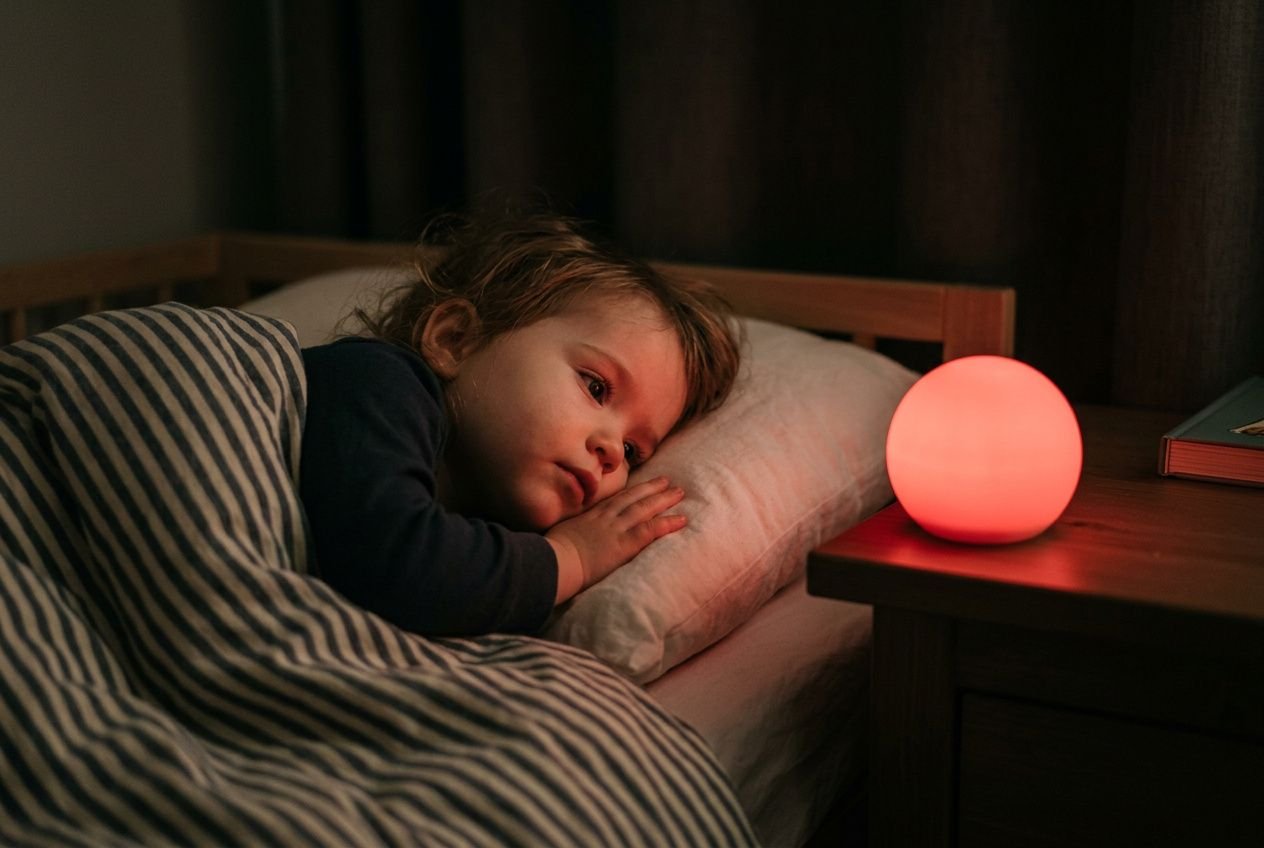
When a toddler is ready for sleep training
Many families consider a sleep trainer clock for toddlers when a child moves from a cot to a bed, typically between 18 months and 2 years. Greater freedom of movement can bring earlier wake-ups and more frequent night-time visits. However, following one rule across a 10-to-12-hour night requires comprehension that most children develop closer to 2.5 years of age, even though basic readiness can appear as early as 18 months. Readiness matters more than a birthday, so observe whether your child consistently follows simple two-step instructions.
- Movement milestone A child who can climb out of bed independently is free to leave the room, making a clear stay-in-bed signal both timely and practical.
- Colour recognition Distinguishing and naming basic colours suggests that the child can reliably understand a colour-based cue rather than guess.
- Instruction retention If the child remembers and applies a simple household rule the following morning, they may be ready to connect the clock’s signal with the expected behaviour overnight.
Introduce the device gradually. Set the wake signal only a few minutes after the child usually wakes, then move it forward in 15-minute increments after two successful days of waiting. These early successes build confidence, while the toddler sleep training clock becomes a milestone in its own right: regulating the morning independently is an important step towards autonomy.
Sleep clock features by kid age
Feature priorities change as children grow. Sleep trainer clock reviews commonly emphasise that toddlers need large, unambiguous visual cues, whereas older children gain more from flexible schedules and dependable audible alarms. Read those reviews in light of your child’s age and routine, rather than assuming every feature suits every household.
- Under 3 years Large sleeping or awake facial expressions and bold colour changes matter more than digital displays. A nightlight and simple sound machine complete the essentials at this stage.
- Ages 3–5 An OK-to-wake signal, reassuring night light, gentle sleep sounds, and optional nap timer meet the main needs of preschool-age children.
- Ages 6–10 A reliable audible alarm, separate weekday and weekend wake settings, and app-based parental controls help children manage mornings more independently while parents retain oversight.
Some models serve one age range well and are then outgrown; others are designed to evolve. A device that begins as a visual sleep companion and later functions as a standard alarm offers better long-term value, avoiding the disruption of changing clocks as your child’s needs develop.
| Age range | Priority features | Clock type |
| Under 3 years | Sleeping/awake face, colour cue, nightlight, soft sounds | Visual sleep trainer |
| 3–5 years | OK-to-wake signal, nap timer, night light, gentle alarm | Sleep trainer + alarm |
| 6–10 years | Weekday/weekend schedule, audible alarm, app control | Smart alarm clock |
REMI is designed to span this entire range. It begins as an audio baby monitor from birth, then progressively activates sleeping and awake face expressions, sleep tracking, story playback, a Bluetooth speaker, and a standard alarm as the child matures. This continuity allows one device to accompany a baby from early night-time monitoring through independent morning routines at age 10 and beyond.
Building consistent sleep training habits
The clock is only a tool; the surrounding routine determines how effectively it works. During the day, explain what each colour or face means, practise the situation through role-play, and consider naming the device together so it feels familiar. Whether you choose a Groclock sleep trainer clock, a Mella, or REMI, your child’s relationship with it matters as much as its technical specifications.
If a child leaves the bed before the wake signal, calmly return them without a lengthy discussion and briefly remind them to wait for the clock. Getting up early, even once, can suggest that the signal is negotiable. Consistent follow-through and sincere praise when the child waits reinforce the boundary more effectively than a reprimand. Over several weeks, the routine can become self-sustaining, and checking the clock becomes a natural part of the child’s day and night.
For families comparing a sleep training clock, a sleep clock, or a dedicated toddler sleep training clock, the same principles apply: choose a clear cue, use a predictable routine, and match the device to your child’s readiness. A sleep trainer clock for toddlers may include a timer, light, nightlight, alarm, and wake signal, but those features work best when your child is ready to understand them.
Recommended products
Compare alarm clock features before buying
Two devices may both be described as sleep trainer clocks, yet differ considerably in their treatment of light, sound, programming, and long-term usefulness. Comparing these details before purchase helps prevent familiar disappointments: a display that remains too bright for restful sleep, a sound machine that does not suit a noise-sensitive child, or a device that is outgrown before the end of its first year.
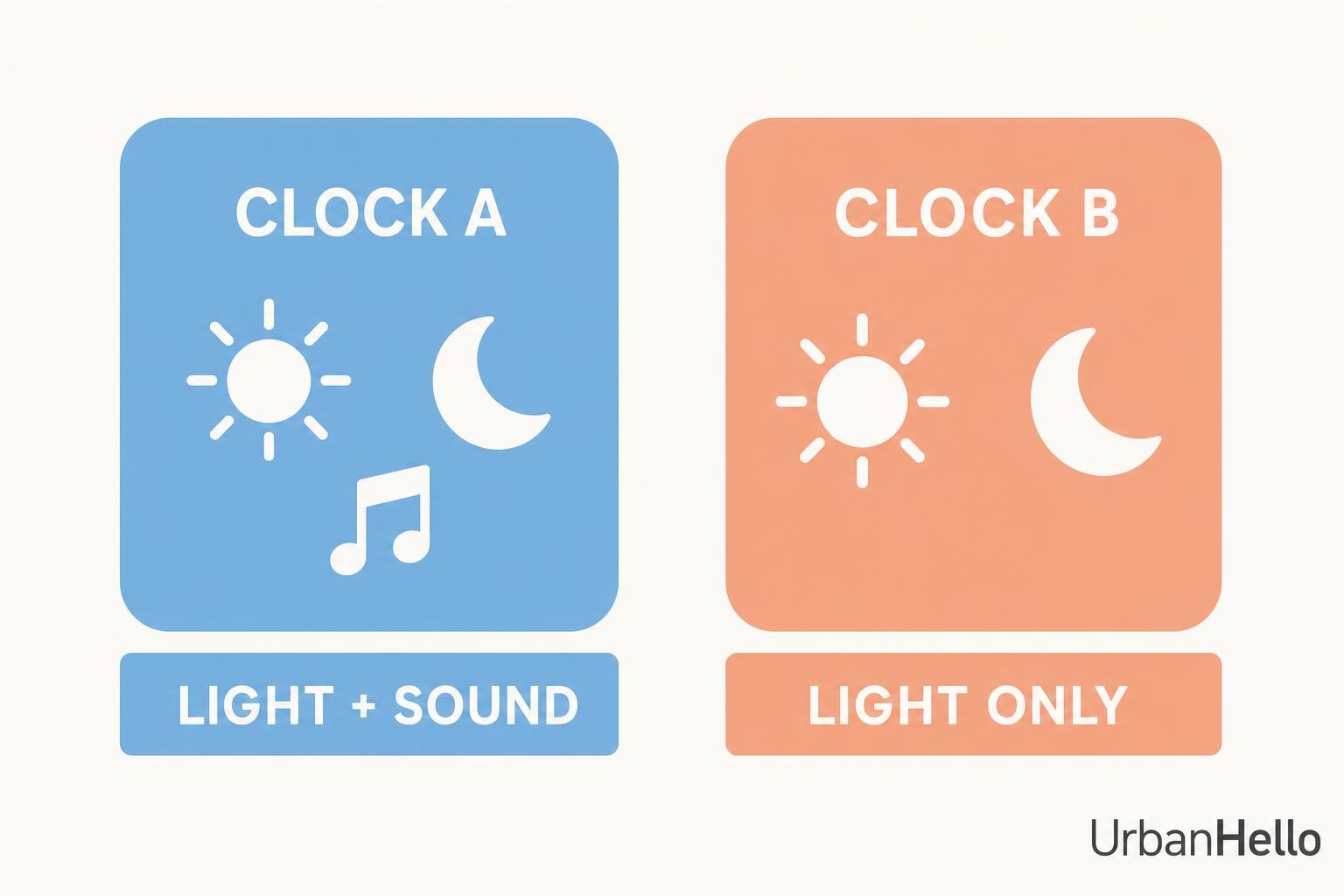
Night light and sound options
How an alarm clock manages light during the night can strongly influence the sleep of children. A persistent glow may stimulate a light-sensitive child and make it harder to settle into deep sleep. Read the sleep trainer clock manual before buying to check whether the display can be dimmed completely or switched off overnight.
- Display dimming Mella offers five brightness levels for its clock face, including a completely dark option, so the display does not become an unwanted light source at night.
- Light ring control Three independent brightness levels for the colour ring help families balance the visibility of the sleep or wake signal with their preference for a darker bedroom.
- Sound machine tracks Mella includes white noise, ocean waves, and a lullaby. Playback can last from 10 minutes to continuous use throughout the night, independently of the light settings.
REMI provides an adjustable, dimmable night light, built-in lullabies, and USB support for custom audio such as stories, songs, and soundscapes. Mella has five volume levels, while its other settings, including the 12-hour or 24-hour clock format, are adjusted directly through the unit's buttons. All settings are adjusted directly through the unit's buttons, including the 12-hour or 24-hour clock format.
Mella sleep trainer clock setup
Mella connects to mains power with its included Type A adapter, rated for 100 to 240 V input and 5 V output, plus a detachable four-foot USB cable. There is no app, Wi-Fi connection, or account registration. Parents set the clock through the buttons, so the schedule remains accessible without a smartphone and cannot be affected by connectivity problems or app updates. Families comparing the sleep trainer clock options on Amazon will find Mella listed there with other established models.
Programming uses three sequential modes. After setting the current time, press the SET button and use the SLEEP/WAKE button to configure Sleep Mode, the red bedtime phase. Next comes Play Mode, an optional yellow transition that is automatically placed 30 minutes before the wake time but can be adjusted from 5 to 30 minutes or disabled. Finally, configure Wake Mode, which provides the green signal at the chosen wake-up time. All three modes must be set for the complete colour sequence to work each morning.
A CR2032 backup battery preserves the stored time and schedule during a power interruption, but it cannot operate the clock normally; mains power is required for active use. A child lock prevents button access, reducing the risk that a child changes the wake-up time after discovering that the green light can be brought forward. Ring brightness, display brightness, sound track, playback duration, and volume can each be adjusted to suit the child's sensitivity and bedroom environment.
REMI, the long-term alarm clock choice
REMI stands out for combining longevity with connected functions. From birth, it works as an audio baby monitor: parents can listen or speak to their child through the companion app and receive noise notifications when the baby stirs, without entering the room. As children grow, the sleeping and awake face on REMI's screen becomes a familiar signal that accompanies the night. This relationship can be more meaningful than a colour change alone.
REMI also includes sleep tracking with a nightly Night Score, app-based schedule adjustments, a walkie-talkie channel for two-way communication, a story player with built-in content and USB audio support, and a Bluetooth speaker for evening wind-down and morning routines. Wi-Fi can be scheduled to switch off between set hours, such as 9 PM and 6 AM, reducing wireless activity in the bedroom during sleep while preserving smart functions during the day. For families looking for one bedside device that remains useful from the first months of life through age 10 and beyond, discover REMI's features for your family.
Frequently asked questions
At what age should I introduce a sleep training clock?
For most families, a sleep training clock becomes useful at around 2.5 years old. At this stage, a child may retain a simple rule throughout the night and recognise basic colour cues. Some parents introduce one from 18 months, especially when a toddler begins leaving the bed at night. However, the expected behaviour is usually understood more reliably closer to age three. Age alone is not decisive. Your child should be able to follow and remember a straightforward two-step instruction consistently during the day before applying it overnight.
What is the difference between a sleep clock and a standard alarm clock?
A standard alarm clock indicates that a particular time has arrived, but it does not tell a child what to do next. A sleep clock adds a behavioural cue: a red display or sleeping face means staying in bed, while a green display or smiling face signals that the day has begun and leaving the room is allowed. This distinction helps children who understand colours and facial expressions before they can read numbers. Some devices, including REMI, combine both functions: visual sleep cues during the early years and a conventional alarm as the child matures. The same clock can therefore remain useful from toddlerhood to age 10.
How do I make a kid's sleep clock actually work at home?
Success depends more on consistent use than on the device itself. Before the first night, explain each signal during the day and practise the expected response through role-play. Set the initial wake-up time just a few minutes after your child's natural wake time, then move it later in 15-minute steps. This makes early progress achievable. If your child leaves the bed before the signal, return them calmly without discussion. Praise a successful morning promptly; children generally respond better to recognition than correction. Do not override the sleep clock by lifting your child before it signals, because that suggests the rule is optional. With consistent use over several weeks, the routine becomes easier to follow, and the morning wake-up time settles around the set signal.
Share this article:





Similar posts
Best kids alarm clock with nightlight: top clock picks
Find the perfect kids alarm clock with nightlight. Compare top alarm clocks for night wake-ups, sleep training & kid-friendly features to buy the best clock.
Best baby sleep trainer device: top sleep picks for toddler wake time
Find the best baby sleep trainer device with our sleep clock guide. Compare top products, sleep trainer clock features, and toddler wake solutions for restful nights.