
Best kids alarm clock with nightlight: top clock picks


Choosing the best kids alarm clock for your child’s bedroom means weighing visual cues, nightlight settings, sound options, and long-term value.
Choosing a kid alarm clock with a night light
A clock that combines a reassuring nightlight with a clear morning signal simplifies the bedside setup. It also gives your child one familiar object to associate with falling asleep and waking at the right time.
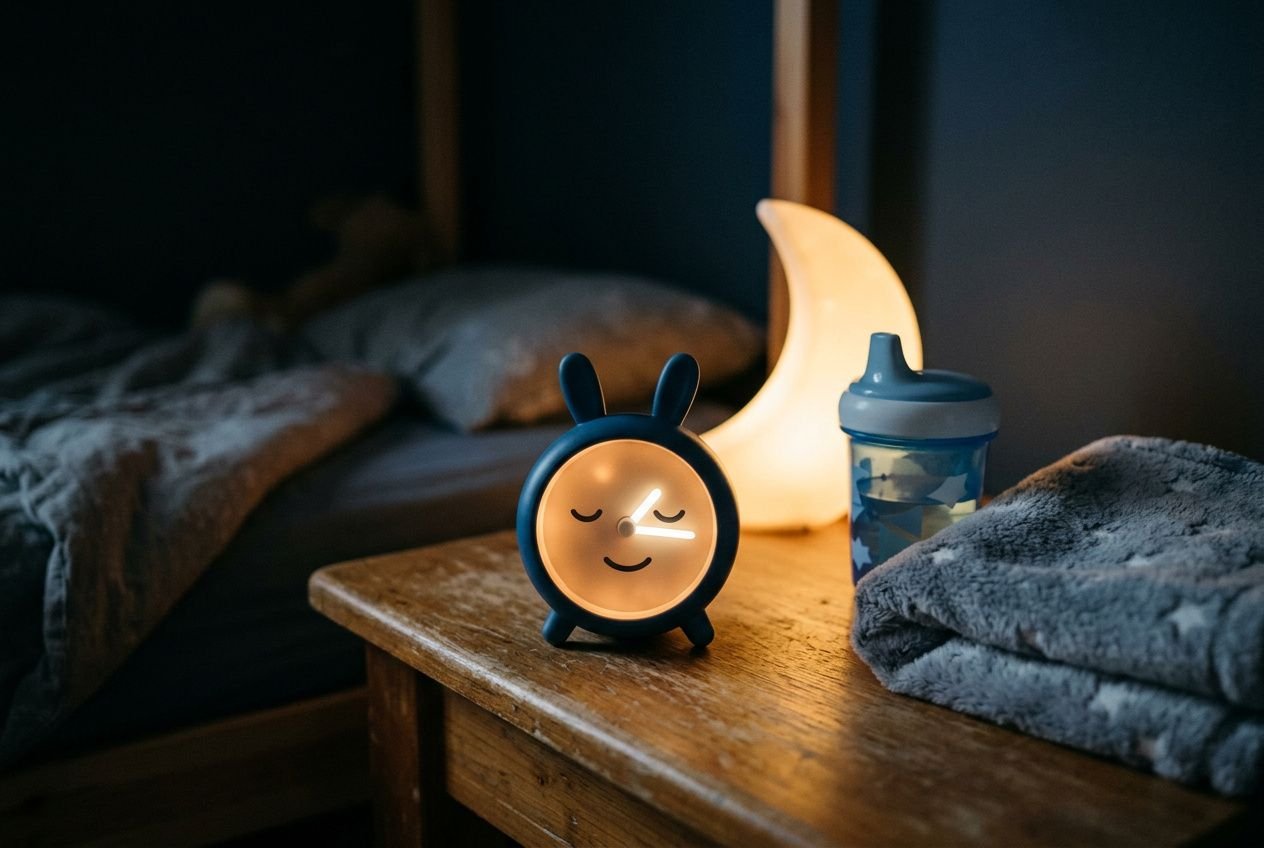
Why a kid needs visual sleep cues
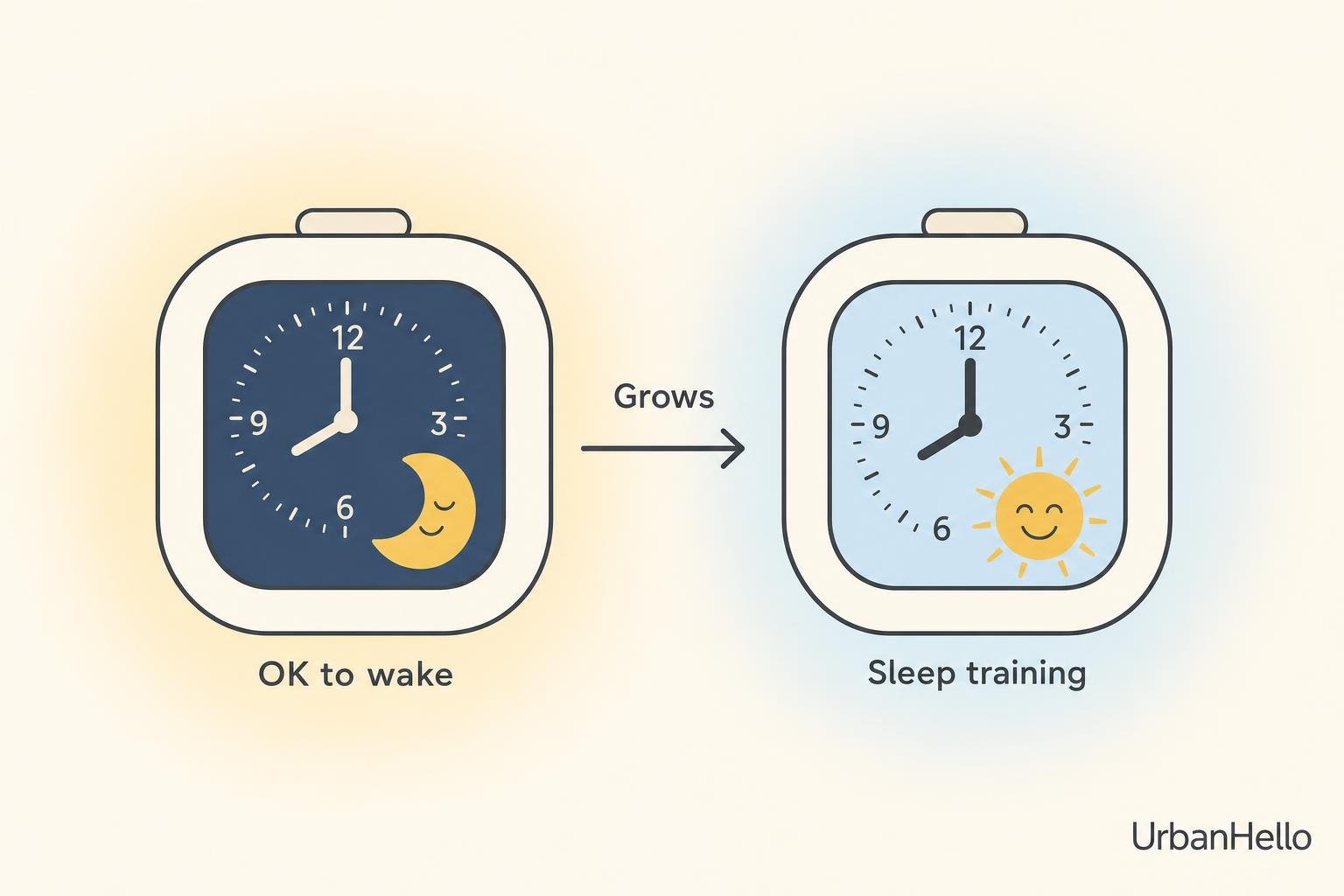
Young children have not yet developed an abstract concept of time, so a digital display showing “6:30” communicates little to a two-year-old. A kids alarm clock with a nightlight can show a sleeping face that becomes an awake face, so your child sees at a glance whether it is time to stay in bed or time to get up.
A sleeping face that changes into an awake face often works more reliably for toddlers than a color change alone. It uses a familiar social signal rather than relying only on color recognition, which develops later. Mella combines color signals with matching expressions for this reason. REMI follows the same principle, showing a closed-eyed face during sleep hours and an alert, open-eyed face at wake time.
Night light settings for bedrooms
Light intensity is an important criterion when assessing what may be the best kids alarm clock with nightlight for your household. A light that cannot dim sufficiently may disturb sensitive sleepers, even at its lowest setting. When a baby or child needs some illumination to feel settled at night, very dim red or amber tones are preferable to blue or bright white, which can interfere more strongly with melatonin production.
- Dimmability range Look for a clock whose display and nightlight can both reach complete darkness during sleep hours, rather than offering only a low-brightness mode.
- Color temperature Warm red or amber nightlights are gentler on sleep cycles than cool white or blue tones at any brightness level.
- App-based control Clocks such as REMI allow parents to adjust brightness from a smartphone, so you can dim the light without entering the bedrooms.
- Daytime versus night mode A clock that brightens naturally at wake time and dims at bedtime supports the child’s circadian rhythm with minimal parental intervention.
Some devices offer between one and twenty dimming levels, giving parents precise control in shared bedrooms where siblings may have different sensitivities. A single device with a dimmable nightlight and a fade-in wake display also frees up space on the bedside table compared with keeping a separate lamp.
When to start toddler sleep training
Most families find that an OK-to-wake clock becomes useful between ages two and three, when a toddler moves into a bed without sides and gains greater freedom of movement during the night. Before this transition, the visual cue has limited impact because the child cannot yet act independently on it. Starting too early may create confusion instead of a clear routine.
From around age two, children begin to recognise faces and associate them with behaviours. Mella’s color system, for example, is designed to work fully once children reach this age. REMI is designed for use from birth onward, first as an audio baby monitor and later as a sleep trainer when the child is developmentally ready to respond to sleeping and awake face signals.
Wake signals that a kid understands
A color-coded system using red for bedtime, yellow for the transition period, and a green light for morning gives children a visual grammar they can gradually internalise. Mella uses all three colors alongside facial expressions: red with a sleeping face during the night, yellow with a playful face during quiet play, adjustable from five to thirty minutes or disabled entirely, and a green smiling face at the agreed wake time, which remains visible for a full hour.
For preschoolers and school-age children, the kids alarm clock with nightlight guide explains how combining a clear visual signal with a gradual sound alarm can support a gentler transition through the final sleep cycles. A sudden beep, by contrast, can raise stress and delay the start of the morning routine.
Top kid alarm clock features compared
Understanding which features matter most at each age helps narrow the choice. For younger children, visual cues and a soft nightlight usually come first; as children reach school age, dependable sound alarms and flexible scheduling support greater independence.
Mella and REMI alarm clock comparison
Both Mella and REMI are fully featured digital kids alarm clocks with nightlight, but they suit different age ranges and offer different levels of control. Mella is intended mainly for children from around eighteen months to six or seven years. It combines a ready-to-rise color system, a nightlight ring, a nap timer and three fixed audio tracks: white noise, ocean waves and a lullaby. Five display brightness levels are available, including a fully dark option.
REMI is designed for use from birth through age ten. Its iOS and Android app lets parents manage remote schedules, named alarms, volume and brightness without touching the device. Audio options include built-in lullabies, Bluetooth speaker capability and custom MP3 files through USB, providing more flexibility than Mella's three fixed tracks. REMI also works as an internet-connected audio baby monitor, so parents can listen, speak and receive sound alerts from any location.
| Feature | Mella (LittleHippo) | REMI (UrbanHello) |
| Age range | ~18 months – 6/7 years | Birth – 10 years+ |
| Wake signal | Red / Yellow / Green + face | Sleeping / awake face + app alarm |
| Nightlight brightness | 3 ring levels, 5 display levels | App-controlled, full blackout |
| Sound options | 3 fixed tracks | Built-in + Bluetooth + custom MP3 |
| App control | No (button-only) | Yes (iOS & Android) |
| Baby monitor | No | Yes (two-way, anywhere) |
| Warranty | 1 year | 3 years (urbanhello.com) |
A digital clock for older kid bedrooms
Among the kid alarm clocks available, models that grow with the child often provide the clearest long-term value. For school-age children aged six to ten, a clock should offer a reliable audible alarm, separate weekday and weekend schedules, and app controls that preserve parental oversight while autonomy develops.
Hatch, Teach Me Time and Mirari OK to Wake work well for younger children, but their usefulness may decline when visual sleep training is no longer the main need. A growing child often benefits from a more conventional digital clock, with a clear time display and a dependable alarm.
Sound options including white noise
Sound at bedtime can help the nervous system settle. White noise masks background disturbances that might interrupt lighter sleep cycles, while lullabies and gentle nature sounds support the transition into rest.
The LittleHippo Mella includes white noise, ocean waves and a lullaby. Playback can be set for between ten and ninety minutes or left continuous, a useful feature for children who need steady sound throughout the night.
REMI adds built-in lullabies, Bluetooth streaming and custom MP3 files through USB, allowing parents to use familiar stories or personal recordings. A loud alarm at the scheduled wake time can be preceded by a gradual increase in light, giving the child time to wake naturally before the sound starts. Adjustable volume can help wake the child without disturbing siblings in shared bedrooms.
Smart wake controls versus buttons
A button-only interface requires parents to enter the child's room to change a weekend wake time, dim the light or select another audio track. This may disturb a sleeping child and make routine adjustments harder to maintain. With REMI, app-based control moves schedule management to the parent's phone.
Remote management also protects settings from curious hands. A child who can press every button may accidentally disable the alarm or alter the wake signal. REMI's app helps keep configurations secure. In comparisons, the Teach Me Time clock was reported as the most difficult to reset correctly, while older toddlers quickly overcame the LittleHippo Mella's sliding lock during testing.
For families comparing options before purchasing, the LittleHippo Mella sleep trainer review examines its ready-to-rise color system, sound machine and nightlight alongside a connected alternative. It can help parents choose the appropriate level of control for their household schedule and their child's age.
The aim is not simply to display the time, but to teach me time concepts gradually and support a calmer wake.
Set a kid alarm clock routine
Programming a clock is only the first step. Consistent results come from pairing it with a structured bedtime sequence that your child recognises: a predictable thirty- to forty-five-minute routine that the clock reinforces without replacing it.
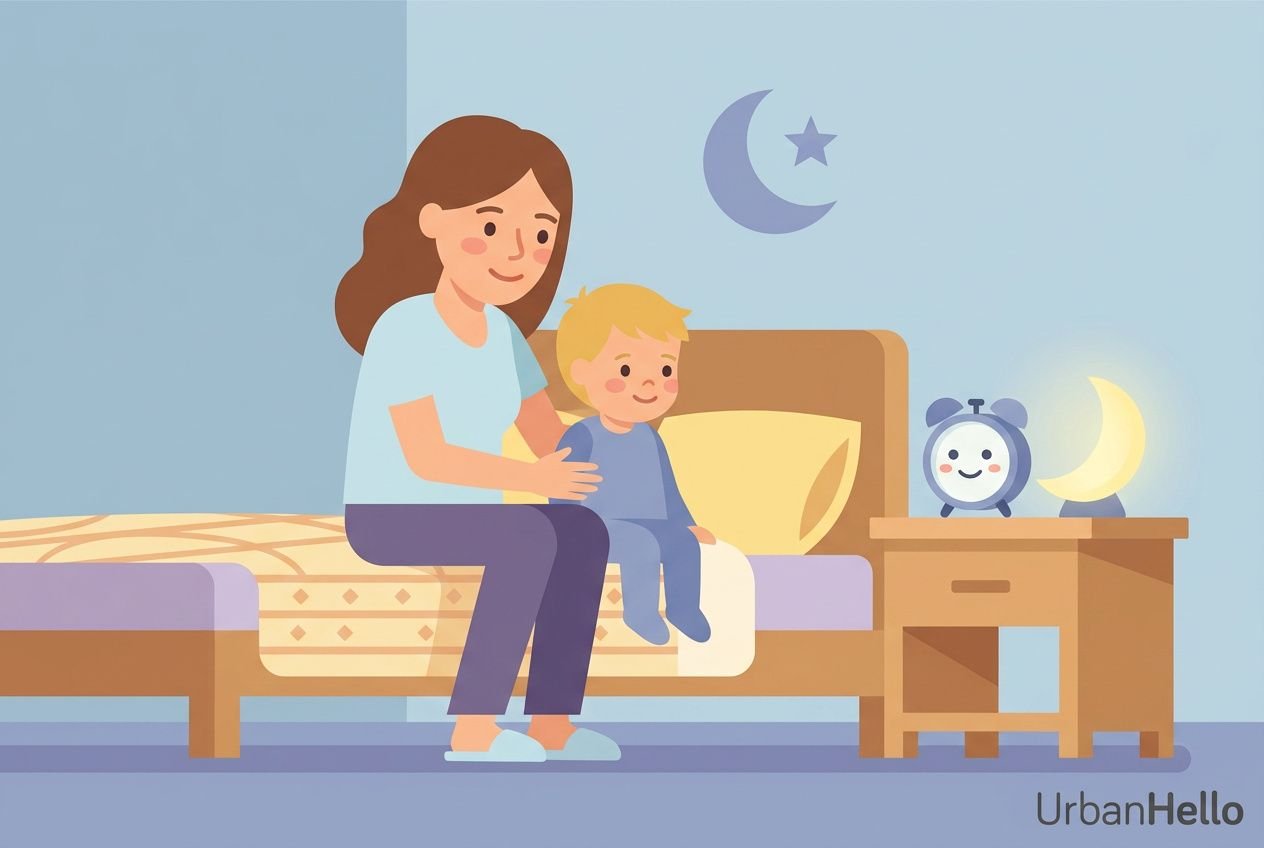
Light and sound before wake time
Warm, dim light during the hour before bed signals that rest is approaching. When the same device brightens gradually at the agreed wake time, the morning transition feels continuous rather than abrupt. Parents comparing kids’ alarm clocks with a nightlight on Amazon will find models designed for both stages, although brightness control varies considerably between products.
A gradual combination of light and sound during the final sleep cycles supports gentler waking than a sudden, loud alarm. REMI’s app-controlled brightness allows the nightlight to dim fully during sleep and increase progressively before the wake alarm sounds, managing both ends of the night without requiring a parent to enter the room.
Sleep training rules for a toddler
Before the first night with a sleep trainer clock, introduce it as a character rather than a rule. Choose its name together, explain what the sleeping and awake faces mean, and practise the bedtime and morning sequences in daylight. This helps your child understand what to expect. Parents evaluating kids’ alarm clocks with nightlights at Walmart or similar large retailers may also find models with starter guides and reward charts.
- Name the clock Let the child choose or approve its name. This can make the device feel like a familiar companion rather than an imposed object.
- Practise the signals Role-play the sleep-time and wake-time sequences before the first night, so the routine feels familiar when it begins.
- Reinforce consistently If the child leaves the bedroom before the wake signal, return them calmly to bed without discussion and repeat the rule. Expect several weeks of repetition before the behaviour becomes stable.
REMI’s Night Score feature provides sleep-quality data each morning in the app, giving parents measurable information about whether the routine is working or needs adjustment. Observed patterns make it easier to refine the schedule over time instead of reacting to isolated difficult nights.
Night routines in shared bedrooms
In shared bedrooms, adjustable volume on the wake alarm is essential. The sound must wake the intended child without disturbing a sibling who sleeps longer. Nightlight brightness matters just as much: a light that remains too intense at its lowest setting can affect both children. A battery backup keeps the alarm working after a power interruption, preserving a reliable morning routine.
Alarm clock settings that last
A nap timer that operates independently from the morning alarm is particularly useful during the early toddler years. It creates a daytime quiet period without interfering with the regular wake schedule. As the child grows, separate weekday and weekend settings remove the need to switch the alarm off manually every Saturday morning. REMI’s app-based scheduling supports named alarms with individual sound, volume, and repeat-day selections.
Children who have absorbed the routine are more likely to remain engaged with a clock that develops alongside them. Software updates, custom audio, and expanding capabilities help a device remain useful instead of becoming outdated in appearance and function. That flexibility sustains the child’s interest and the parents’ investment over a longer period.
Why REMI is the lasting kid clock
A sleep training clock that becomes obsolete when visual cues are no longer needed represents a limited investment.
From baby monitor to alarm clock
REMI begins in the nursery as a connected audio baby monitor. Parents can listen to their child, speak to them, and receive sound alerts through the app wherever an internet connection is available. This two-way communication removes the need for a separate monitoring device and extends reassurance beyond the bedroom door, whether parents are in another room or away from home.
- Birth to age 2 It functions as a full audio baby monitor, with app-based listening, two-way communication, and sound alerts, so no separate device is required.
- Age 2 to 6 It becomes a sleep trainer. Its sleeping and awake faces guide the child through bedtime and morning with clear, intuitive signals.
- Age 6 to 10+ It operates as a conventional alarm clock, Bluetooth speaker, and walkie-talkie, remaining relevant after sleep training has ended.
Instead of replacing a toddler sleep trainer with a school-age alarm clock and a separate speaker, families continue using REMI as new functions become relevant, supported by software updates that extend its capabilities over time.
A trusted wake companion at night
When REMI opens its eyes, it signals that the day is ready to begin, helping the child follow the agreed schedule more consistently.
The Night Score shown each morning in the app offers concrete data for refining the approach: adjusting the wake time, changing the nightlight brightness for a sensitive sleeper, or choosing a gentler sound for the morning transition.
Smart light control for kid bedrooms
At bedtime, the nightlight dims to a warm, reassuring glow suited to the child's sensitivity. At wake time, the display brightens progressively to signal the new day before the alarm sound begins.
Families can upload custom MP3 files via USB, adding familiar songs or stories to the audio environment. As the child grows, REMI's Bluetooth speaker also supports everyday listening, while sleep training becomes a secondary function.
Choose REMI for better sleep routines
Everything is managed through a single app and supported by a three-year warranty when purchased directly from urbanhello.com. Discover REMI and order it today at UrbanHello for a sleep companion that grows with your child.
Frequently asked questions
At what age should a child get an alarm clock?
Most children are ready for a sleep trainer clock between the ages of two and three, when they move into a bed without sides and can respond independently to a visual cue. A face-based clock, showing a sleeping expression at night and an awake face in the morning, is often the most intuitive starting point. It uses a familiar social signal instead of requiring your child to read numbers or interpret small indicator lights. REMI is designed for use from birth as a baby monitor, then transitions naturally into a sleep trainer from around age two.
Is it okay for kids to sleep with a night light?
A dim nightlight can help a child feel settled and safe, particularly during the toddler and preschool years. Keep it very dim, and choose warm red or amber tones rather than blue or bright white light, which can interfere more strongly with melatonin production. A clock with adjustable brightness, ideally allowing complete blackout during deep sleep hours, gives parents greater control. REMI's app-controlled brightness supports this balance.
What features matter most in a kids'alarm clock with a nightlight?
The most useful feature depends on the child's age. For toddlers, a clear visual wake signal—such as a sleeping face changing to an awake face or a colour changing from red to green—matters more than any other function. It communicates without requiring clock-reading skills. A dimmable nightlight, an independent nap timer, and protected settings that curious hands cannot change accidentally are also important.
For school-age children, a reliable audible alarm, a flexible weekly schedule, and app-based remote control become increasingly valuable. A multifunctional device such as REMI combines these functions across a child's development, reducing the need to replace the clock every few years as sleep needs evolve.
Share this article:





Similar posts
Best smart wake up clock for kids: alarm clock guide
Find the best wake clock for kids with lights, sounds & app control. Compare top alarm clock picks to help your child wake up and sleep on schedule.
Sleep trainer clock guide: find the best ok-to-wake clock
Compare top sleep trainer clock models by features, colors & wake signals. Find the perfect sleep clock to help your toddler know when to wake up.