
Best kids' alarm clock: compare every clock to wake up right


Finding the right kids'alarm clock means weighing age, sleep sensitivity, and the challenge you want to address, whether that is keeping a toddler in bed until a reasonable hour or helping a school-age child rise independently. This guide covers the main selection criteria, compares the available clock types, and highlights features that remain useful as your child grows.
How to choose the best kids'alarm clock
Choosing a kids'alarm clock requires matching the device to your child's developmental stage, bedroom lighting, and the specific sleep problem you want to solve.
Match features to your child's age
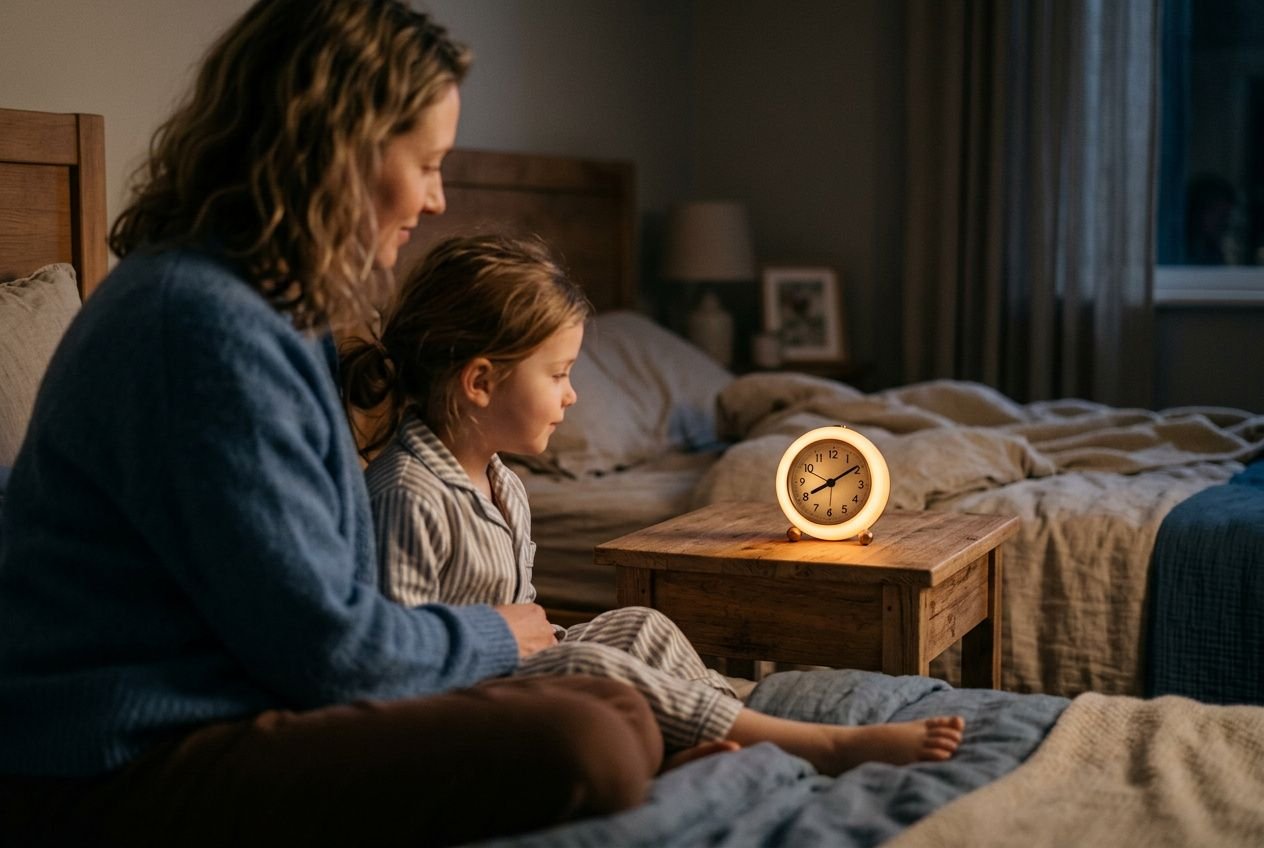
Age is the best starting point when you compare a kids'alarm clock. The features that help a two-year-old remain in bed differ considerably from those a seven-year-old needs to prepare for school. A visual wake signal is more useful than a precise digital display for a child who cannot read the time.
- Toddlers (under 3) need clear visual cues, such as a sleeping face or a colour change, rather than numbers or small indicator lights they cannot yet understand.
- Preschoolers (3–5) can benefit from a toddler alarm clock with an OK-to-wake signal, a nightlight, and gentle sound options that make bedtime reassuring and the morning more predictable.
- School-age children (6–10) can use a clock with a reliable audible alarm, separate weekday and weekend settings, and app controls that let parents retain oversight while children build responsibility.
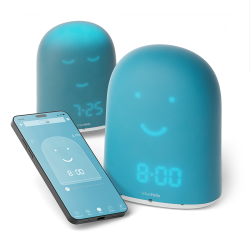
Bedroom conditions also affect your choice. A digital display may disturb a light-sensitive sleeper if its brightness cannot be reduced. Some devices have a screen that dims to complete blackout during sleep hours. The REMI smart sleep companion, designed for children from birth to age 10, offers app-controlled brightness alongside its sleep and wake functions.
Compare visual, sound and smart cues
Parents comparing options on community forums and review platforms, including those searching for the best kids'alarm clock on Reddit, often note that the type of signal matters as much as its timing. A green light is widely used as an OK-to-wake cue, indicating that a child may leave bed. Yet colour alone can be too abstract for toddlers who are still learning to recognise colours.
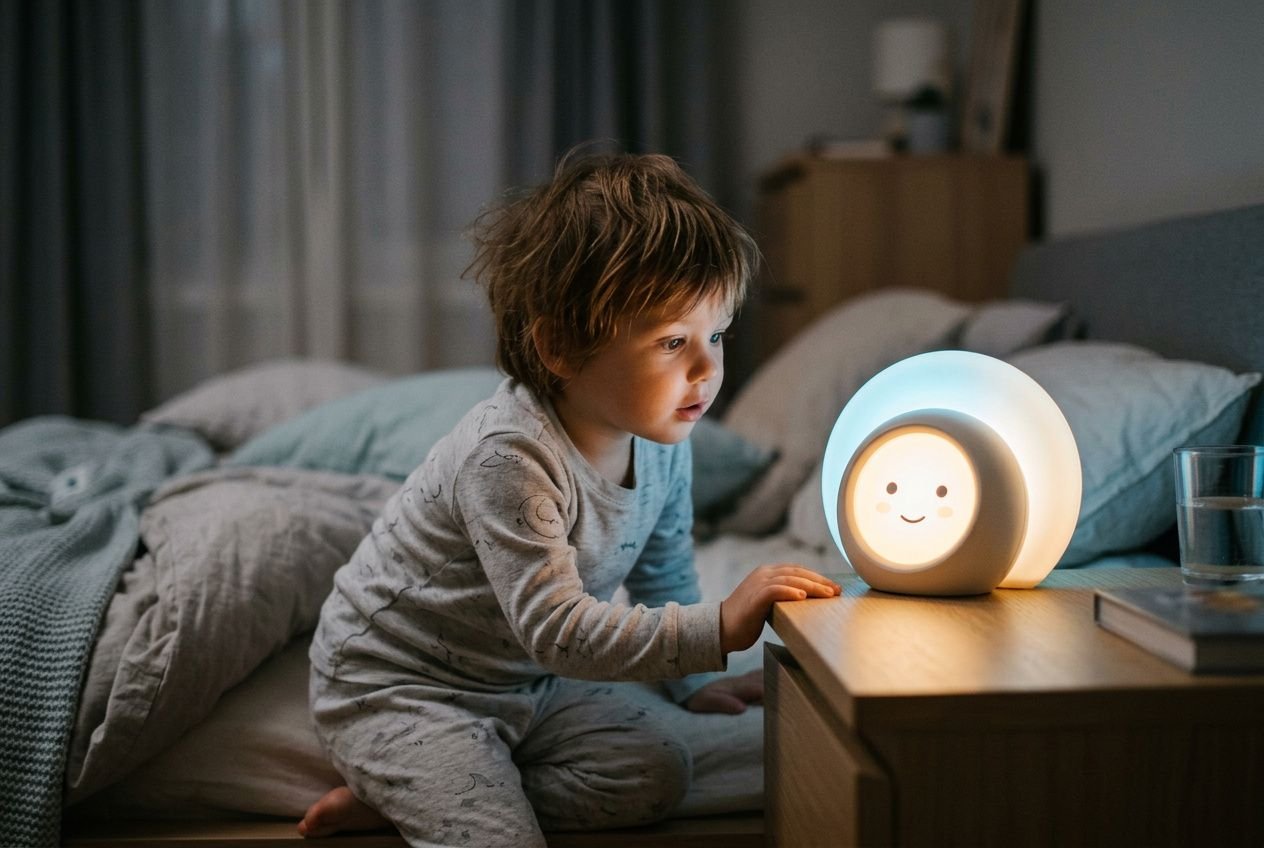
A sleeping face that changes to an awake face is more intuitive because it conveys a familiar social signal instead of asking a toddler to decode a colour. REMI uses this approach, with facial expressions that give the clock a reassuring, companion-like presence during the night. The change from a calm sleeping face to a bright awake face creates a cue that toddlers can understand and anticipate.
Through a companion app, parents can adjust alarm times, control nightlight brightness, manage sound options, and review sleep data without entering the bedroom or handling the device. This control is useful when a child is beginning to experiment with buttons. Some models, including REMI, offer this blackout option as well.
Alarm sounds and wake-up light options
The way a clock wakes a child shapes the entire tone of the morning. A sudden beep may leave them startled and reluctant before the day has begun, whereas a gradual combination of light and sound supports a gentler transition through the final sleep cycles.
Gentle cues for easier mornings
For children who are sensitive to abrupt noise, the best kids'alarm clock with sound offers adjustable volume and pairs its audio cue with a gradual light signal. A sunrise alarm clock recreates the effect of natural daylight by brightening slowly over several minutes before the chosen wake time, allowing light to begin the waking process before sound is introduced.
Bright light detected by the eyes signals the body's internal clock to shift from sleep to wakefulness. Some devices combine a wake-up light with a nightlight function: the same lamp dims to reassure a child at bedtime, then brightens to prompt them gently in the morning. REMI supports this dual role through app-controlled brightness settings, allowing parents to configure the change from a calming evening glow to a structured morning cue.
Reliable alarms for school days
A good kids'alarm clock for school balances parental control with child-friendly operation, helping the child take ownership of their morning routine without unintentionally changing essential settings.
- Separate day settings allow different wake times for weekdays and weekends, avoiding confusion when the family schedule changes.
- Battery backup preserves the correct time and ensures the alarm still produces a sound after a power interruption, so the morning routine is not silently disrupted.
- Adjustable volume lets parents adapt the wake cue to the child's sleep depth, making it loud enough to wake them without disturbing younger siblings across the hallway.
- App-based alarm creation lets parents set repeat days, select the wake music, and fine-tune the nightlight brightness without touching the device, protecting settings from curious hands.
REMI's connected alarm system covers each of these functions, allowing parents to create named alarms with individual sound and volume selections through the app. The device also works as a kids sleep trainer from the very first months, so the alarm becomes one part of a familiar sleep environment rather than an abrupt new demand.
Pick a clock that grows with your child
A clock bought for a two-year-old but outgrown by age four is a short-term investment. A better choice is a device whose functions develop with your child’s needs: it can begin as a visual sleep signal, then become a morning alarm, story companion, and independent wake-up aid.

From toddler signals to school routines
A toddler sleep trainer usually uses simple visual cues: a sleeping face at night, an awake face in the morning, and sometimes a coloured light to mark each phase. Such signals are effective because they align with a child's existing visual comprehension before formal time-reading skills develop. Later, the best alarm clock for a 7-year-old should help your child read the time, set an alarm before bed, and manage a morning routine with less parental prompting.
The REMI BLUE variant is designed for children aged 2 to 5, with signals suited to the earliest years. As your child grows, a device with features such as sleep tracking, a story player, Bluetooth audio, a walkie-talkie, and a classic alarm offers practical value beyond the toddler stage because these functions support evolving sleep and independence needs.
Learning time through daily habits
A clock becomes a useful way to teach children to tell the time when it is linked to familiar daily events rather than treated as an abstract lesson. A smart alarm clock can reinforce number recognition and sequencing because your child connects a displayed time with an action they understand, such as getting out of bed or starting a bedtime story.
A digital display is easy to read at a glance, but its brightness should be dimmable or capable of complete blackout so it does not disturb sleep. Analog clocks produce no light and help children learn to read clock hands, so they can complement a digital device rather than replace it. Whatever format you pick, involve your child in setting the wake time each evening. This simple habit supports clock literacy through meaningful daily practice, as explained in a separate guide to teaching kids to tell time with a smart alarm clock.
Recommended products
Make the sleep-to-wake routine stick
Programming a sleep trainer clock is only part of the process. The device provides a clear signal, but children are more likely to follow it when parents establish consistent household rules. Without explanation, practice, and steady reinforcement, even the best OK-to-wake clock may not change early-morning behaviour for long. Introducing the routine carefully matters as much as choosing the right device.
Explain the rules before the first night
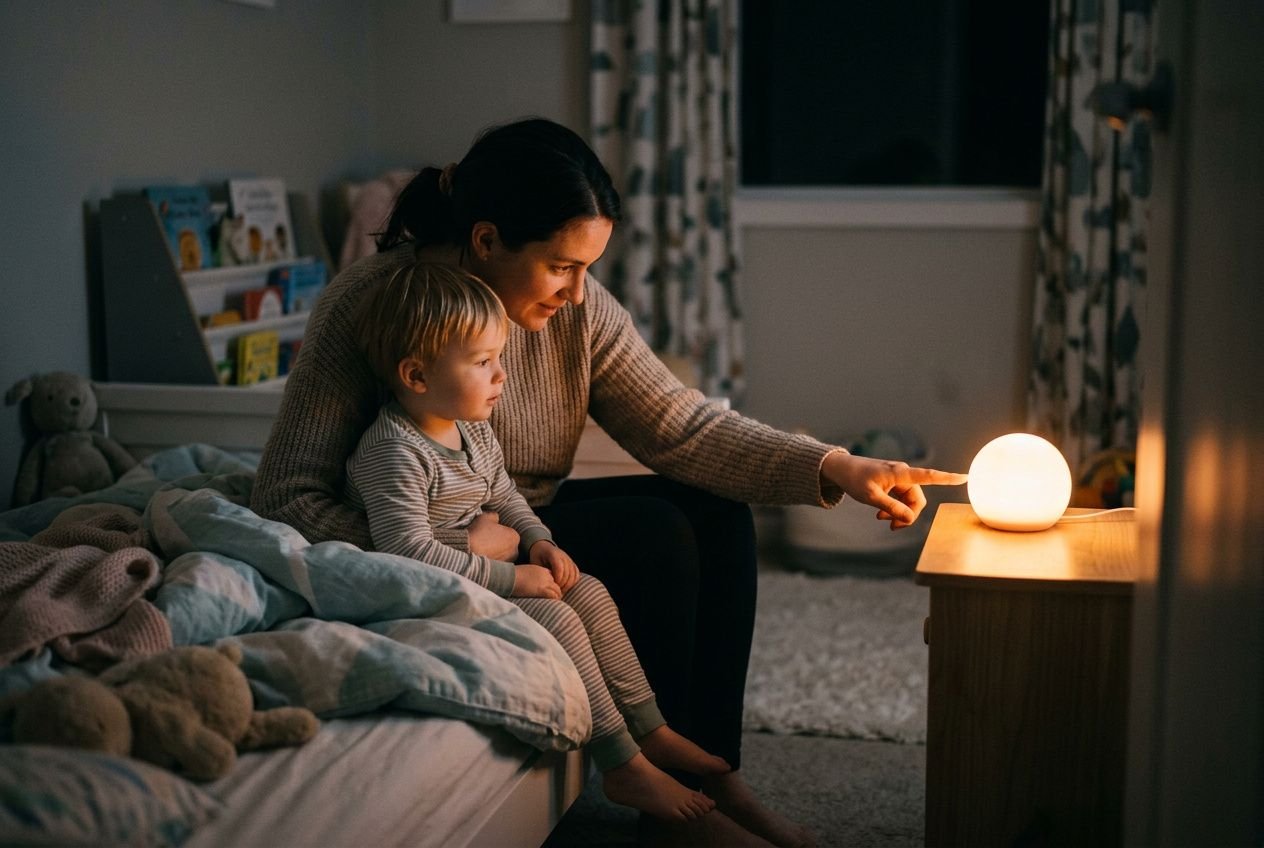
Before comparing options for the best kids'alarm clock on Amazon or elsewhere, vous devez garder à l'esprit que l'utilisation régulière détermine en grande partie l'efficacité d'un réveil. Give the clock a name, explain what each face or colour means, and practise the sequence through role-play before the first night. The alarm sets the signal, but parents build the habit around it.
Expect repetition. The behaviour may take time to become dependable, particularly when your child is learning to remain in bed until the agreed wake time.
Why a stoplight signal can help
Some devices use a stoplight format to organise the night and morning. A red phase signals sleep time, an optional yellow phase offers a gentle pre-wake indication or nightlight, and a green light shows when the child may leave the bed.
A pre-wake signal helps older children anticipate the main alarm, while visual countdowns, such as stars that gradually disappear, show how much time remains before they may rise. REMI uses a different but equally clear system, with a sleeping face and an awake face for each phase. REMI, a smart clock for kids that uses an OK-to-wake system, illustrates how this approach can fit into everyday family life.
- Name the clock and present it as a character, helping the child connect with the signal instead of viewing it as an arbitrary rule.
- Role-play the routine during the day so the child can practise responding to the awake face before the first morning, reducing confusion and resistance.
- Reinforce the routine consistently for several weeks. Acknowledge mornings when the child waited calmly, and revisit the expectations without pressure when they did not.
REMI also gives parents a Night Score each morning, summarising sleep patterns and helping them see whether the routine is working or needs adjustment.
The smart alarm that does more
Most kids'alarm clocks solve one problem for one age group, then sit unused in a drawer. A more practical long-term choice combines several bedside essentials: a nightlight, baby monitor, story player, sleep tracker, and alarm. That is the thinking behind REMI, which combines these functions in one device, from the baby monitor for the first months to the alarm for school-age children.
One companion for bedtime and mornings
REMI is designed to keep a child's sleep environment consistent from the first months through middle childhood. Instead of replacing devices as your child grows, parents can activate features gradually. From birth, REMI works as an audio baby monitor. Around age 2, its facial expressions help guide sleep and wake behaviour. At school age, the alarm and Bluetooth speaker become increasingly useful.
- Baby monitor with notifications lets parents listen or speak through the connected app and receive sound alerts without repeatedly entering the room.
- Walkie-talkie function creates a gentle two-way channel between parent and child, making a bedtime check-in possible without fully waking the child.
- Story player and Bluetooth speaker support both the morning routine and evening wind-down, playing built-in content or audio files uploaded by USB, including lullabies, stories, and white noise selected by the family.
- Sleep tracking and Night Score give parents an objective view of sleep patterns each morning, helping them identify disruptions and adjust the routine through suitable sound options and light settings.
Parents manage these functions in REMI's companion app. They can set precise alarms, choose the time and repeat days, add a custom name, and adjust the nightlight brightness, music, and volume without touching the device. The REMI kids'alarm clock daily use guide explains each setting for families using REMI for the first time or refining an established routine.
Choose REMI for years of use
Longevity is easy to underestimate when choosing an alarm clock. A gift that serves only the toddler years needs replacing just as morning independence begins to matter. REMI is designed for use from birth to age 10, with software updates and new features that help it evolve instead of becoming redundant. Few children's sleep devices offer the same role as a long-term bedside companion rather than a short-term sleep aid.
UrbanHello supports every REMI device with setup guides, FAQs, repair services, customer support, and a three-year warranty. This protects the investment throughout the years of use for which the device is designed. Whether you are managing a newborn's light-sensitive sleep or establishing a morning routine for a primary-school child, REMI adapts to the present need while remaining ready for the next stage. The alarm clock overview has moved far beyond a basic buzzer, and REMI shows how connected technology can support children's sleep.
- From birth to age 10 REMI's features develop with the child, from baby monitoring during the earliest months to a classic alarm supporting an independent school-morning wake-up by age seven or eight.
- Custom audio uploads through USB allow parents to add familiar lullabies, family stories, or specific white-noise tracks alongside REMI's built-in library, creating a personalised sound environment.
- App-controlled precision keeps every alarm detail adjustable remotely, including the time, days, volume, nightlight colour, and brightness, without disrupting the child's space.
- Regular software updates add capabilities over time, helping REMI remain useful as the child's needs and sleep habits change.
If you want one device to accompany your child from the first nights through confident, independent mornings, REMI is designed for that progression. Discover REMI and its full range of features on the UrbanHello store, and give your child and yourself a structured, reassuring sleep routine.
Frequently asked questions
What is the best alarm clock for kids, and does age change the answer?
The best alarm clock for kids depends on the child’s age and the sleep challenge you are addressing. For toddlers, a sleep training clock with visual wake signals, such as sleeping and awake faces, is more appropriate than a time-based alarm because young children cannot yet read the clock. For school-age children, a reliable audible alarm, app-based parental controls, and separate weekday and weekend settings become more important. A device such as REMI can support both stages, developing from a toddler sleep trainer into a full morning alarm as the child grows. It can therefore suit parents who want one device to accompany their children for several years.
At what age should a child have their own alarm clock?
Many families introduce a kids sleep trainer or an OK-to-wake clock between 18 months and 2 years, when a toddler starts climbing out of bed or waking the household very early. At this stage, the purpose is not complete independence. Instead, a visual signal gives the child a clear and reassuring boundary without requiring reading skills.
By around age 5 to 6, the child can begin using a time-based alarm and taking on small morning responsibilities. From age 7 onward, most children are ready to set their own alarm, check the time independently, and manage a morning routine with less parental prompting. The right clock can support this gradual transition.
What makes a smart alarm clock better than a standard one for children?
A standard alarm clock performs one function at a fixed time. A smart connected clock gives parents more control through an app: you can adjust settings remotely, review sleep data, manage the nightlight, and select the wake sound without entering the child’s room or disturbing sleep. For younger children, disabling the physical buttons prevents them from changing the alarm settings independently.
For parents, features such as REMI’s Night Score provide measurable information about the child’s sleep and wake routine. This makes it easier to adjust the approach according to real patterns rather than guesswork, supporting a calmer morning and more consistent sleep habits.
Share this article:





Similar posts
How to choose an audio baby monitor: the ultimate guide
Ready to choose your baby's monitor? Our guide covers audio baby monitor features, safety, range & budget tips to find the perfect monitor for your baby.
Best smart wake up clock for kids: alarm clock guide
Find the best wake clock for kids with lights, sounds & app control. Compare top alarm clock picks to help your child wake up and sleep on schedule.