
Best smart wake up clock for kids: alarm clock guide


Choosing a smart wake-up clock for kids is a practical way to support healthy sleep habits from the earliest years. The right device can translate your child’s routine into clear signals, help establish a calmer bedtime, and adapt as they grow.
What makes a smart wake-up clock helpful
A wake-up clock for children does more than show the time. It turns a sleep schedule into signals a young child can understand independently, using light, colour, sound, or a familiar face. This can reduce repeated reminders at bedtime and during the early morning.
Visual cues children understand
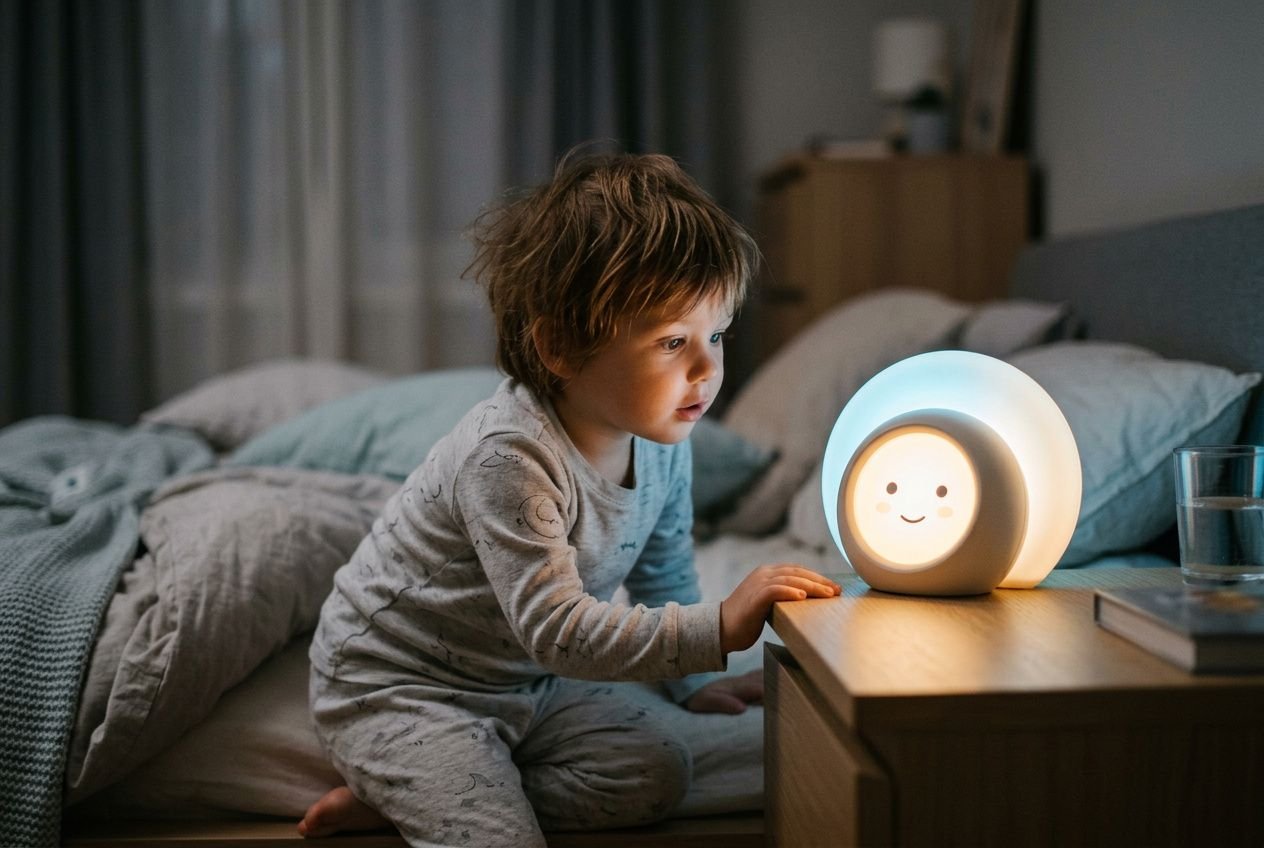
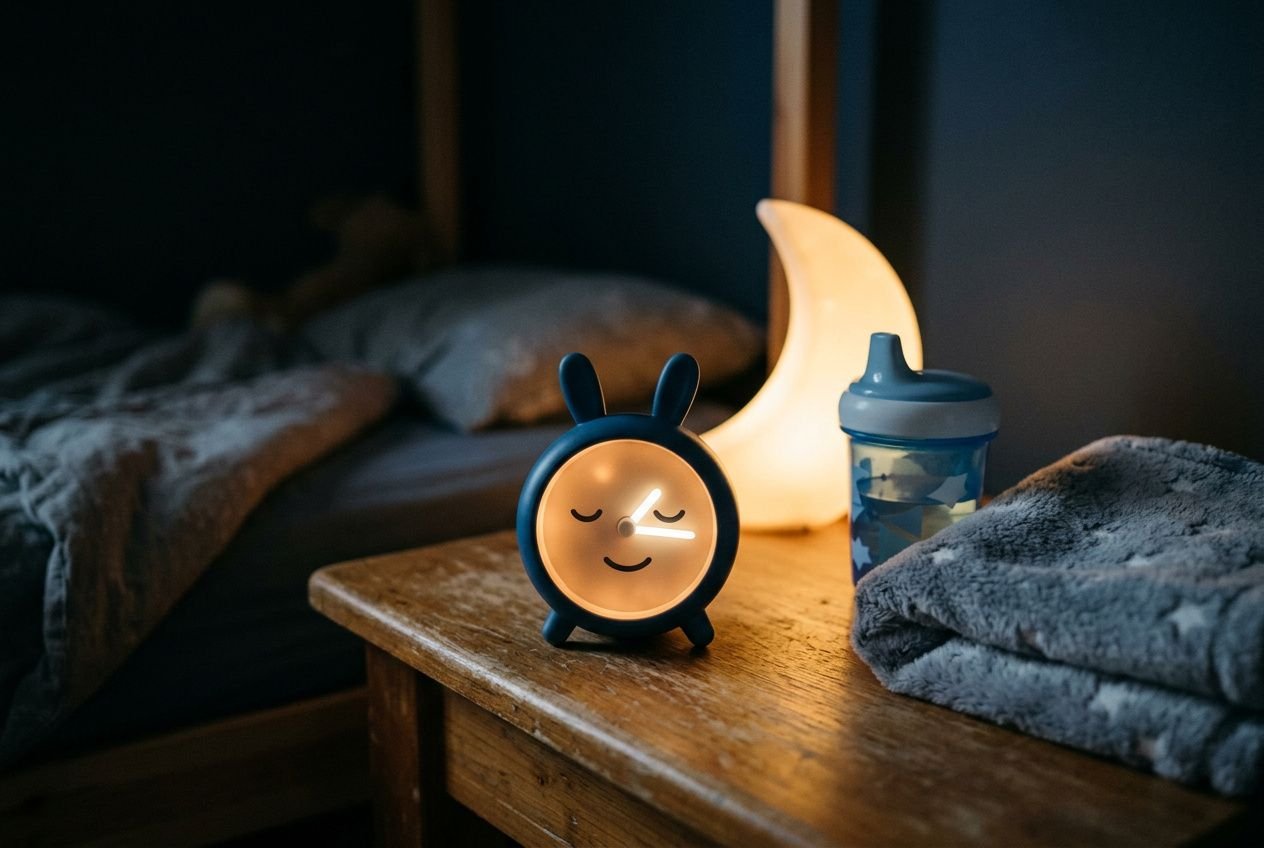
When parents compare a smart wake-up clock for kids, they often find that images are more accessible than numbers. A child who cannot yet read a clock face can recognise a sleeping expression that means staying in bed, or a smiling face that shows the morning has arrived. REMI follows this approach: its expressive display moves from closed eyes during quiet time to an alert face when it is ready to rise, without requiring adult interpretation.
- Sleeping face display A resting expression on the clock face shows clearly that it is still night-time and that remaining in bed is expected.
- Awake face signal At the scheduled wake time, the face changes to a friendly, alert expression. This gives your child an independent green light to begin the morning.
- Colour-coded system Many devices also use colour: red for bedtime, yellow as a transition cue, and a green light to show that morning has arrived. These layers of meaning help children develop their concept of time.
- Multi-sensory reinforcement REMI combines visual sleep and wake signals with customisable music and sounds, so the transition between night and day is communicated through sight and hearing.
The best choice is not necessarily the model with the longest feature list. It is the one whose signals your child understands consistently. A clear difference between sleep and wake states, whether created by a face, a colour, or both, works better than a subtle screen change that a tired toddler may miss. Choose a dimmable display that avoids filling the bedroom with unnecessary light.
A friendly alarm clock companion
For toddlers, an ok to wake clock can become more than a device. It becomes a familiar presence in the room each night. When an alarm clock has a personality, sleeping when the child sleeps and waking when the child may wake, it creates a shared routine instead of presenting a rigid rule.
Children often respond more readily to a companion than to an instruction. This is why face-based designs are appreciated by many parents. REMI is designed to support this relationship from birth through age 10. During the earliest months, it can function as a baby monitor and nightlight; later, it becomes a trusted clock for kids that signals the start of the day with a recognisable expression.
That continuity matters. The same face, device, and reassuring presence can accompany your child through changing sleep needs and support a more predictable bedtime routine.
Build sleep routines with light and sound
Light and sound are two powerful tools for anchoring a child’s internal clock to a predictable daily rhythm. A well-configured wake-up clock uses both carefully: gentle audio eases the transition into sleep, while a gradual or precisely timed signal makes waking feel natural rather than abrupt. The aim is to work with the child’s circadian system, not against it.
When toddlers can start using one
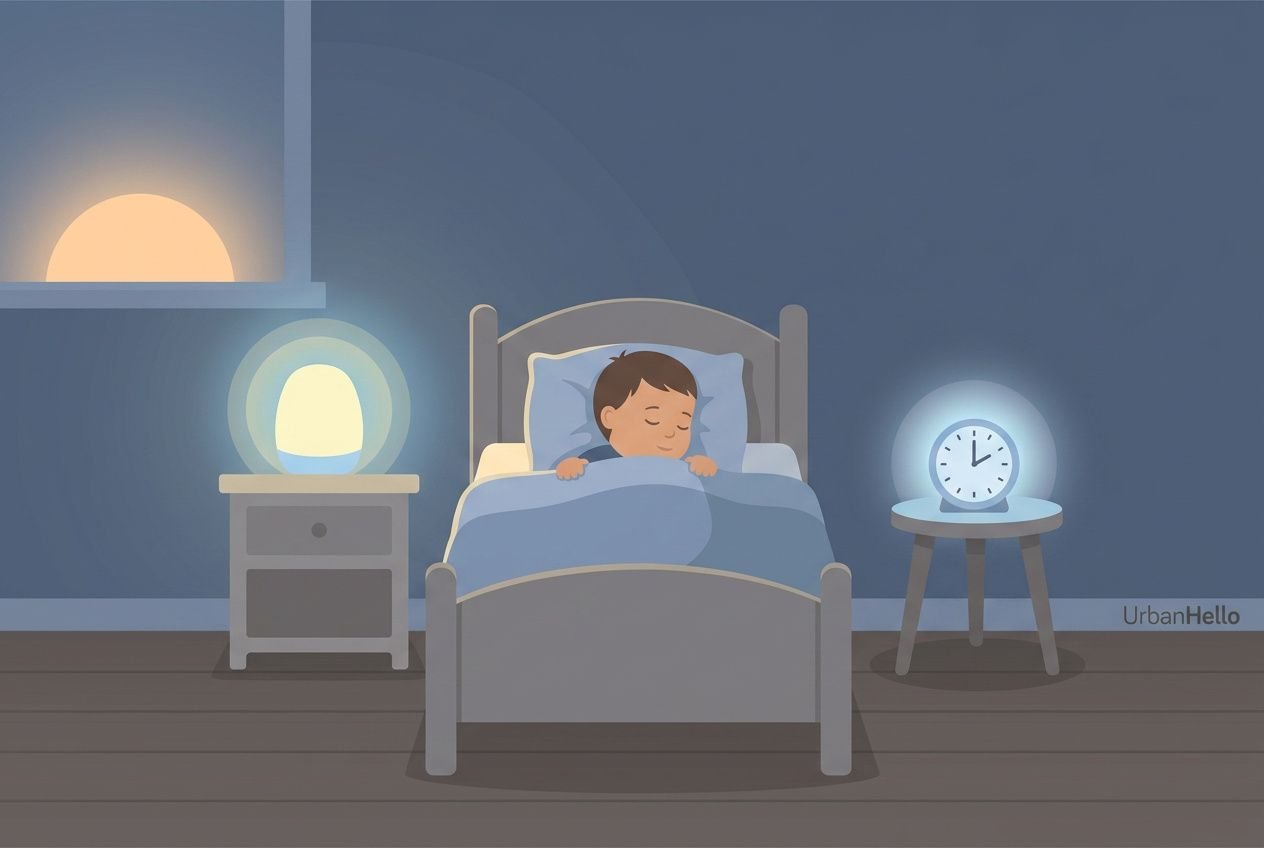
The right time to introduce a dedicated device depends on each child, but many families find that a smart clock for kids with sound becomes useful once a toddler consistently understands a repeated bedtime rule, typically from around age two. The REMI BLUE model is designed for children aged two to five, offering an appropriate starting point. Before then, the same device can serve as a baby monitor, nightlight, and sound machine, allowing the routine to evolve smoothly.
A predictable 30- to 45-minute bedtime routine gives any alarm clock a clear framework to reinforce. During the hour before sleep, dim, warm light helps the body prepare for rest; brighter light in the morning signals that a new day has begun. Research into twilight light exposure at home consistently highlights the importance of dawn light exposure for children's sleep. Natural or device-based dusk and sunrise signals can influence circadian rhythms and overall well-being. A clock with a gradual or timed light cue therefore does more than announce the morning: it supports the child’s biological rhythm.
Teach the wake-up rule consistently
An ok to wake up clock for toddlers works best when you explain the rule before expecting the device to guide your child independently. Name the clock together, describe what each expression means in simple language, and practise both bedtime and wake-up situations before the first night. If your child leaves the room before the wake signal, respond calmly and consistently: return them quietly to bed, then repeat the rule without starting a discussion. This reinforcement may take several weeks before the behaviour becomes self-directed.
Use sound without overstimulation
Sound at bedtime should help the nervous system settle rather than provide additional stimulation. Lullabies, white noise, gentle rain, and familiar stories can support a calmer transition into sleep. REMI allows parents to upload custom MP3 files by USB, including songs, stories, or white noise recordings, so the audio environment remains personal and familiar. Exclusive stories from the REMI Store also turn the device into a story box that can extend the routine beyond one track.
At wake time, alarm sounds should be gentle enough to rouse without startling. A toddler clock that uses a pre-wake light or soft audio cue can help a child move out of lighter sleep stages more naturally than a sudden loud alarm. REMI’s weekly scheduler allows parents to set separate sleep and wake times for each day, so school mornings and weekends can follow different patterns without repeated manual changes. For families comparing a clock for toddlers with a traditional alarm clock, a gradual rise signal may offer a calmer start than an abrupt alarm.
Recommended products
Compare smart alarm clock features
Small differences, such as nightlight brightness control or the option to schedule WiFi off overnight, can influence sleep quality and everyday convenience over years of use.
Essential sleep-friendly controls
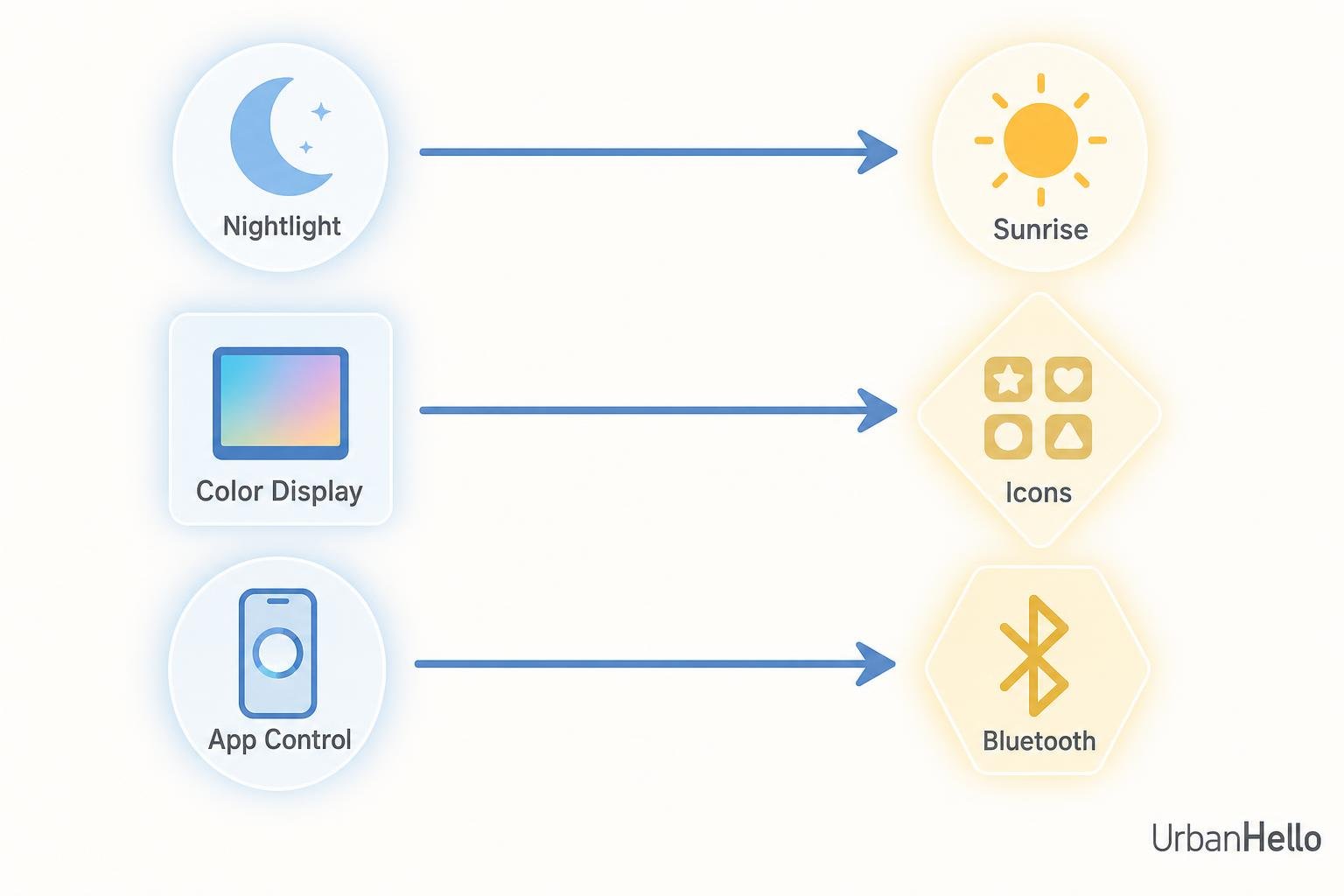
When comparing a smart wake-up clock for kids at Walmart or elsewhere, begin by testing how its nightlight, display, and audio behave in a dark room.
- Adjustable nightlight Brightness control from 0 to full intensity helps prevent the bedroom from becoming too stimulating during deep sleep. A fixed night light offers less flexibility.
- Dimmable display The clock face should switch off or dim completely overnight, preventing a visual wake cue from becoming ambient light during sleep.
- Flexible alarm sounds Lullabies, nature sounds, and parent-selected audio allow families to match the signal to their child's temperament and routine.
REMI supports custom MP3 uploads through USB. A familiar recording, a parent's voice, a favourite song, or a bedtime story can therefore mark bedtime or morning. This personalisation is unusual among standard clock for toddlers models and can strengthen a child's sense of comfort and predictability.
App control and connected features
App control turns a static device into a flexible sleep tool. Parents can adjust schedules, brightness, facial expressions, and audio from a phone rather than reaching for a small device in a dark room. The free REMI app works on iOS and Android, with separate sleep and wake settings for every day of the week. That arrangement is useful when school-day and weekend routines differ.
WiFi connectivity also deserves careful consideration. Some connected clocks have been associated with inconsistent performance or connection problems, which can undermine confidence in their reliability. REMI needs WiFi for setup and app-based control, but its connection can be scheduled to switch off automatically overnight, such as from 9 PM to 6 AM. This reduces wireless activity in the child's room while preserving daytime functionality.
REMI uses a power outlet instead of batteries, so a depleted battery is less likely to silence the wake signal during the night. Placement must therefore be planned near a suitable socket. The benefit is stability: the device will not lose its settings or fail silently because its battery has run down.
Compare long-term value
Long-term value depends on how well the device supports changing needs. The Hatch Baby Rest, the Mirari OK to Wake, and the Teach Me Time clock each serve focused purposes: the Teach Me Time clock introduces the concept of time through an analogue clock face, while the Mirari OK to Wake uses a simple colour signal.
REMI follows a broader model. Instead of being replaced when sleep training ends, it can develop with the child, moving from baby monitor to educational alarm clock, Bluetooth speaker, and classical alarm clock for older children. Regular software updates add capabilities over time. Its nap timer, story box access, and sleep tracker can remain useful beyond the toddler years.
| Feature | REMI | Hatch Baby Rest | Mirari OK to Wake | Teach Me Time clock |
| OK-to-wake visual cue | Sleeping/awake face + colour | Colour light only | Colour light only | Clock face + colour ring |
| Night light | Fully adjustable via app | Yes, colour adjustable | Yes, basic | Yes, basic |
| Sound machine | Custom MP3 + built-in lullabies | Yes, built-in sounds | Limited | No |
| App control | Full iOS & Android control | Yes | No | No |
| Baby monitor | Yes, two-way audio | No | No | No |
| Sleep tracking | Yes, nightly Night Score | No | No | No |
| Suitable age range | 0–10+ years | 0–5 years approx. | 1–5 years approx. | 2–8 years approx. |
For families seeking one device from the newborn stage through primary school age, this breadth can mean fewer replacements, less relearning, and a familiar sleep aid that remains part of the child's room for many years.
Whether you call it a nightlight or a night light, the best choice depends on consistent use. As children mature, a teach me time clock can help connect the display with the wider concept of time.
Choose settings that fit your child's routine: use the nap timer during the day, keep the display low at night, and reserve the morning signal for a clear wake cue. A smart sleep training clock can combine these functions without making bedtime complicated.
Choose the best kids'wake-up clock
Selecting the right device means matching it to your child’s current stage, your bedroom setup, and the level of remote access you need as a parent. Start by identifying which features matter now and which could remain useful in one, three, or five years.
Beyond a basic alarm clock
When parents look for a smart wake-up clock for kids in local shops or online, they often find simple devices limited to a coloured light and timer. These options can be useful, but they do not provide monitoring, communication, or broader support for a young child’s sleep. A device that combines visual wake cues with a baby monitor, sleep tracking, and personalised audio meets a wider range of family needs.
REMI’s built-in baby monitor allows parents to listen from anywhere with internet access, receive noise alerts on their phone, and speak to their child through two-way audio without entering the room. This can be especially helpful at night, when opening the door might interrupt sleep further. As the child grows, the same hardware becomes a walkie-talkie, so no additional purchase is needed.
- Two-way audio monitoring Parents can listen, speak to their child, and receive noise notifications from any location with an internet connection, extending reassurance beyond the bedroom door.
- Nightly Night Score Each morning, REMI displays a sleep-quality score alongside app-based tracking data. This gives parents concrete information for adjusting routines instead of relying on guesswork.
- Story box access Exclusive audio stories from the REMI Store turn the device into an imaginative companion for bedtime rituals and quiet time, even when a parent is not physically present.
- Walkie-talkie mode Once children move beyond the baby stage, the two-way communication feature naturally becomes a walkie-talkie, keeping the device useful and engaging.
Parents using REMI report gaining an average of 45 extra minutes of sleep per night, which they attribute to greater child independence and the consistency created by the device’s routines. Clear signals, predictable schedules, and repetition help children understand that the clock’s face guides the rhythm of their night and morning.
Why REMI grows with children
Most devices serve one phase and then become redundant. REMI follows a different model: it begins as a baby monitor and nightlight during the newborn months, becomes an educational alarm clock during the toddler and preschool years, and continues as a Bluetooth speaker, sleep tracker, story box, and classical alarm clock for children through age 10 and beyond. Regular software updates add new capabilities over time, helping the device remain useful rather than becoming obsolete. This makes it a smart wake-up clock for kids that can stay on the bedside table throughout childhood.
UrbanHello supports REMI with a 3-year warranty, setup guides, FAQs, repair services, and customer support. Replacement covers, cables, and accessories also help families maintain the device throughout its usable life. A product that can be repaired, updated, and personalised over several years offers a different value from a basic clock discarded when its single function is no longer needed.
Buy a lasting sleep companion
If you are looking for the smart ok to wake clock for kids that supports every stage of your child’s sleep journey, REMI brings several functions together in one device. It combines a sleep training clock, nightlight, sound machine with customisable audio, baby monitor, sleep tracker, and story companion, all managed through one intuitive app. This avoids purchasing, charging, and managing several separate products over the years.
Discover the smart REMI kids alarm clock and give your child the structure and reassurance supported by a consistent bedtime routine. From the first nights at home to the morning alarm of a ten-year-old, REMI is designed to accompany each stage with a familiar face your child can recognise and trust.
Frequently asked questions
At what age can a child start using a wake-up clock?
Most children begin responding meaningfully to a visual wake-up signal around age two, when they can understand and remember a simple bedtime rule. A face-based device such as REMI, including the REMI BLUE model designed for ages two to five, works particularly well at this stage because it communicates through expressions rather than numbers.
The same device can be introduced from birth as a baby monitor, nightlight, and sound machine. Its later role as an alarm clock then develops naturally within an object the child already associates with sleep and comfort.
What is the difference between a standard night light and a smart wake-up clock?
A standard night light provides a fixed or adjustable glow without interactive functions. A smart wake-up clock adds time-based signals for sleep and wake periods, often through a changing face or a green light, together with features such as a nap timer, customizable alarm sounds, and app-based scheduling.
In REMI’s case, the device also includes a baby monitor, sleep tracker, and story box. Its nightlight is precisely adjustable, with brightness ranging from a gentle shimmer to a fuller glow. This makes it more suitable for sleep than a fixed source of ambient light.
Is a WiFi-connected kids'alarm clock safe to use in a child's room overnight?
WiFi connectivity allows parents to control the device remotely, adjust settings without disturbing the child, and receive monitoring alerts. These features can be useful during the day and around bedtime.
For families concerned about continuous wireless activity near a sleeping child, REMI includes a scheduled WiFi shut-off feature. The connection can switch off automatically at a set time in the evening, such as 9 PM, and resume at 6 AM. This keeps the smart functions available during waking hours while minimizing overnight exposure and preserving a calm sleep environment.
Share this article:





Similar posts
Best kids' alarm clock: compare every clock to wake up right
Find the best kids' alarm clock for every age. Compare ok-to-wake clock features, alarm sounds & wake-up lights to choose the perfect clock for your child.
Best kids alarm clock with nightlight: top clock picks
Find the perfect kids alarm clock with nightlight. Compare top alarm clocks for night wake-ups, sleep training & kid-friendly features to buy the best clock.