
Best baby sleep trainer device: top sleep picks for toddler wake time


Finding the right sleep trainer device for your child can feel overwhelming, particularly when many products share similar features. This guide compares effective baby and toddler sleep tools, explains how visual cues, sound, and light support bedtime habits, and shows what can help children sleep through different developmental stages.
Choosing the best sleep trainer device
A sleep trainer is not a shortcut to immediate results. Healthy sleep still depends on a consistent schedule, age-appropriate feeding, and the ability to settle independently. A well-designed device adds a reliable visual language, helping a toddler understand whether waking means the morning has begun. Repeated each night, this clarity can gradually reduce early waking and bedtime resistance. Reviews of the best baby sleep trainer device point to one consistent lesson: regular use matters more than a long list of features.
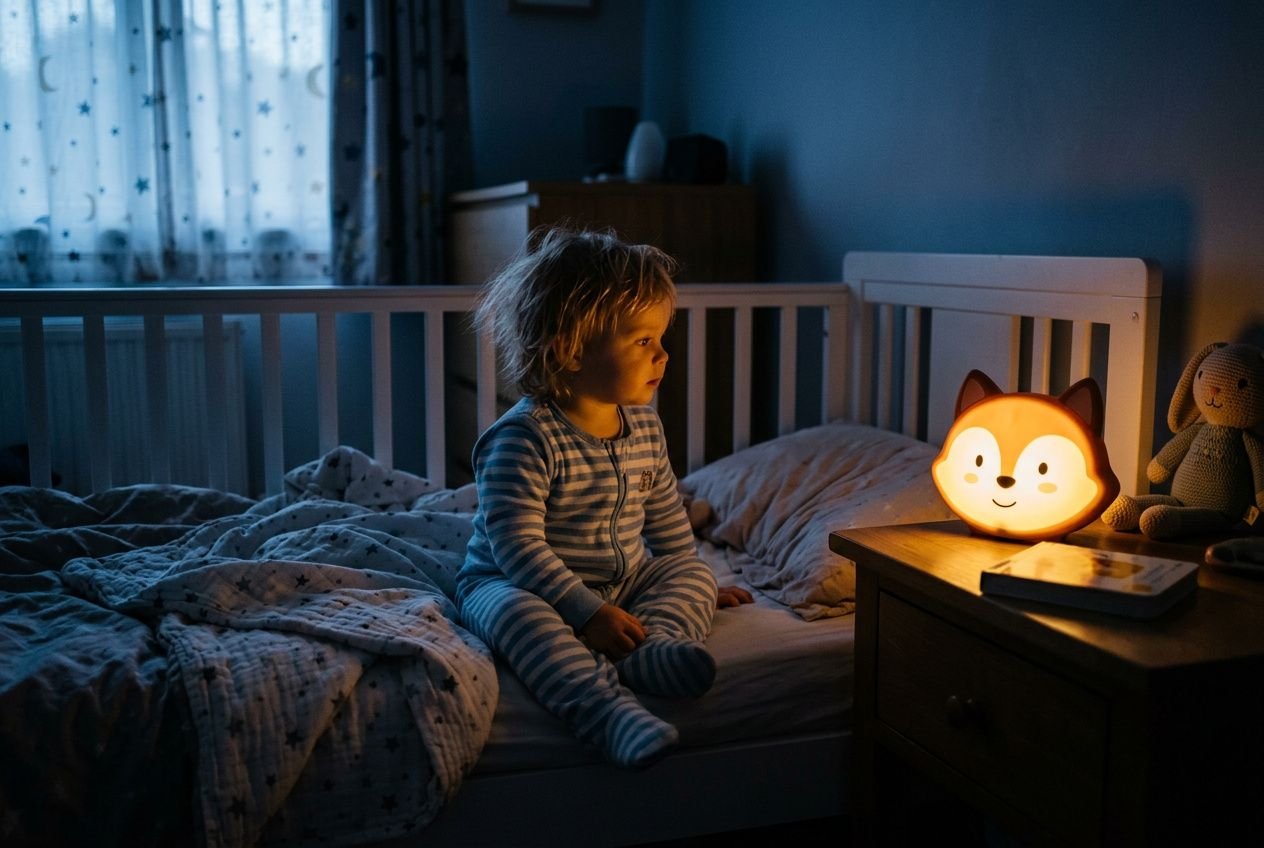
When a toddler is ready for sleep cues
Color-coded sleep cues usually become meaningful around age two, when children start connecting specific colors with expected behaviors. Readiness for a structured visual system often appears closer to two and a half years, although some children show signs from around 18 months, especially when moving from a crib to an open bed. Before choosing among the best baby sleep trainer devices on the market, consider whether your child has reached the stage at which visual signals can guide behavior. Three markers are particularly useful.
- Independent bed exit. The child can climb out of bed without help, showing the physical and cognitive ability to respond to the device's signal.
- Color recognition. The child can reliably distinguish and name basic colors, so red, amber, and green light signals have a clear meaning.
- Rule retention. The child can remember and follow a simple household rule the following morning, suggesting that overnight instructions will be retained.
For babies younger than 18 months, REMI provides a practical starting point. From birth, it works as a WiFi audio baby monitor, allowing caregivers to listen, speak, and receive noise notifications through its companion app. As the child matures, sleep-trainer cues can be introduced gradually, allowing one device to remain useful from the newborn period through early childhood without requiring a separate purchase at every stage.
What supports better sleep habits
No device works in isolation. A predictable bedtime routine, consistent timing, calming activities, and a stable sleep environment remain the foundation of independent sleep.
Families often see more durable progress when they combine a visual wake signal with a consistent response. If a child leaves the room before the morning signal, calmly return them to bed without lengthy discussion, repeating the response as needed. The clock provides a reference point, while the caregiver's follow-through gives that cue meaning.
Sound can provide additional support. White noise or lullabies during settling create a positive sleep association and help the brain recognize the transition toward rest. Paired with a dim, warm-toned night light and a clear visual wake cue, this audio layer creates a coherent sleep environment instead of a collection of disconnected products. For a detailed comparison of leading models, consult the best sleep trainer clock guide.
How a sleep trainer clock signals wake time
The core function of any sleep trainer is to answer the question every toddler asks when they open their eyes: is it time to get up? Abstract clock numbers mean little to a young child. Visual cues such as color, brightness, and facial expression turn that information into signals a two- or three-year-old can recognize without adult intervention. Understanding how each signal works helps caregivers choose a suitable combination for their child's developmental stage.
Red, amber, and green light meanings
The classic stoplight system at the heart of a sleep trainer clock divides the night and morning into clear phases. A warm red or amber display signals that the child should remain in bed, while a green light confirms that morning has begun. Red and amber wavelengths are preferable overnight because they are less likely to interfere with melatonin production than blue or broad-spectrum white light, which can suppress this sleep hormone and make settling harder.
- Red or amber phase Displayed throughout the overnight period to indicate sleep time, ideally at the lowest brightness setting so it provides reassurance without becoming stimulating.
- Yellow transition phase An optional window of five to thirty minutes before the designated wake time, allowing a child to engage in quiet, independent play without leaving the room.
- Green wake signal Confirms that morning has begun. On the Mella model, the signal remains active for a full hour, accommodating children who sleep past the programmed time.
Brightness control also matters. A clock face that cannot dim sufficiently may become a source of stimulation instead of reassurance. Mella provides five independent brightness levels for its clock face, including a completely dark setting. REMI's app-based controls let caregivers adjust light intensity from another room without disturbing the child's sleep environment.
Why faces help toddlers understand sleep
Color changes alone can be ambiguous for very young children. A device that combines them with expressive facial imagery adds a second, emotionally meaningful layer of communication. A sleeping face at night and a smiling, awake face at morning wake time are easier for a toddler to interpret because they resemble social expressions already familiar from daily life. This is why an ok-to-wake clock with facial displays can establish a routine more quickly for children under three years old, who are still developing abstract color-behavior associations.
REMI extends this approach through expressive sleeping and awake faces throughout the night. The device gradually becomes a familiar presence that reassures the child when they stir at 5:00 a.m. and wonder whether rest time has ended. For parents considering Hatch, the Hatch sleep trainer review provides a direct feature-by-feature comparison with REMI.
A toddler wake clock routine
A consistent evening sequence reinforces the device's meaning. Switch the toddler clock to sleep mode at the same time each night, while explaining the action: “Look, REMI is going to sleep now, so it is rest time for you too.” This shared moment connects the device's expression with the expected behavior. Repetition over several evenings helps the signal become part of the child's understanding of bedtime.
In the morning, your response to the wake signal matters just as much. When the light turns green or the awake face appears, offer specific acknowledgment: “You waited until REMI woke up—well done.” This positive reinforcement shows the child that the transition is meaningful. Within one to two weeks of consistent use, most toddlers begin to internalize the rhythm and check the device before deciding whether they are ready to leave bed.
Build a toddler sleep training clock routine
Une routine quotidienne réfléchie rend le dispositif fiable. Votre pratique régulière, plus que la technologie, aide votre enfant à comprendre le signal. When a visual sleep signal does not work, the issue is often limited rehearsal or inconsistent caregiver follow-through rather than faulty technology. An effective routine combines realistic goals, daytime preparation, and gradual schedule changes.
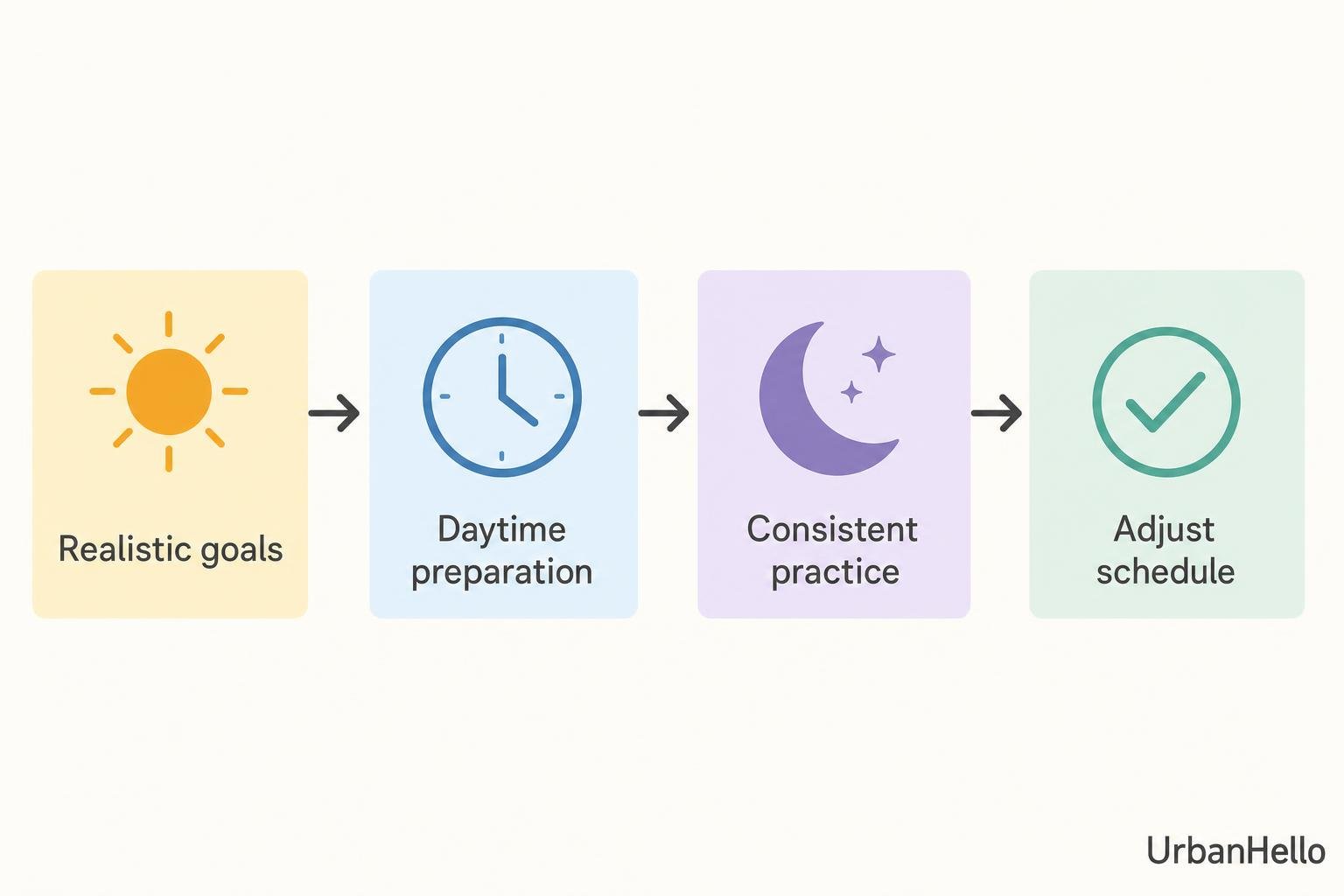
Start with a realistic wake goal
Before choosing the best baby sleep trainer device on Amazon or elsewhere, identify your child's usual wake time accurately. Set the first morning signal only fifteen minutes later, so the change remains achievable. Moving directly to 7:00 a.m. when your child currently wakes at 5:30 a.m. can create frustration and weaken confidence in the routine. Most children need approximately eleven hours of overnight sleep after bedtime; three-year-olds who still nap may need closer to ten hours.
Practice the sleep and wake signals
A toddler sleep training clock needs an introduction before its first night of use. During the day, name the device with your child, activate sleep mode, and explain what to do for each signal. Practice the sequence several times, so your child recognizes the visual and audible wake cues before early morning arrives. A good toddler sleep trainer clock should make both signals easy to demonstrate.
- Name the device together Giving it a name, such as “REMI is sleeping now,” helps your child connect its expressions with a familiar meaning.
- Demonstrate both modes Show the sleep signal and the wake signal separately in daylight, when tiredness is less likely to affect attention.
- Role-play the morning decision Ask what your child will do when the sleeping face changes to an awake face or the light turns green. Saying the rule aloud strengthens recall.
If your child leaves the room before the wake signal during the first weeks, guide them back calmly and keep conversation brief. Point toward the device, redirecting attention to the agreed rule rather than to your reaction. REMI’s app-based scheduling lets you adjust the morning signal in small increments without reprogramming the machine each night, while weekly scheduling can accommodate different weekday and weekend routines.
Adjust the alarm schedule gradually
After two or three successful mornings, advance the alarm by another fifteen minutes. Repeat this adjustment every few days until you reach the family’s desired minimum wake time, typically between 6:00 and 7:00 a.m. Acknowledge each success specifically: “You stayed in bed until your clock woke you. That is exactly right.” This recognition supports your child’s confidence and encourages continued cooperation.
Mella suits families who prefer a device without an app or WiFi connection. Its schedule is programmed through buttons on the unit; one example could set sleep mode at 9:00 p.m., quiet play at 6:30 a.m., and full wake time at 7:00 a.m. Its ready-to-rise color cues and sound machine options are explained in the LittleHippo Mella sleep trainer review, which also covers setup and troubleshooting.
Recommended products
Sound machine and light features compared
Visual wake signals define the morning boundary, while sound and light shape your child’s sleep environment from settling to sunrise. Comparing how each device manages these elements gives families a clearer basis for choosing a toddler clock.
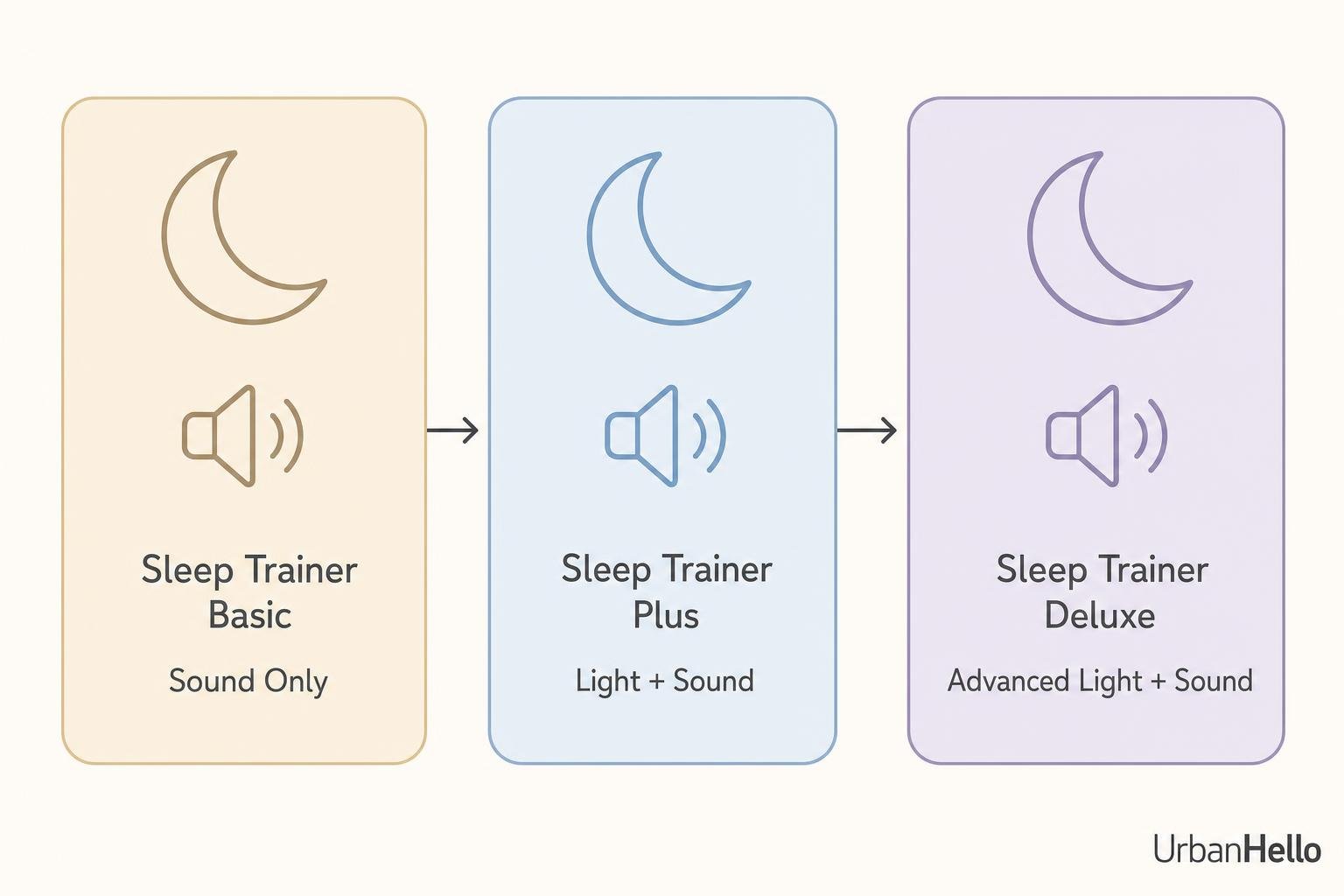
Safe sound settings for sleep
Parents often look to community discussions for practical assessments. Across detailed conversations about the best baby sleep trainer device available on Reddit and parenting forums, one point appears consistently: volume discipline matters as much as the selected sound. White, pink, or brown noise offers continuous masking without abrupt changes.
Three principles support safe, effective use of sleep audio.
- Placement distance. Position the sound machine at least three feet from the child's sleeping area, avoiding concentrated exposure at close range during the night.
- Volume ceiling. Keep playback at a moderate level. Sound at the child's ear level should not exceed fifty decibels during extended overnight use, helping protect developing hearing.
- Sound type selection. Prefer true white, pink, or brown noise to short-loop environmental tracks. This type of audio masks household noise consistently without distracting loops.
The pediatric sleep literature indicates that babies using white noise may experience longer sleep bouts and less night waking. Once a consistent routine accompanies the audio environment, most families report a twenty to forty percent reduction in the time needed to fall asleep. This sensitivity is most pronounced during the first months, when babies have not yet developed stable sleep-wake regulation.
A gentle increase in light, paired with soft sound at the morning wake time, creates a calmer transition than a sudden alarm beep.
Hatch, Mella, and REMI features
The three leading devices use sound and light according to different design approaches. Hatch Baby offers eleven built-in tracks, including white noise, pink noise, heartbeat, rain, ocean sounds, lullabies, and birds. Through its companion app, caregivers can create up to ten programs, each with independently adjustable color, sound, volume, brightness, timing, and repeat days. Its physical Big Button starts or pauses a track without requiring the app, which helps during quiet nighttime adjustments. The toddler clock options from Hatch provide flexible scheduling and integrate light and toddler clock functions.
Mella combines a sleep trainer, alarm clock, sound machine, night light, and nap timer in one unit. It offers three sounds—white noise, ocean waves, and a lullaby—with playback durations ranging from ten minutes to continuous overnight use. REMI adds white noise, built-in lullabies, USB MP3 uploads, REMI Store content, and Bluetooth speaker functionality, allowing the audio experience to develop as the child grows.
| Feature | Hatch Baby | Mella | REMI |
| Built-in sounds | 11 tracks | 3 tracks | Lullabies + white noise + REMI Store |
| Custom audio upload | No | No | Yes, via USB MP3 |
| Bluetooth speaker | No | No | Yes |
| App control | Yes | No | Yes |
| Wake signal color | Green (10 colors + custom) | Green (3 colors) | Awake face + color light |
| Expressive face display | No | Yes (3 expressions) | Yes (sleeping + awake) |
| Baby monitor | No | No | Yes, WiFi audio + walkie-talkie |
| Sleep tracking | No | No | Yes, nightly Night Score |
| Backup battery | Up to 8 hours | No | No |
Aligning the light, sound, and alarm with a child’s usual waking pattern makes the schedule easier to maintain.
The long-term sleep alarm choice
Choosing a sleep device for a newborn or toddler also means considering how long it will remain useful. A product designed for only one developmental stage may need replacement within two or three years, once the child outgrows its features. A device that evolves with your child avoids that disruption and offers better long-term value, both financially and through continuity in sleep associations and bedtime routines.
From baby monitor to bedtime companion
REMI is designed to remain meaningful from birth through age ten and beyond, with capabilities that become available as the child develops. During the first months, it works as a full WiFi audio baby monitor: caregivers can listen or speak through the companion app from anywhere in the home and receive noise notifications when the baby stirs, without entering the room or checking another device.
- Birth to 18 months REMI functions as a WiFi audio baby monitor with two-way communication and noise alerts through the companion app.
- 18 months to 5 years It introduces sleeping and awake facial expressions as the child becomes ready for color-coded and face-based sleep cues, helping establish a familiar companion during the nightly routine.
- Ages 5 to 8 The Story Box feature and Bluetooth speaker function allow the child to listen to stories and other audio content independently at bedtime, extending the device well beyond the toddler clock phase.
- Ages 8 to 10+ REMI operates as a standard alarm with app-controlled settings and weekly scheduling, becoming a reliable morning alarm that the child can manage with increasing independence.
REMI’s sleep tracking adds a feature that simpler devices lack. Its nightly Night Score, generated through the app, gives caregivers objective context about sleep quality over time. This can help identify patterns, evaluate schedule changes, and support informed conversations with a pediatrician when concerns arise. A built-in temperature sensor provides additional environmental information that a basic toddler clock or sound machine cannot offer.
REMI versus standalone sleep products
Compared with Hatch Baby and Mella, REMI occupies a broader position. Hatch Baby offers flexible sound-and-light programming, a capable app, and a physical control button that parents may appreciate during nighttime adjustments. However, it does not include a baby monitor, sleep tracking, temperature sensing, or Bluetooth speaker, so families may need separate products. Mella is simple and reliable, with no app or WiFi required, but its useful lifespan generally ends around age six or seven, when color-based sleep cues are no longer needed. The four main differences are these.
- Audio monitoring REMI includes a full WiFi baby monitor with two-way walkie-talkie communication. Neither Hatch nor Mella offers monitoring, so families with babies under 18 months need another device.
- Sleep data REMI produces a nightly Night Score through its sleep tracking function. Hatch and Mella provide no sleep data beyond the wake signal.
- Audio flexibility REMI supports USB MP3 uploads, REMI Store content, and Bluetooth speaker use. Hatch has a fixed library of eleven tracks, while Mella offers three options.
- Privacy control REMI’s WiFi can be scheduled to turn off overnight while core functions continue locally. Hatch does not currently offer this option.
One practical advantage belongs to Hatch Baby: its backup battery lasts up to eight hours. REMI has no backup battery and relies on mains power for full operation. For families who experience frequent power interruptions or travel often, this difference matters. REMI’s core local functions continue without WiFi, but its dependence on a power source remains a clear distinction.
UrbanHello data reports that parents using REMI gain an average of forty-five additional minutes of sleep per night. This figure reflects more than the effectiveness of the wake signal; it also reflects the combined effect of monitoring, schedule control, and sleep-environment management within one connected platform. Results vary according to the child’s routine and how consistently caregivers use the system, but no other device compared here combines these features in the same way.
Choose REMI for every growing stage
It does not need replacing as the child moves beyond the monitoring stage, the toddler clock stage, or the story-time stage. Instead, its capabilities develop in sequence: monitor, sleep cues, story player, Bluetooth speaker, and standard alarm. This continuity can strengthen the child’s emotional association with a safe, predictable night. For parents building a long-term sleep environment, that lasting relationship is one of the product’s most valuable features.
Frequently asked questions
At what age should I introduce a sleep trainer clock to my toddler?
Most children are developmentally ready for a color-coded sleep signal around age two, although readiness is often closer to two and a half years. Look for three practical cues: your child can climb out of bed independently, recognizes each color reliably, and remembers a simple rule the following morning. Before this stage, a device such as REMI can function as an audio baby monitor from birth, then gradually become an ok-to-wake clock when your child is ready to respond to visual cues without prompting at every waking.
Does white noise really help babies and toddlers sleep longer?
White noise masks traffic, voices, and household movement that might interrupt the lighter phases of a child’s sleep cycles. During the first months, continuous, non-repeating white or pink noise can also resemble the womb’s acoustic environment, making it easier for babies to settle. Pediatric sleep research indicates that babies using white noise may experience longer sleep periods and less night waking. Many families observe a twenty to forty percent reduction in the time needed to fall asleep when sound is combined consistently with a calming routine. Keep the volume moderate and below fifty decibels at the child’s ear level.
What makes REMI different from a standard ok-to-wake clock or sound machine?
A standard ok-to-wake clock or sound machine usually serves one or two functions, such as providing a morning signal or creating an audio environment. Its usefulness may diminish as a child moves beyond the toddler stage. REMI is designed to remain useful from birth through age ten and beyond, combining audio baby monitoring, a two-way walkie-talkie, expressive sleeping and awake facial displays, sleep tracking with a nightly Night Score, a temperature sensor, USB MP3 and REMI Store audio content, Bluetooth speaker capability, and a standard alarm.
These features are controlled through one companion app. Rather than requiring a new product at every developmental transition, the machine can evolve with your child, creating a coherent sleep environment from the first months through primary school age.
Share this article:





Similar posts
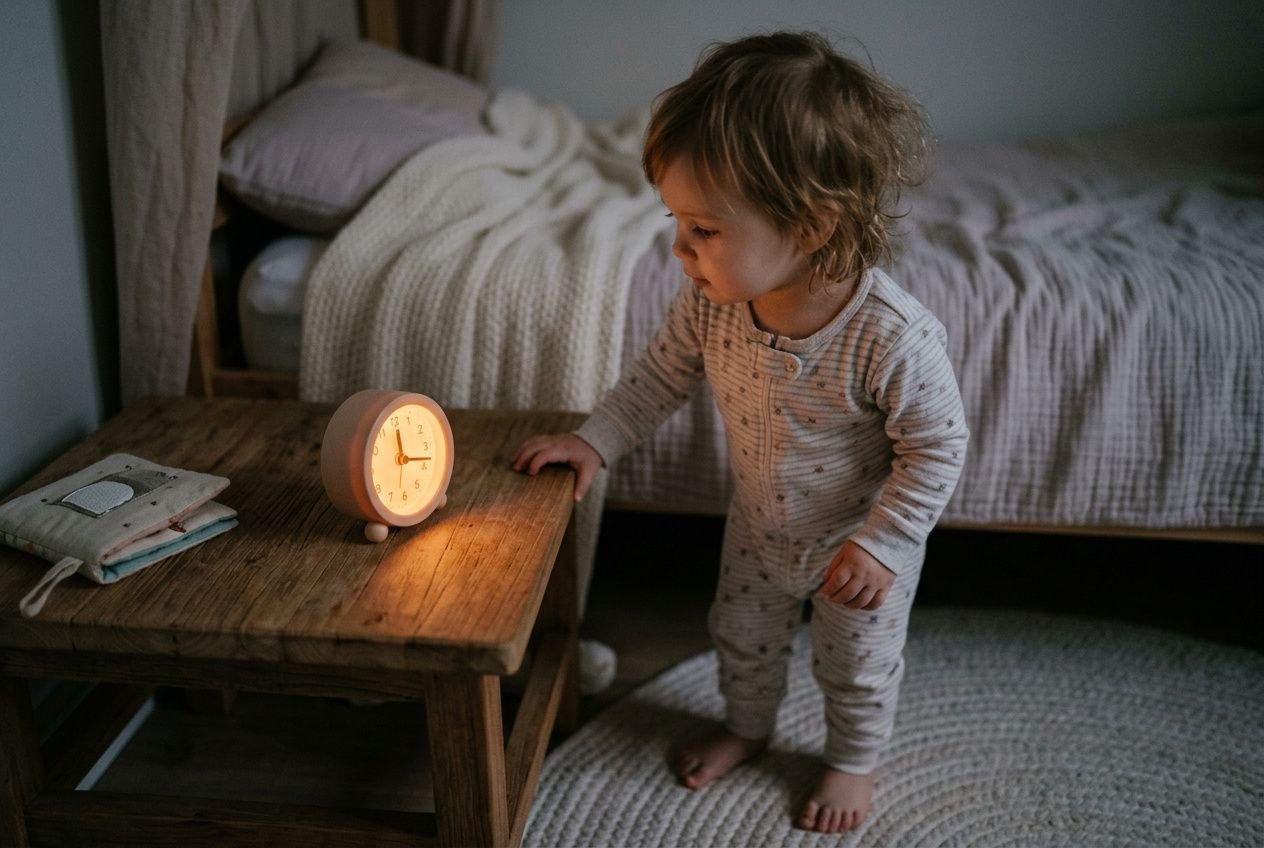
Sleep trainer clock guide: find the best ok-to-wake clock
Compare top sleep trainer clock models by features, colors & wake signals. Find the perfect sleep clock to help your toddler know when to wake up.
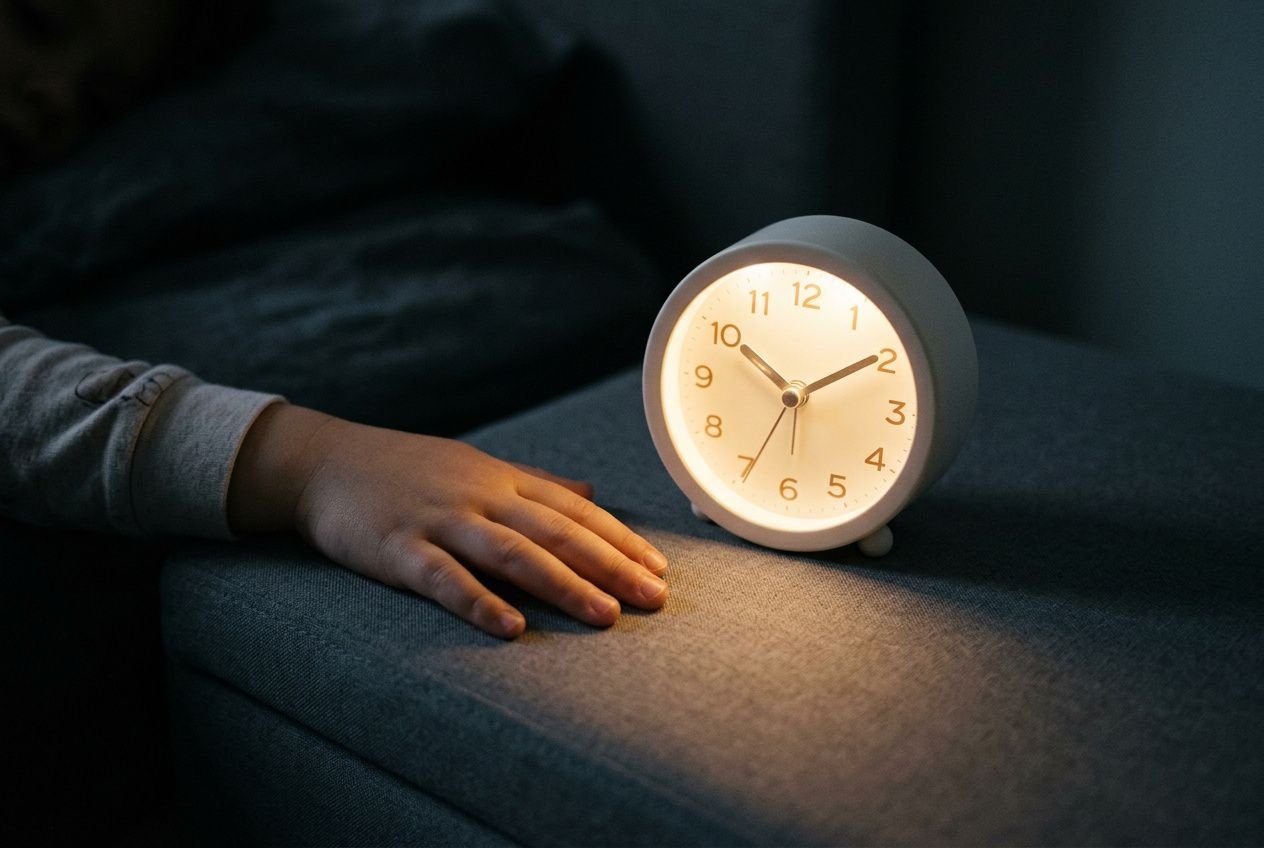
Best kids alarm clock with light: top clock picks for kids
Find the best kids alarm clock with light. Compare alarm clock features like ok-to-wake signals, sunrise simulation & night light to wake kids gently.