
Best kids alarm clock with light: top clock picks for kids


Choosing a kids alarm clock with light means comparing several features, from dimmable nightlights to face-based wake signals. Each one can help your child understand when to sleep and when to begin the day. This guide explains how these functions work in daily life and how to choose a device that supports a sleep routine from the toddler years through primary school. For more detail about nightlight functions, consult the kids alarm clock with nightlight guide. For connected wake-up technology, explore a smart wake-up clock guide.
Choosing the best kid alarm clock with light
Not every alarm clock suits every child. Your choice depends on your child's age, sensitivity to light, and need for a sound cue, a visual signal, or both. Age, sensitivity to light, and the need for sound, visual, or combined cues are the three factors that matter most.
What makes an alarm clock easy
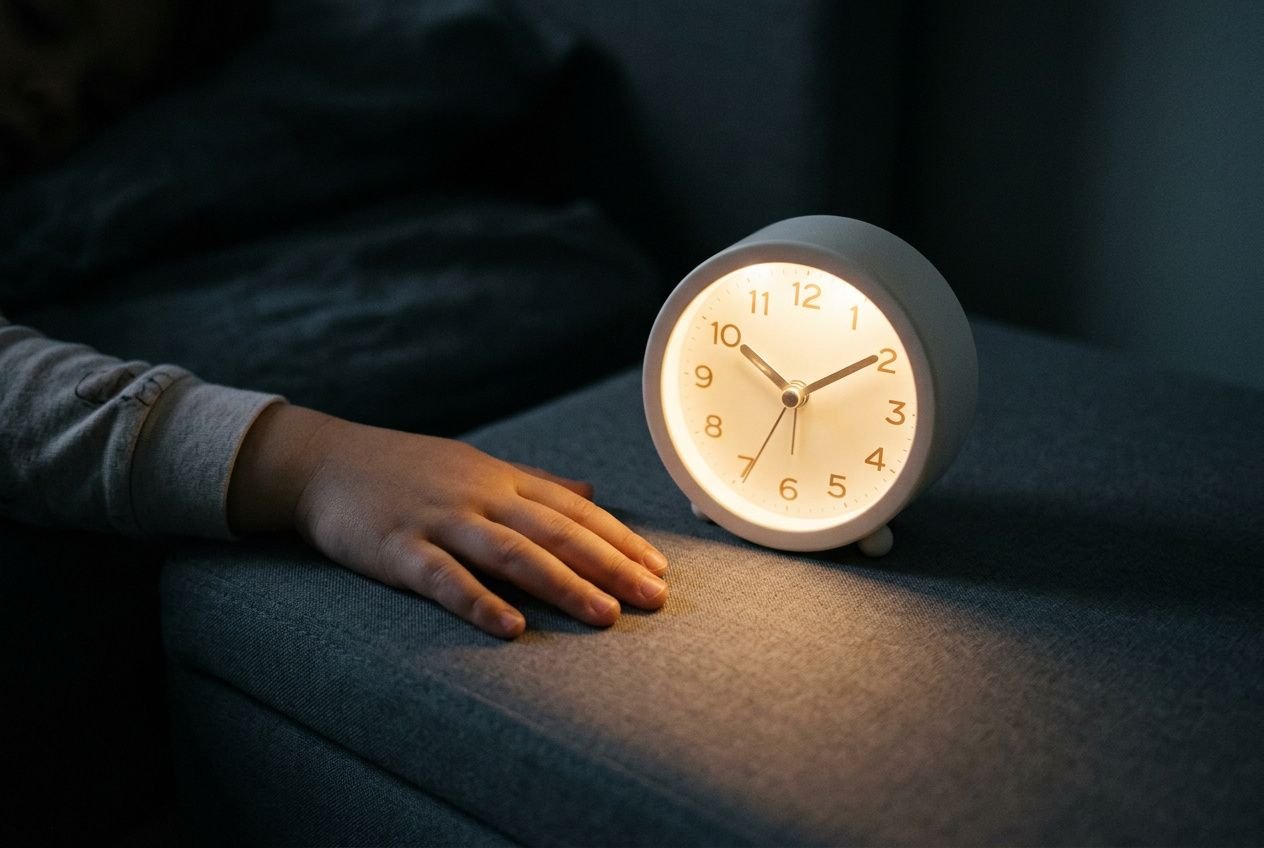
A well-designed kids alarm clock with light combines a clear sleep signal, a recognizable morning cue, and a nightlight that does not interfere with rest. For toddlers, visual cues are particularly useful because they require no reading, number recognition, or parental reminder.
- Face-based signals A sleeping expression on the clock face shows a toddler that it is still night. At the programmed time, an alert, friendly face provides a clear green light to start the morning independently.
- Dimmable nightlight A nightlight that dims almost completely keeps the room dark during sleep hours. You do not need to switch off a separate bedside lamp each evening.
- Adjustable alarm sounds A gentle audio cue at wake time, such as a soft melody, a white noise fade-out, or a familiar voice, creates a calmer transition than a sharp electronic alarm.
- App or remote control A parent-facing app lets you adjust brightness, alarm times, and sound settings from outside the room. You can adjust the settings without entering the room, so your child is not woken by the door opening or by small fingers pressing buttons.
REMI demonstrates this approach through its closed-eyed face during sleep hours and its open, alert expression at wake time. The device feels less like a rule and more like a familiar companion during the night. Parents manage schedules through the app without entering the room. This is particularly helpful during the early weeks of sleep training. Consistency matters most then.
Comparing clock features for children
When parents look for the best kids alarm clock with light, they find everything from basic color-change devices to connected systems with weekly scheduling and sleep tracking. The table shows which combination fits a toddler, a preschooler, and a school-age child.
A color-change alarm without sound may suit a light sleeper but fail to wake a heavier sleeper. A durable choice should offer enough flexibility to remain useful as the child grows, rather than becoming obsolete after the toddler years.
| Feature | Basic model | Mid-range model | Connected model (e.g. REMI) |
| Visual wake signal | Color change only | Color + icon (sun/moon) | Expressive face + color sequence |
| Nightlight dimming | Fixed low brightness | A few brightness levels | 0 to full intensity, app-controlled |
| Alarm sounds | Preset tones only | Built-in lullabies | Lullabies, custom MP3, Bluetooth |
| Scheduling | Single daily alarm | Weekday/weekend | Named alarms, per-day repeat settings |
| Remote control | None | None | Full smartphone app management |
| Long-term use | Toddler years only | Up to early school age | Birth to age 10 and beyond |
When a digital display helps
A digital display becomes useful when a child can connect numbers with daily events, typically around age five or six. At that age, school schedules create a practical need to check the exact time. Earlier, a face or color signal is usually clearer because a toddler can understand a sleeping or smiling expression without adult explanation.
For school-age children, combining a digital readout with a visual morning signal offers both forms of guidance. REMI can serve as a visual sleep trainer in the early years and later function as a standard digital alarm clock, so children do not need a replacement as they mature.
How an OK-to-wake alarm builds routines
An OK-to-wake alarm clock gives a child a clear, consistent answer to the question that might otherwise bring them to their parents’ bedroom door at five in the morning. By replacing that interruption with a predictable visual signal, the device gradually helps children regulate their mornings.
A kid clock with clear visual cues
A toddler sleep training clock that also works as a nightlight alarm clock and a sound machine meets three needs in one device: it reassures a child in the dark, indicates when sleep time begins, and plays soothing audio during the transition to rest. Combining these functions keeps the room calm and uncluttered, while simplifying the evening routine for parents who would otherwise manage several devices.
Using color for wake-up boundaries
A children’s alarm clock with light and sound provides layered guidance, whether children wake naturally before the alarm or sleep through the initial visual change. The audio cue reaches a deeper sleeper, while the light guides an early riser without a disruptive noise that could wake a sibling. Together, the light and sound signals let siblings share a room without one child’s wake-up disturbing the other.
- Red for sleep time A warm red or amber glow shows that night is still in progress. Paired with a sleeping face on the clock, it creates a message the child learns to recognize without parental explanation.
- Yellow for transition A midpoint color, sometimes appearing thirty minutes before the scheduled wake time, gradually changes the light environment and helps children move toward wakefulness without an abrupt shift.
- Green for morning When a green light appears with a smiling expression, the child understands that they may leave the room. This color-changing night light becomes the visual anchor for the morning routine.
- Sound as backup A gentle melody or soft audio that rises with the morning light gives children who sleep deeply a dependable alarm without startling them or disturbing the household.
REMI supports a full sequence of colors and facial expressions, from a sleeping red-toned face at bedtime to a bright, cheerful expression at the programmed wake time, all managed through its smartphone app. Parents can lock the settings remotely, preventing a curious toddler from disabling the alarm or changing the schedule by pressing buttons.
When children understand the signals
Most families find an OK-to-wake clock most effective around ages two to three, particularly after a child has moved from a crib into a bed without sides and can respond to the cue without adult help. Before this transition, the visual signal has limited impact because the child cannot yet choose independently whether to stay in bed or get up. The device becomes a practical sleep-training tool when mobility and basic cognitive readiness develop together.
Introduce the alarm clock as a character, let your child name it, practice the signals in daylight, and role-play bedtime and morning scenarios before the first real night. After the child has named the clock and practiced the signals, the device becomes a familiar part of the morning routine. When the clock shows a sleeping face, the child stays in bed; when the clock wakes, the child may get up. Reinforced calmly over several weeks, this simple logic gradually turns an external signal into a morning boundary the child follows independently.
Do light alarm clocks wake kids gently
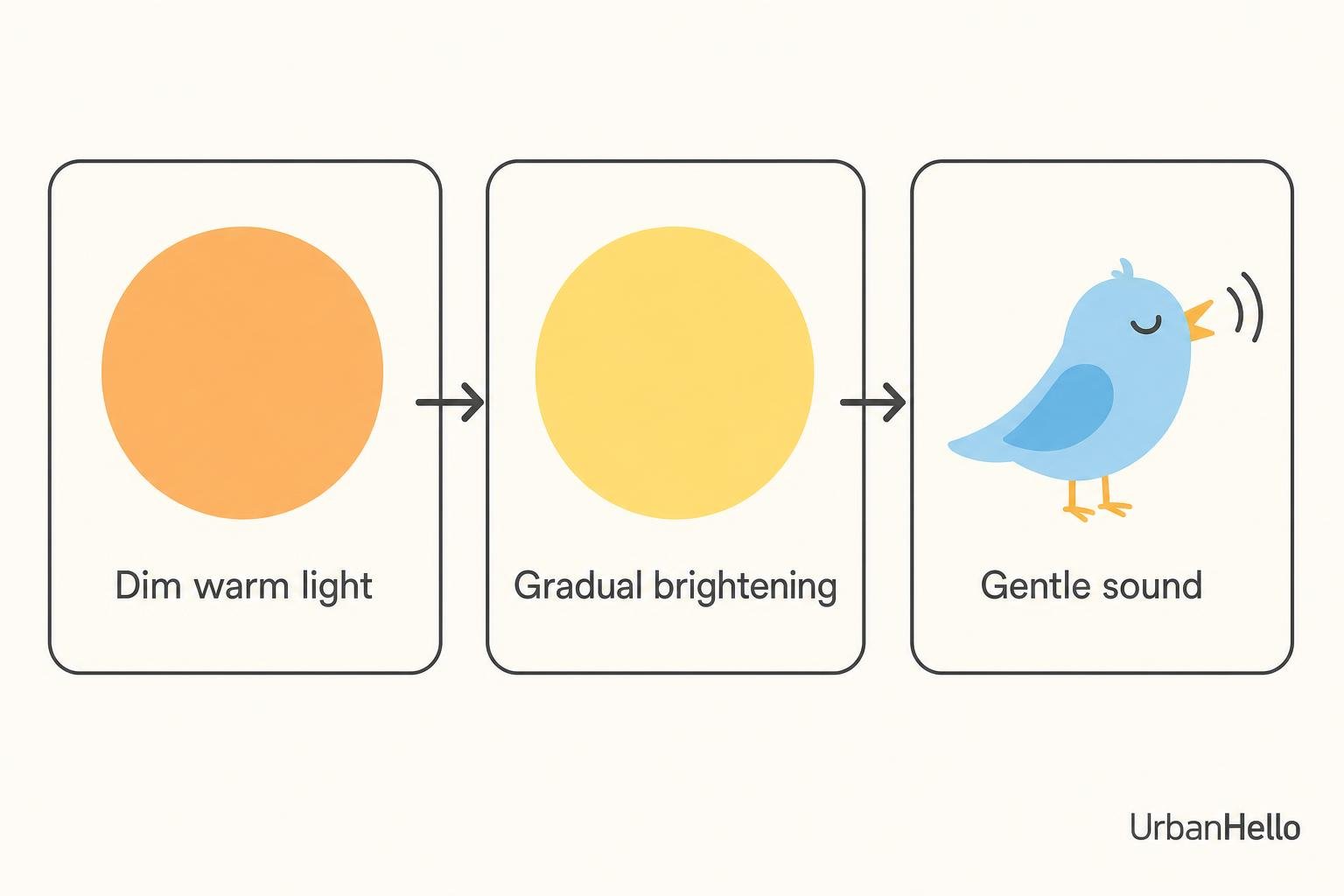
Morning light is more than a visual alarm. It acts as a physiological signal that helps regulate the body’s internal clock. For children, whose circadian rhythms are still developing, a gradual brightening at the programmed wake time can make the transition from sleep to wakefulness feel more natural than an abrupt sound.
Intensity, color temperature, and the speed at which the light rises each shape the child’s response: a slow warm ramp signals dawn, while a fast bright flash feels abrupt.
Sunrise alarm clock benefits
A sunrise alarm clock for children usually begins at a very low intensity, sometimes as low as one percent, then brightens progressively toward full brightness by the scheduled wake time. This gradual pattern resembles dawn and gives the child’s body time to move through lighter sleep stages instead of being pulled abruptly from deep sleep.
A digital kids alarm clock with light and a sunrise simulation can be especially useful on school mornings, when a child must wake at a fixed time regardless of sleep depth.
When the light rises over fifteen to thirty minutes before the alarm time, the body begins preparing for wakefulness. By the time an audio or visual cue arrives, the child may already be in a lighter sleep phase and more receptive to waking, which can reduce the groggy resistance many families experience at the start of the day.
Some sunrise models combine progressive brightening with soft nature sounds or a gentle audio cue at the final wake moment. This uses two sensory channels. For children who sleep lightly, the visual change may be enough; heavier sleepers may benefit from the added audio signal.
REMI’s gradual morning brightening, managed through the app, can begin before the scheduled alarm. The room is therefore gently lit before the child’s display changes from sleeping to awake.
A night light that protects sleep
A nightlight that cannot dim sufficiently may disrupt sleep rather than reassure. Some children respond to even small amounts of light during the night. The most protective settings reduce brightness to near zero during sleep hours. They also turn off the display completely, allowing the room to become genuinely dark.
This control is especially valuable in a shared bedroom, where one child’s nightlight can affect another child’s rest.
- Complete darkness mode A clock whose screen and nightlight can both switch off fully during sleep hours creates a genuinely dark environment instead of a room with a noticeable residual glow.
- Warm LED tones at night A warm amber or red LED tone is less disruptive to melatonin production than bright white or blue light, making color selection an important sleep consideration rather than a purely decorative choice.
- Remote brightness adjustment App-controlled dimming lets parents reduce or eliminate the nightlight without opening the bedroom door after the child has settled.
REMI’s nightlight can be adjusted from zero to maximum brightness through the smartphone app, even after the child has fallen asleep.
This control also supports a gradual wind-down. The light can dim progressively during the evening as part of the bedtime routine, reinforcing the body’s preparation for sleep once the child is in bed.
Choosing warm LED brightness
The color temperature of a nightlight matters as much as its intensity. Blue-toned and bright white light suppress melatonin more strongly than warm amber or red tones, so the warm end of the LED spectrum is preferable for light used during sleep hours.
When choosing a clock for girls or boys with sensitive sleep patterns, consider the nightlight’s color alongside its brightness controls. Some models offer green, blue, purple, and several white tones that can complement bedroom decor.
A warm, dim amber setting at night and brighter colors in the morning create a consistent light environment from dusk to dawn.
In rooms shared by siblings, an overly bright morning cue—even a green light—can wake a child who is still sleeping. Adjustable brightness for the morning signal is therefore as important as nightlight dimming.
A clock with separate settings for sleep and wake modes offers more flexibility than one applying the same brightness everywhere. REMI’s per-alarm volume and brightness controls make this calibration easy to manage through the app, whether you use a clock, a digital alarm, or a digital kids alarm clock with light.
For families comparing a kids alarm clock with light, check whether the device supports a gradual morning brightening, a quiet night setting, and an easy-to-read alarm display.
Sound options for every kid alarm
Sound plays two important roles in a child’s sleep environment. At bedtime, it helps the nervous system settle; at wake time, it signals a new day without creating distress. A kids’ alarm clock that offers calming audio in the evening and a gentle morning signal can reinforce the consistency a healthy bedtime routine requires.
Alarm clock sounds without sudden stress
Parents comparing a kids alarm clock that includes a light on Amazon will find that many standard models offer only a few preset tones, such as simple beeps or short melodies. These sounds may suit some children, but a familiar voice, favorite song, or well-known story can make the morning alarm feel less intrusive, especially for younger children who respond strongly to recognizable audio cues.
At bedtime, the most helpful sounds usually reduce stimulation rather than add to it. White noise creates a steady acoustic backdrop that masks unpredictable household sounds. Lullabies provide a repetitive melody that marks the transition toward sleep, while gentle nature sounds, such as rain or a quiet stream, give the nervous system something neutral to follow. For example, a child who is startled by passing traffic may settle more easily with white noise, while one who needs a clear transition to bedtime may respond better to the same lullaby each night.
- Custom MP3 via USB Parents can load personal recordings, a familiar voice, a favorite bedtime song, or a well-known story onto the clock by USB.
- Bluetooth streaming A clock with Bluetooth speaker functionality allows parents to stream audio from another device.
- Built-in lullaby library Preloaded lullabies provide an immediate option for families who want reliable bedtime audio without configuring an external source. Repeated use can also help a child associate the same melodies with sleep.
REMI supports all three approaches. Built-in lullabies are available from the first evening, Bluetooth streaming connects to a parent’s device, and USB upload allows fully personalized audio to be added directly to the clock. The REMI Store also offers exclusive stories, giving the bedtime routine an expanding library that can remain relevant as a child grows and develops new interests.
Night stories and soothing audio
A consistent bedtime routine lasting between thirty and forty-five minutes gives a child’s body time to prepare for sleep. During this period, a calming story or soothing sound, played at a steady volume and at the same point each evening, becomes a predictable cue.
REMI’s stories and audio remain useful beyond the toddler sleep training phase. During primary school, the same device that once played lullabies can become a story box and Bluetooth speaker, allowing bedtime audio to evolve rather than disappear. On the nightstand, it can become a predictable signal that bedtime is near and that the day is ending.
Does a snooze feature help
A snooze function on a kid alarm can help a school-age child move gradually into wakefulness, but its value depends on how it is controlled. An alarm clock with snooze that allows unlimited delays may weaken the clear morning boundary established during sleep training, particularly if pressing the button effectively cancels the signal. For example, a ten-minute snooze can let a child open their eyes slowly while still keeping breakfast and departure on a predictable track.
For younger children in the toddler sleep training phase, snooze is usually unnecessary and may create uncertainty about when it is truly time to wake. An alarm clock for heavy sleepers often works better with paired light and audio signals: the visual change continues while the sound repeats. As children become more independent, parents can introduce a controlled snooze option gradually, adapting the clock to their developing morning routine.
Why REMI is more than an alarm clock
Most alarm clocks serve one purpose and become obsolete as a child moves beyond the toddler years. REMI is designed to grow with your child, starting as a connected baby monitor during the first months and later supporting sleep training, school-age schedules, and independent morning routines without requiring a replacement device.
From baby monitor to kids' clock
From birth, REMI works as an audio baby monitor. Parents can listen to their child, speak to them, and receive sound alerts on a smartphone from anywhere with an internet connection. Unlike traditional radio-frequency monitors, it is not limited by distance. A parent in another room, on another floor, or even in another building can stay connected to the child's room at night. As children grow, the two-way audio feature naturally becomes a walkie-talkie function they can enjoy using.
- Audio baby monitor (birth to age 2) Remote listening and speaking through the app, together with noise alerts sent to the parent's phone, offer reassurance around the clock without requiring a separate monitoring device beside the bed.
- Sleep trainer and nightlight alarm clock (ages 2–6) The face-based wake signal, dimmable nightlight, color sequence, and scheduled alarms turn REMI into a complete toddler alarm clock. This gives toddlers a predictable daily rhythm without a separate gadget.
- Alarm clock, speaker, and walkie-talkie (age 6 and beyond) As children develop an understanding of abstract time, REMI becomes a standard digital alarm, a Bluetooth speaker for music and stories, and a two-way communication device they can use independently.
This progression, from newborn monitor to school-age alarm clock, explains REMI's long-term value. A single purchase covers the whole path. The three-year warranty, available when REMI is purchased directly from urbanhello.com, supports this extended use with full replacement and repair coverage.
Digital controls for busy parents
Managing a child's sleep schedule manually can demand more attention than busy families have available. Parents may need to adjust the clock each Sunday night, change wake times during school holidays, and prevent a curious child from altering settings before bed. REMI's app places the schedule, alarm sounds, brightness levels, and snooze permissions on the parent's smartphone, where they can be adjusted in seconds at any time.
- Named alarms with individual settings Each alarm can have its own name, sound, volume, and selected days, allowing school mornings and weekends to follow different schedules without weekly readjustment.
- Night Score sleep tracking Each morning, REMI displays a sleep-quality assessment in the app. This gives parents concrete information for identifying patterns and refining routines instead of reacting to one difficult night in isolation.
- Remote brightness and sound control Parents can adjust the nightlight or alarm volume from outside the room after the child is in bed. This avoids disturbing the settling process and supports gradual, consistent dimming each evening.
The weekly scheduler is especially useful when school days and weekends follow different routines. Parents can program a later Saturday and Sunday wake time alongside the Monday-to-Friday school alarm, all within the same device. This removes a recurring source of morning tension while preserving the weekday schedule required for school.
Because REMI runs from a power outlet rather than batteries, its programmed settings remain reliable without the risk of a depleted battery causing silent failure. Parents who have seen a battery-operated clock reset overnight and erase a carefully prepared schedule will recognize the practical benefit. UrbanHello also provides setup guides, customer support, repair services, and replacement covers, cables, and accessories to help maintain the device throughout its usable life.
A connected alarm for every age
REMI combines a face-based sleep signal, gradual morning brightening, personalized audio, remote app control, and functionality spanning birth to age ten. Together, these features create a consistent sleep environment that supports children from their first nights through their first independent mornings. Few single-function devices offer comparable use across such a long developmental period.
If you are looking for one device to support your child's sleep from the earliest months through primary school and beyond, explore REMI at urbanhello.com, including its covers, accessories, and long-term support options. A single purchase, backed by a three-year warranty and continuous software updates, can replace four or five separate devices while adapting to your child at each stage of development.
Frequently asked questions
At what age should a child have an alarm clock?
A toddler alarm clock usually becomes useful between two and three years old, when a child has moved into a bed without sides and can respond independently to a visual wake signal. Before then, children generally need an adult to interpret and apply the cue, which limits the device’s practical value. For younger children, the same device can first serve as an audio baby monitor, as REMI does from birth, before becoming a sleep trainer when the child is developmentally ready to use the signal alone.
Do alarm clocks with light really help children sleep better?
A well-configured light alarm can support a child’s circadian rhythm. Warm, dim light in the evening signals that night is approaching, while a gradual increase in light at the programmed wake time makes the morning transition easier. The nightlight should dim sufficiently during sleep, ideally to zero brightness, so it does not disturb sensitive sleepers. A dimmable, warm-toned light works best when paired with a clear visual wake signal.
What is the difference between a basic OK-to-wake clock and a connected model like REMI?
A basic OK-to-wake clock generally uses a fixed color change—red for sleep and green for morning—with limited scheduling and no remote control. A connected model such as REMI adds a face-based wake signal, which uses familiar expressions rather than color alone. Through its app, parents can schedule named alarms with different settings for each day of the week, adjust the brightness remotely, and track sleep quality with the Night Score feature. It also offers longer-term functions, including a baby monitor, Bluetooth speaker, and walkie-talkie, making it adaptable as the child grows.
Share this article:





Similar posts
Best baby sleep trainer device: top sleep picks for toddler wake time
Find the best baby sleep trainer device with our sleep clock guide. Compare top products, sleep trainer clock features, and toddler wake solutions for restful nights.

How long does 4-month sleep regression last?
Wondering how long the 4-month sleep regression lasts? Most babies recover in 2–6 weeks. Learn causes, coping tips, and when to call your pediatrician.