
Hatch sleep trainer: the hatch baby sound machine review


Choosing a smart sleep trainer for your child means weighing sound quality, light design, scheduling flexibility, and monitoring features. This review examines the Hatch baby sound machine and compares it with REMI, helping you decide which device best supports your family’s bedtime routine.
Hatch sleep trainer product review
The Hatch Baby combines a night light, a sound machine, and a time-to-rise alarm clock in one tabletop unit. Looking at each function closely is the best way to judge whether the device suits your approach to child sleep.
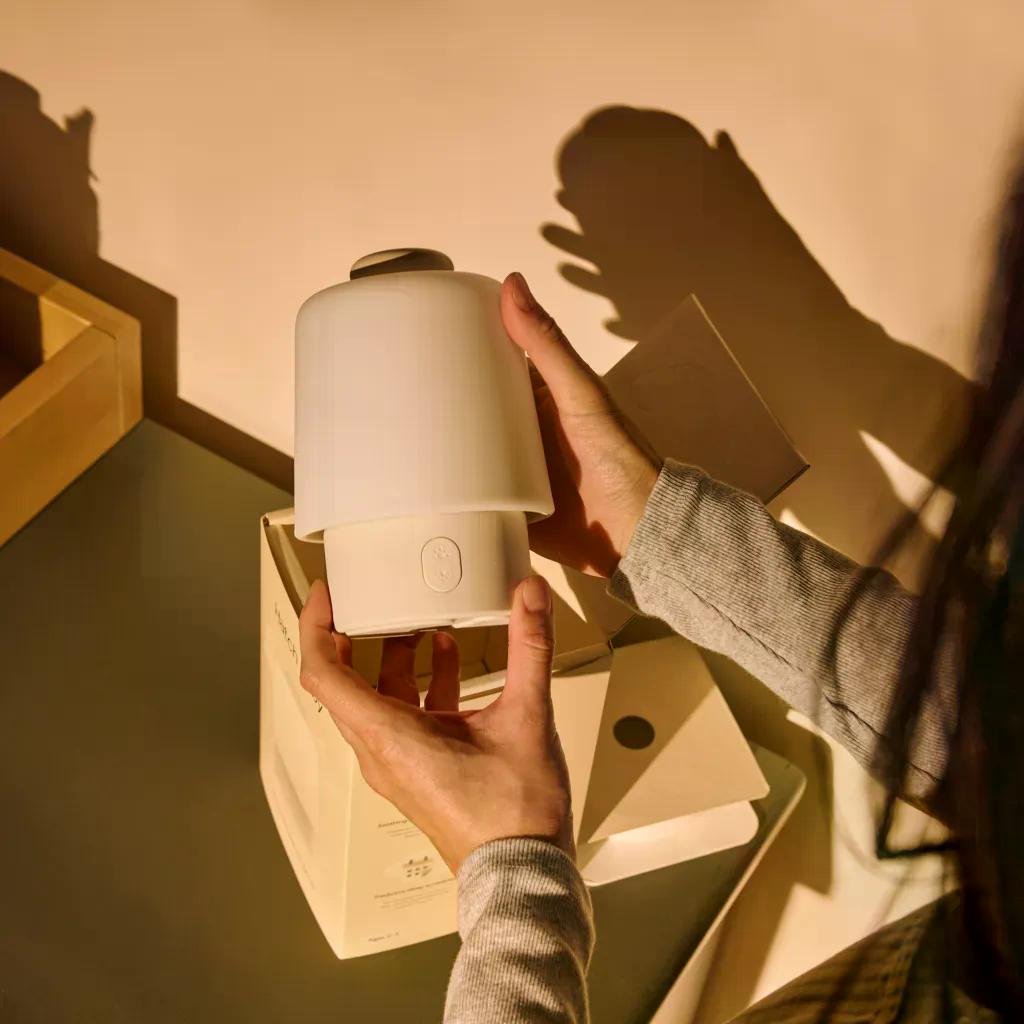
Hatch baby sound and light features
The Hatch baby sound library includes eleven built-in tracks, with white noise, pink noise, heartbeat, rain, lullabies, ocean sounds, and birds. This range accommodates different sensory preferences. Parents using a hatch sleep trainer as part of their child’s bedtime routine can start or pause any track with the physical Big Button, without reaching for a smartphone.
The companion app provides remote volume control and on/off access from another room, allowing discreet adjustments during the night. A no-noise setting is also available for quiet wind-down periods before the light goes out.
The night light offers ten pre-programmed colors and a custom color picker for more precise selection. Light affects melatonin production: warm, long-wavelength shades such as red, orange, and yellow do not suppress this hormone, while blue, green, and broad-spectrum white light can inhibit it. A dim amber or red glow is therefore generally preferable at bedtime and during overnight reassurance.
The app’s dimmer gradually lowers brightness as your child settles, supporting the body’s natural transition toward deeper rest.
Sleep routines and scheduling options
The difference between Hatch models becomes clearest in their power options. Both include green Time-to-Rise and orange Bed Time programs, while the Hatch Baby model adds a backup battery that provides up to eight hours of power. The night light can therefore continue operating during an outage.
Each unit supports up to ten programs, with separate settings for color, sound, volume, brightness, start and end times, and repeat days. Weekend wake adjustments can be made in fifteen-minute increments without rebuilding the entire routine.
- Time-to-rise cue: A pre-loaded green light tells your child when it is acceptable to leave bed, reducing early-morning interruptions without verbal reminders.
- Bedtime program: The dim orange setting eases the move from play to sleep by creating a warm, low-intensity environment before lights-out.
- Toddler lock: This setting prevents a toddler from switching the device off by touch, so the active schedule remains in place through the night.
- Routine builder flexibility: Ten programs allow you to separate weekday and weekend schedules, naps, and seasonal changes in daylight hours.
The Hatch Sleep app, available for iOS 18.6 or later and compatible Android versions, serves as the central schedule hub. Two caregivers can connect to the same device at the same time, which suits households sharing bedtime and early-morning responsibilities. Once saved, programs run automatically and require no nightly manual input.
Hatch baby vs REMI comparison
Both products support structured child sleep through visual cues and audio, but their capabilities differ. Hatch concentrates on a refined sound-and-light experience with extensive customization. REMI adds active overnight monitoring through a WiFi baby monitor with walkie-talkie function, a temperature sensor, and a sleep tracker that produces a Night Score each morning.
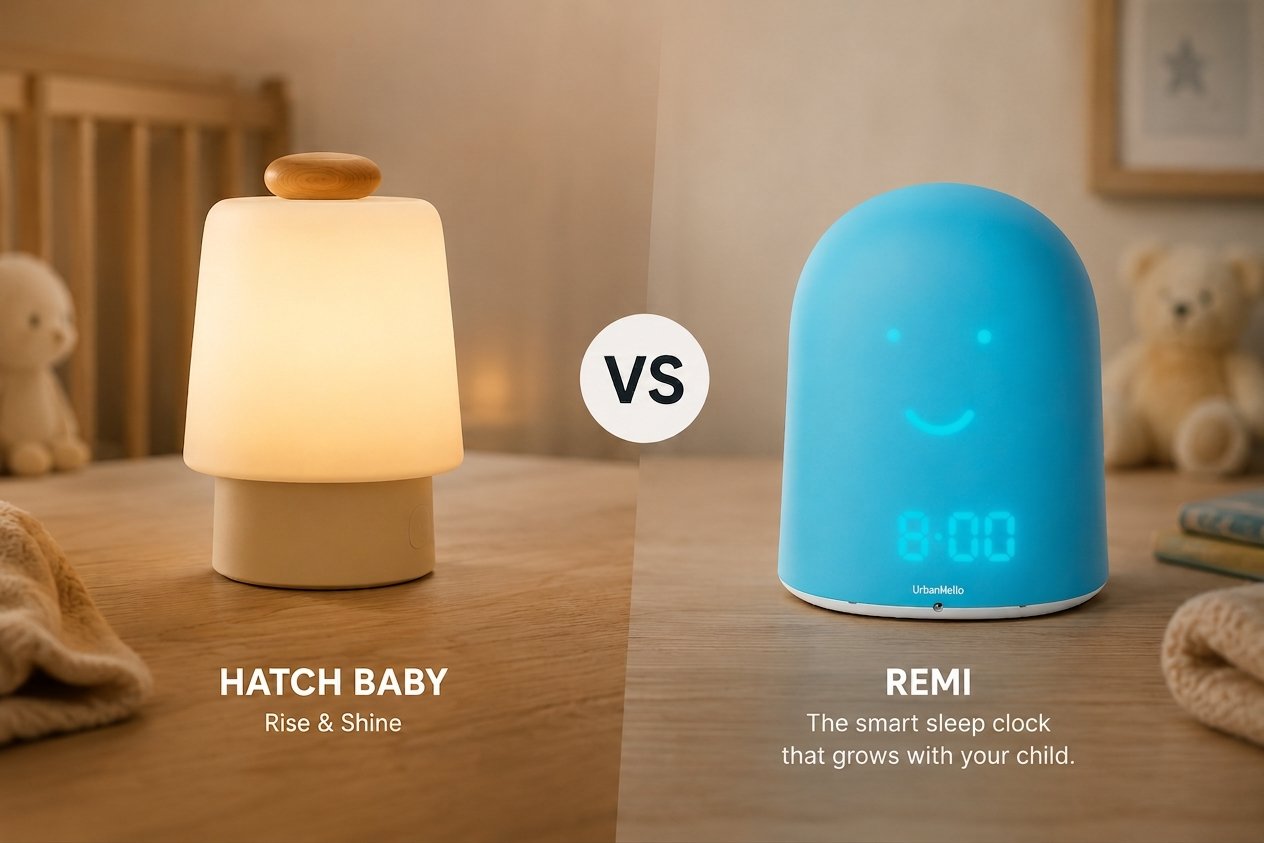
REMI is designed for children from birth to age ten. Its expressive face display communicates sleep and wake signals in a way young children can understand intuitively. According to UrbanHello data, parents using REMI gain an average of 45 extra minutes of sleep per night.
WiFi can also be scheduled to turn off at night while the main functions continue working locally. Based on currently available information, the Hatch range has no direct equivalent to this privacy feature. However, sleep tracking is not included in the Hatch Baby: the device focuses on sound, light, and scheduling, leaving overnight monitoring to dedicated baby monitors or trackers.
| Feature | Hatch Baby | REMI |
| OK-to-wake visual cue | Yes, color-coded light programs | Yes, expressive face display |
| Sound machine | 11 built-in tracks + app library | MP3 upload, lullabies, white noise, REMI Store content |
| Night light | 10 colors + custom picker, dimmer | Adjustable glow to full brightness, app-controlled |
| Scheduling | Up to 10 programs, per-day repeat | Personalized schedule per day of the week |
| Baby monitor | Not included | WiFi monitor + walkie-talkie function |
| Sleep tracking | Not included | Nightly tracking + morning Night Score |
| Temperature sensor | Not included | Included |
| Bluetooth speaker | Not included | Included |
| Story Box | Not included | Connected to the REMI Store |
| WiFi-off mode | Not included | Programmable; core functions work offline |
| Age range | Infant through preschool | Birth to 10 years |
| Backup battery | Included (up to 8 hours) | No backup battery |
Choosing a sleep companion
The most suitable device is the one whose functions your household will use consistently. If you want a refined white noise sound machine with precise light programming, Hatch offers a polished and well-tested experience. If you prefer one device that also tracks sleeping patterns, monitors room temperature, supports two-way audio, play bedtime, entertainement or learning stories and pairs with your phone as a Bluetooth speaker, REMI brings those functions together.
Neither product replaces advice from a sleep consultant when sleep routines are significantly disrupted.
- Sound-first families: The Hatch baby sound library and physical Big Button simplify audio control, particularly for parents who prefer limited app use during the night.
- Monitoring-focused parents: REMI’s baby monitor, temperature sensor, and Night Score suit caregivers who want overnight data alongside visual wake cues.
- Long-term use: REMI’s age range, from birth to ten years, may reduce the likelihood of outgrowing the device during early childhood and supports use across developmental stages.
The Hatch sleep clock approach and a device such as REMI reflect different priorities: curated sensory programming on one side, and integrated monitoring on the other. Consider your child’s age, your level of overnight involvement, and the functions you will use regularly.
Whichever option you choose, a stable bedtime schedule and a consistent routine remain central to lasting progress in child sleep. The goal is a calmer bedtime and a more predictable wake-up, supported by a device that fits your family’s everyday reality. This approach with a Hatch sleep trainer can include a night light, a baby sound machine, a white noise sound machine, and an alarm clock, while preserving the rest needed for healthy sleeping.
Frequently asked questions
Is Hatch baby sleep support worth the subscription cost?
The Hatch baby sleep support subscription includes three months of full access at no additional cost. During this period, parents receive one-to-one chat with certified sleep consultants, baby sleep guides, and premium stories and songs that can make the bedtime transition more predictable. Afterward, the core functions remain available without renewal, including the lights, basic sound machine, and time-to-rise cues. The paid plan mainly benefits families seeking continued access to expanded audio content and direct professional guidance. Its value therefore depends on how often you use those resources after the first three months.
Does a white noise machine or white noise sound machine improve a child's sleep?
A white noise sound machine can mask sudden environmental sounds, such as traffic, household noise, and voices, that may interrupt light sleep cycles and make it harder for a child to reach deeper rest. A continuous, consistent signal also creates a familiar auditory setting, which many infants begin to associate with sleeping during the early weeks of life. Both a white noise machine and broader sound libraries, including those from Hatch and REMI, let parents identify the sound their child tolerates most consistently. For safety and effectiveness, place the device at least three feet from the sleeping area and keep the volume moderate throughout the night.
What is the best OK-to-wake device for a Toddler?
The best OK-to-wake device for a toddler depends on the depth of support your family needs. Both Hatch Baby and REMI offer the same essential functions: a programmable alarm clock with color-coded wake and bedtime cues, a multicolor night light, and an integrated sound machine controlled through the app.
Where the two devices truly diverge, however, is in the emotional quality of the night-time presence they offer. Hatch communicates through a simple colored light: a functional cue, but one that remains abstract and does not personify the device.
REMI, by contrast, uses an expressive face display that conveys sleep and wake signals through recognizable emotions. This small change has a significant effect on attachment: many children develop a genuine bond with REMI, much like the one they form with a comfort object or a doudou. The face makes the device feel alive and responsive, so a toddler is more likely to accept it as a reassuring presence throughout the night. A child who trusts the device in this way tends to settle more easily, knowing that the companion watching over the room is familiar and kind.
Recommended products
Share this article:





Similar posts

Find a baby sleep trainer for your infant or toddler
Looking for a sleep trainer? Our experts specialize in baby, infant, and toddler sleep training. Explore methods, packages, and book your consultation today!
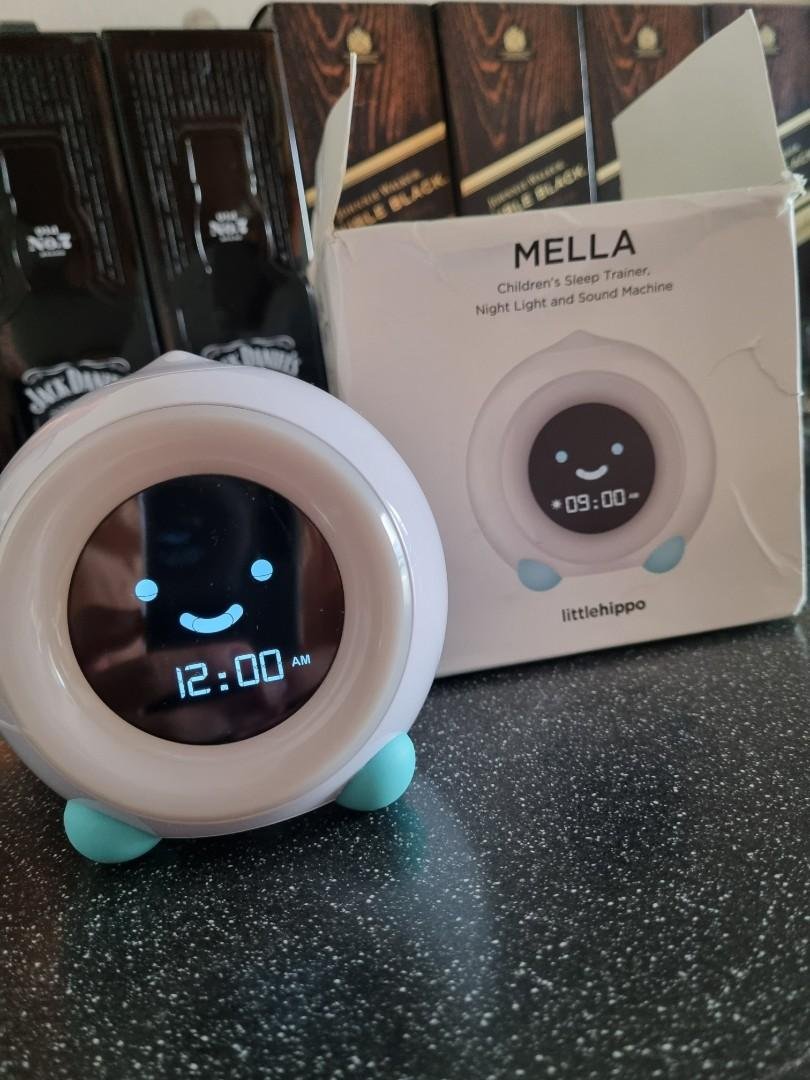
LittleHippo Mella: the ready-to-rise sleep trainer clock for kids
Discover the Mella sleep trainer clock by LittleHippo. Ready to rise features, sleep sounds & night light in one. Buy Mella now and help your child sleep longer!