
How to help an anxious child sleep: calming bedtime tips


Helping an anxious child sleep starts with understanding that worry and rest affect each other, and that both can be eased in steps. This guide covers how to build a calming routine, how to answer bedtime fears without making them bigger, how to support a child who resists sleeping alone, and when to ask a professional for help. Along the way, we show where REMI can fit into your evenings.
Build a calming bedtime routine
An anxious child often settles more easily when evenings follow a familiar pattern. Predictable routines tell the body that sleep is coming. They also cut down on surprises that can add to child stress. Three things support that sense of safety: a steady schedule, a reassuring bedroom, and quiet stories or sounds.

Keep the schedule predictable
Your child's bedtime and wake time should stay reasonably consistent, weekends included. The American Academy of Sleep Medicine recommends 10–13 hours of sleep per 24 hours for ages 3–5 and 9–12 hours for ages 6–12. For teenagers aged 13–18, it recommends 8–10 hours. The schedule you set should leave enough time in bed to reach that range.
Within that schedule, the American Academy of Pediatrics suggests a simple, repeatable sequence: brush, book, bed. Homework, active play and difficult conversations belong before this final wind-down. Consistency appears to help. In a 3-week randomized trial involving 405 mother-child pairs, introducing a consistent bedtime routine improved sleep onset, night waking and sleep continuity in children aged 7–36 months.
Make the sleep space reassuring
The American Academy of Pediatrics advises putting screens away 30–60 minutes before lights-out, and at least 1 hour before for teens. Blue light is not the only concern, because exciting or upsetting content can also keep a nervous mind active. Fear of the dark calls for a different adjustment. The AAP suggests a nightlight in the hallway near the bedroom door, which offers comfort while keeping the bedroom itself dim.
Brightness matters too. A 2026 laboratory study of children's nightlights measured 25 models across 79 settings and found large differences in light output. The lowest levels came mainly from red-appearing light or the dimmest setting, and placing the light farther from the bed reduced exposure. REMI's nightlight gives a soft glow, and you can adjust its brightness in the app to suit your child.
Use stories and sounds to wind down
Reading together can become a calming signal that sleep is near. The American Academy of Pediatrics recommends reading as part of the bedtime routine. It also notes that 15 minutes a day of reading aloud supports language and social-emotional development. REMI can play lullabies and children's audio stories from the REMI Store, including bedtime stories and relaxing meditation tales. You can also upload songs, stories or white noise by USB.
Any audio should stay soft and short. A 2024 review of 13 pediatric studies involving 9,428 participants found that some commercial white-noise machines went above 91 dB at maximum volume. The authors advised limiting both volume and duration, so a low setting that fades out after a while follows that advice.
Respond to bedtime worries with calm
Bedtime is often when worries come to the surface, because the day has gone quiet and there is nothing left to distract from them. How you answer these fears shapes whether they settle or grow. Three tools help here: short, clear reassurance, a set time for worries earlier in the evening, and a few coping skills your child has already practiced.

Ask about the fear and reassure briefly
When a child with anxiety can't sleep, darkness is not always the cause. Your child may be afraid of a bad dream, worried about your safety, scared of an intruder, or uneasy about an unfamiliar feeling in their body. A gentle question about what feels frightening tells you which fear you are actually dealing with.
Once you know the fear, helping a child with sleep anxiety follows four steps: acknowledge the feeling, reassure them briefly about the present moment, prompt a coping skill they know, and return to the bedtime plan. Answering the same safety question again and again can turn reassurance into part of the routine. A calm voice works better than teasing or demands to "be brave." The American Academy of Pediatrics favors supportive, gradual approaches when fears are significant.
Give worries an earlier time
A 15-minute worry period, held before the final wind-down, gives concerns a place outside the bedroom. During this time your child writes or draws what bothers them, then closes the notebook or worry box. Problems that can be solved wait until tomorrow, which leaves bedtime for rest.
The worry period also lets you look at a thought together while your child is calm. You can weigh the evidence for and against an anxious idea, then look for a more accurate way to see it. If the worry is realistic, a practical plan reassures more than promising the feared event will never happen.
Practice simple coping techniques
Coping strategies work best when they are rehearsed during the day, so they feel familiar once evening worries begin. Slow, comfortable breathing is a good place to start. There is no set counting formula to follow, and practice should stop if your child feels dizzy. Other techniques give the mind something concrete to focus on:
- The 3-3-3 exercise: your child names 3 things they see and 3 things they hear, then moves 3 body parts.
- Progressive muscle relaxation: your child tenses a group of muscles, then lets it go, working through the body.
- Calming imagery: your child pictures a peaceful place in detail.
Each of these brings attention back to the present moment instead of imagined future events. They are in-the-moment coping tools that support emotional regulation. They do not treat an anxiety disorder.
Handle sleeping alone and nighttime fears
Many anxious children find the moment a parent leaves the room the hardest part of the night. Others sleep well at first and then wake up frightened. Both situations improve with patience, gradual steps and a response your child can predict.
Build confidence with gradual steps
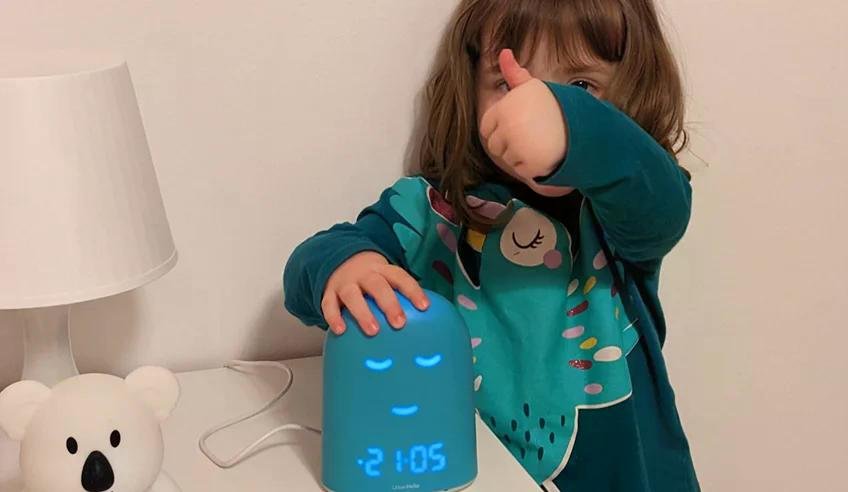
When a child is not sleeping due to anxiety, staying with them until they fall asleep can bring quick relief. Over time, though, this avoidance can strengthen the fear. Small, supported steps toward falling asleep in their own bed help your child build confidence. This home practice is a supportive change in habits, not formal exposure therapy. One optional chair-fading timetable looks like this:
- Nights 1–3: you sit beside the bed.
- Nights 4–6: you move your chair farther from the bed.
- Nights 7–9: you sit near the doorway.
The timetable is only an example, not a medical requirement. Short, predictable check-ins can replace staying in the room, with the time between visits growing longer as nights go on.
If you are wondering how to help your anxious child sleep at night without turning bedtime into a battle, the pace is what matters. Slow down if your child becomes more distressed. Praise the effort and each small step, rather than expecting a perfect night.
Respond calmly when your child wakes
Children may naturally wake 2–3 times a night. Learning to fall asleep on their own at bedtime can also make it easier to settle again after these ordinary wakings. When your child wakes up frightened, first check for illness, pain, a need for the bathroom, being too hot or cold, a nightmare, or breathing trouble. If no physical need comes up, keep your visit brief and quiet, and do not start the whole routine again.
Nightmares need a slightly different response. The American Academy of Pediatrics recommends going to your child and reassuring them, letting them describe the dream if they want to, and reminding them that dreams are not real. Then encourage them gently to go back to sleep.
Use consistent sleep and wake cues
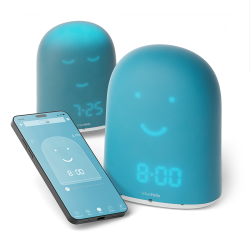
A clear visual signal can answer the question "Is it time to get up?" without anyone needing to speak. REMI's sleeping face shows that it is time to sleep, and its awake face shows that it is okay to get up. You can set bedtime and wake time for each day of the week, so the ok-to-wake clock's sleep and wake cues follow your family's schedule.
REMI's Wi-Fi baby monitor lets you listen to your child from another room and sends you noise alerts. You can check how your child is doing without turning every ordinary waking into a long visit.
The walkie-talkie feature lets you say a few calm words to your child remotely. To use the app, REMI needs to be set up on Wi-Fi, and the device must stay plugged into a power outlet.
Recommended products
Know when bedtime anxiety needs more help
Home strategies help many families, but some bedtime fears point to something that needs professional attention. Knowing the warning signs lets you act early. A doctor can also explain what support is available.
Notice persistent or disruptive symptoms
Child anxiety and sleep problems call for a pediatrician's opinion when bedtime anxiety continues, gets worse, keeps preventing sleep, or affects school, activities, friendships or family life. The National Institute of Mental Health advises an evaluation when symptoms last for weeks or months and interfere with daily life. Other signs are also worth raising with a clinician:
- Physical symptoms: frequent headaches or stomachaches with no clear cause.
- Behavior: constant need for reassurance, or avoiding school.
- Separation: refusing to sleep alone along with fears of being apart from you. Wanting a parent nearby does not, on its own, mean an anxiety disorder.
Breathing signs need a different kind of check. Loud or frequent snoring, gasping, choking or pauses in breathing call for a medical evaluation, rather than assuming anxiety is behind every waking.
Ask about assessment and treatment
A pediatrician can look into ongoing trouble falling or staying asleep and tell you whether a sleep specialist or a mental health specialist, such as a therapist, is needed. The American Academy of Child & Adolescent Psychiatry identifies cognitive behavioral therapy as an evidence-based first-line psychotherapy for mild anxiety disorders in children. Calming bedtime tools do not replace individualized treatment when anxiety is impairing.
If your child expresses suicidal thoughts, mentions self-harm, or is in immediate danger, seek urgent crisis or emergency help right away. This is not a bedtime-routine problem.
Use sleep tracking as context
A sleep log of bedtime, wake time and night wakings over several nights helps you and your pediatrician spot patterns, alongside how your child does during the day. Consumer trackers give estimates, not diagnoses. A 2024 validation study of 137 children aged 8–16 found 91.8% average sensitivity for detecting sleep but only 63.8% specificity. Accuracy depended on the algorithm and where the device was worn.
REMI tracks sleep patterns and shows a Night Score each morning. It is best used to notice trends, never as a new bedtime goal for an anxious child. Urban Hello offers REMI, the smart sleep companion, which also works as a nightlight, story player, baby monitor, walkie-talkie, Bluetooth speaker and alarm clock from birth through age 10.
Choosing REMI for calmer nights
An anxious child sleeps better with a steady routine, short and warm reassurance, practiced coping skills and gradual steps toward independence. REMI supports each of these. Its sleeping and awake faces turn the clock into a trusted companion that watches over your child's nights. Its dimmable nightlight and soothing stories help with winding down. Through the app you can listen or talk to your child from anywhere and get noise alerts.
REMI also grows with your child, from baby monitor and ok-to-wake clock to sleep tracker, walkie-talkie, story player, Bluetooth speaker and classic alarm clock, so it stays useful until age 10 and beyond. Urban Hello recommends connecting REMI to your home Wi-Fi, setting sleep times in the app, and using it every day to keep bedtime calm. Bring REMI home and give your child a reassuring companion for every night.
Frequently Asked Questions
Acknowledge the fear, reassure your child briefly about the present moment, prompt a coping skill they know, and return to the bedtime plan. If no physical need requires attention, avoid long talks, play, television or snacks. After a nightmare, a light may be reasonable if it helps your child feel safer.
The American Academy of Pediatrics advises talking about melatonin with your child's pediatrician and not using it in place of healthy sleep routines. Its long-term safety in children is still uncertain, so it is not a routine treatment for bedtime anxiety.
According to the American Academy of Pediatrics, moving bedtime 15–20 minutes earlier can sometimes help an overtired child.
Share this article:





Similar posts
Nightmares in 8-year-olds: causes and how to comfort
Why nightmares in children occur at age 8, how to soothe a bad dream and when to seek help, with REMI's nightlight and stories for a calm bedtime.
Toddler bedtime routine tips: steps, schedule and REMI
Learn how to create a bedtime routine for toddlers that calms evenings, eases bedtime battles and uses REMI's nightlight, stories and OK-to-wake clock.