
Nightmares in 8-year-olds: causes and how to comfort


Nightmares in 8-year-olds are common, and they can still leave a whole household tired the next morning. This guide explains why your child may wake up frightened, how to tell a nightmare from a night terror, how to comfort them and make bedtime calmer, and which signs mean it is time to see a pediatrician.
Why does my 8-year-old have nightmares?
A nightmare is not a sign that something has gone wrong. Dreams are a normal part of sleep, and some of them simply turn frightening. Before looking at causes, it helps to know what you are seeing at night, because a nightmare and a night terror call for different responses.
How to recognize a nightmare
A nightmare is a frightening dream that wakes your child. At 8, a child is usually responsive afterward, can often remember the dream and generally accepts comfort. They may know the dream was not real and still feel scared for several minutes.
The story may involve a monster, a chase or a fall. Those images say little about what triggered the dream. Watch instead for these signs after waking:
- Tears: crying soon after waking up.
- Looking for a parent: calling out for you or coming to your room.
- Asking for light: wanting a lamp on or the door left open.
- Trouble falling back asleep: lying awake for a while, still alert.
Bad dreams are not limited to the preschool years. A 2023 systematic review of nightmare prevalence found nightmares throughout childhood and adolescence, with a peak around ages 10–14. Your 8-year-old is still well within the years when nightmares are common.
How night terrors differ
A night terror is an incomplete arousal from deep non-REM sleep, the non-dreaming phase that dominates early in the night. Night terrors therefore tend to happen sooner after bedtime. Nightmares come more often in the second half of the night, when REM (dreaming) sleep lasts longer. Timing alone cannot tell you which one it was, though.
During a night terror, your child may scream, stare, sweat or thrash without fully waking. They may not recognize you and usually remember little the next day. Night terrors are more common in younger children, but an 8-year-old can still have one. Stay calm, keep them from getting hurt, and do not force them awake or try to reason with them.
Possible causes of bad dreams
Stress and anxiety are among the usual contributors. That can include conflict at school, bullying, worries about friends, changes at home, or an upsetting or traumatic event. None of these can be identified as the cause of a particular dream from its content alone.
Other possible triggers include frightening movies, games, books or news, illness or fever, a newly started medication, and too little or irregular sleep. Children with ADHD may report more nightmares, but research does not show that ADHD itself causes them. Anxiety, disrupted sleep and medication effects may overlap in these children.
How can I comfort my child after a nightmare?
When your child wakes up afraid, the goal is simple: help them feel safe and then let sleep return. Whatever your parenting style, a calm and short response usually works better than a long conversation in the middle of the night.
Help them feel awake and safe
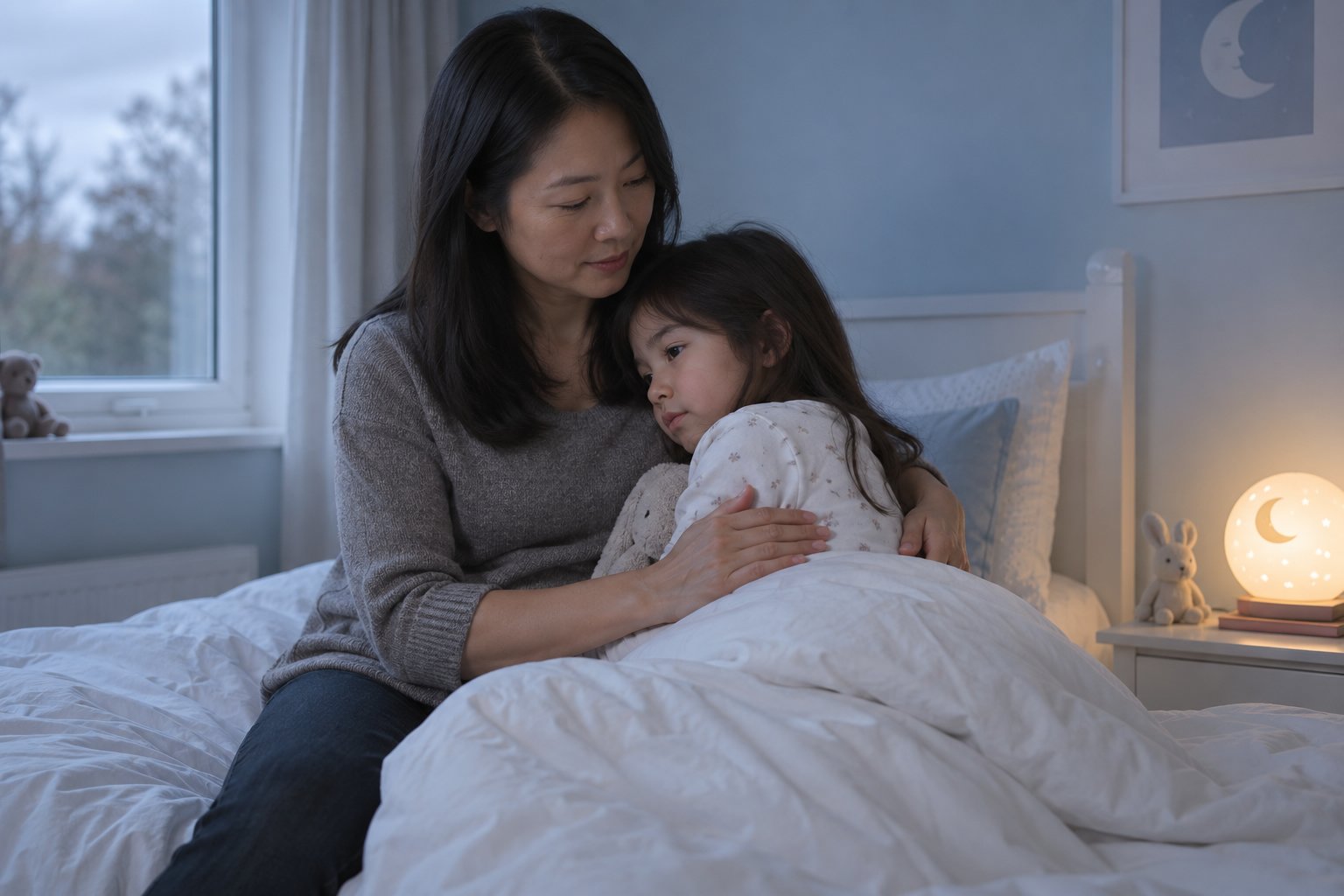
Go to your child promptly and keep your voice calm. Your steady presence helps them understand that they are awake and safe in their room. Explain that it was a dream and that it is not happening now. Do not argue about the details while they are still upset.
Some children want to describe the dream right away and others do not. Let your child decide. Listening is enough, and pressing them to tell the whole story can bring the fear back.
Offer comfort without prolonging the scare
If your child wants a hug, offer it, and stay until they settle. There is no universal medical rule against staying with them or letting them sleep in your bed after a nightmare. If a shadow or an unfamiliar object is scaring them, deal with that specific thing. Avoid turning it into a long search for an imaginary threat.
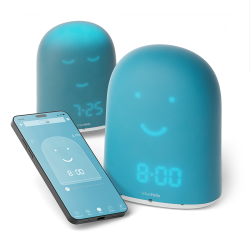
A favorite stuffed animal, an open door or a nightlight can help. The American Academy of Pediatrics says a light can stay on after a nightmare if it makes your child feel better. A 2026 laboratory study of 25 nightlights across 79 settings found large differences in brightness and light spectrum. It measured light output, not whether children had fewer nightmares, so keep the light dim and away from the pillow. The REMI nightlight can be adjusted in the app from a faint glow to a brighter light.
Ease the return to sleep
Once your child is calm, guide them back to sleep instead of turning the waking into a long nighttime activity. If the dream seems linked to a real upsetting event, save the full conversation for the daytime, when your child is fully awake and better able to talk about it.
A baby monitor can help you hear a child who wakes up crying. The REMI sleep companion's Wi-Fi monitor lets you listen in, talk to your child remotely and receive noise alerts. After a nightmare, though, going to your child in person is still the most reassuring response.
Recommended products
How can bedtime become calmer?
A calm evening will not prevent every nightmare, but it gives your child a steady base for the night. Three things matter most: a predictable routine, gentle activities before bed, and a daytime way to deal with a dream that keeps coming back.
Keep sleep routines predictable
The American Academy of Sleep Medicine recommends 9–12 hours of sleep per 24 hours for children ages 6–12, which includes 8-year-olds. Regular bedtimes and wake times help your child get enough of it. The American Academy of Pediatrics suggests a simple order: brush teeth, read a book, go to bed.
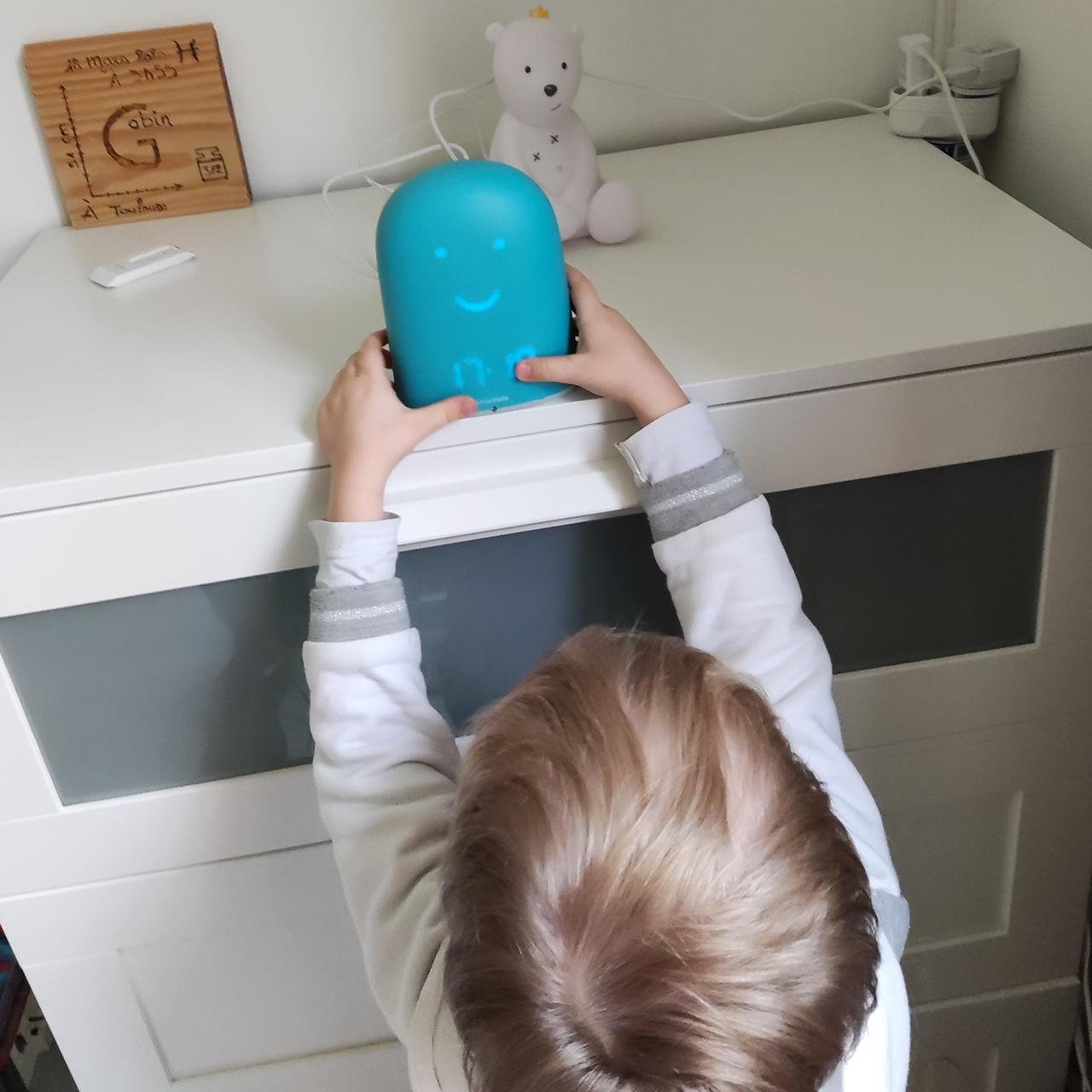
REMI's face looks asleep when it is time to stay in bed and awake when your child can get up. Through the REMI smart kids alarm clock app, you can schedule its light, sounds and face for each day of the week, so school days and weekends each keep their own rhythm.
Choose calming evening activities
Ask about your child's worries during the day, when they are relaxed. A dream does not show exactly what is bothering them, but a quiet conversation in the afternoon often will.
If nightmares started after a scary movie, a game, a story or a news report, keep that kind of content out of the hour before bed. Then see whether the pattern changes over the next few weeks.
Reading or listening to stories can make bedtime enjoyable, although stories have not been shown to prevent nightmares. Urban Hello offers built-in lullabies and audio stories for REMI. Through REMI's bedtime story box, families can also transfer their own recordings by USB.
Address nightmares that recur
When the same nightmare keeps coming back, your child can talk about it, draw it or make up a less frightening ending during the day. In a 2009 randomized study of 20 children ages 9–11, this kind of imagery rehearsal reduced nightmare frequency, and the benefit lasted nine months. Those children were older than 8. A small study of children ages 6–11 found less distress and anxiety after three sessions over eight weeks. When a child is very distressed, these exercises are not a substitute for professional help.
When should I seek professional help?
Most nightmares fade without any treatment. Some patterns do deserve a medical opinion, and knowing them ahead of time can help you decide when to call. What counts most is how much the nights are affecting your child's days.
Watch for persistent distress
Contact your pediatrician if nightmares are frequent, persistent or getting worse, or if they keep interrupting sleep or make your child afraid of bedtime. The same applies when they start to affect mood, school, activities or family life.
The ICSD-3-TR, the international classification of sleep disorders, focuses on persistent distress or impairment rather than a fixed number of nightmares per week. A child mental-health evaluation is worth considering when nightmares come with:
- Lasting anxiety: worries that continue well beyond bedtime.
- Withdrawal or mood changes: pulling away from others, or a clear shift in behavior.
- Daytime struggles: falling behind at school or other significant difficulty during the day.
Recognize other warning signs
After a distressing event, watch for recurring nightmares together with persistent fear, avoidance, intrusive memories, behavior changes or ongoing sleep problems. That combination deserves professional attention, even though a nightmare on its own does not mean trauma. Also tell your pediatrician about injuries, dangerous sleepwalking, unusual movements, or episodes that do not look like a typical nightmare or night terror.
Breathing deserves its own attention. Regular snoring, mouth breathing, pauses in breathing or gasping, frequent waking and daytime sleepiness can be signs of sleep apnea. The National Heart, Lung, and Blood Institute identifies ages 2–8 as a period when pediatric sleep apnea is especially common.
Bring useful observations to the visit
When nighttime episodes keep happening, your pediatrician may ask for a sleep log. Note what time each episode starts and how your child behaves afterward. A sleep tracker can also help you spot changes in sleep duration or bedtime consistency, but its sleep-stage graphs cannot diagnose nightmares, night terrors or any other sleep disorder.
We designed REMI to stay useful through age 10. Its sleeping or awake face watches over the night, and you can listen, talk and receive noise alerts from anywhere. REMI also tracks sleep, plays stories, and works as a walkie-talkie, Bluetooth speaker and regular alarm clock. If those features fit your family, you can order REMI from Urban Hello today.
Frequently Asked Questions
Children with ADHD may report more nightmares, but research does not show that ADHD itself causes them. Anxiety, disrupted sleep and medication effects may overlap. Trauma-related sleep problems can also come with restlessness or trouble paying attention, so a nightmare should not automatically be treated as an ADHD symptom.
An occasional nightmare does not, by itself, point to a mental-health disorder or trauma. A 2022 meta-analysis linked childhood maltreatment to higher odds of nightmares (odds ratio 3.15; 95% CI 2.38–4.18), but nightmares do not prove maltreatment. Seek help when recurring nightmares come with persistent fear, avoidance, intrusive memories or behavior changes.
There is no single reliable percentage for this age. A 2023 systematic review found that estimates vary widely depending on how nightmares are defined and measured, which children are studied, and the recall period used.
Share this article: