
Best children clock: kids wall clock for teaching time


Choosing the right clock for your child's room means balancing readability, learning support, and a consistent sleep routine. This guide compares children's clocks, from analog teaching models and wall clock designs to smart sleep trainers, so you can choose one that suits your child's age and daily needs.
Choosing a children's clock
A clock in a child's room serves two purposes: it helps children learn to read time and supports daily rhythms such as bedtime and morning wake-up. The best choice depends on your child's age, developmental stage, and whether the clock will hang on a wall or sit beside the bed.
Learning time with an analog clock
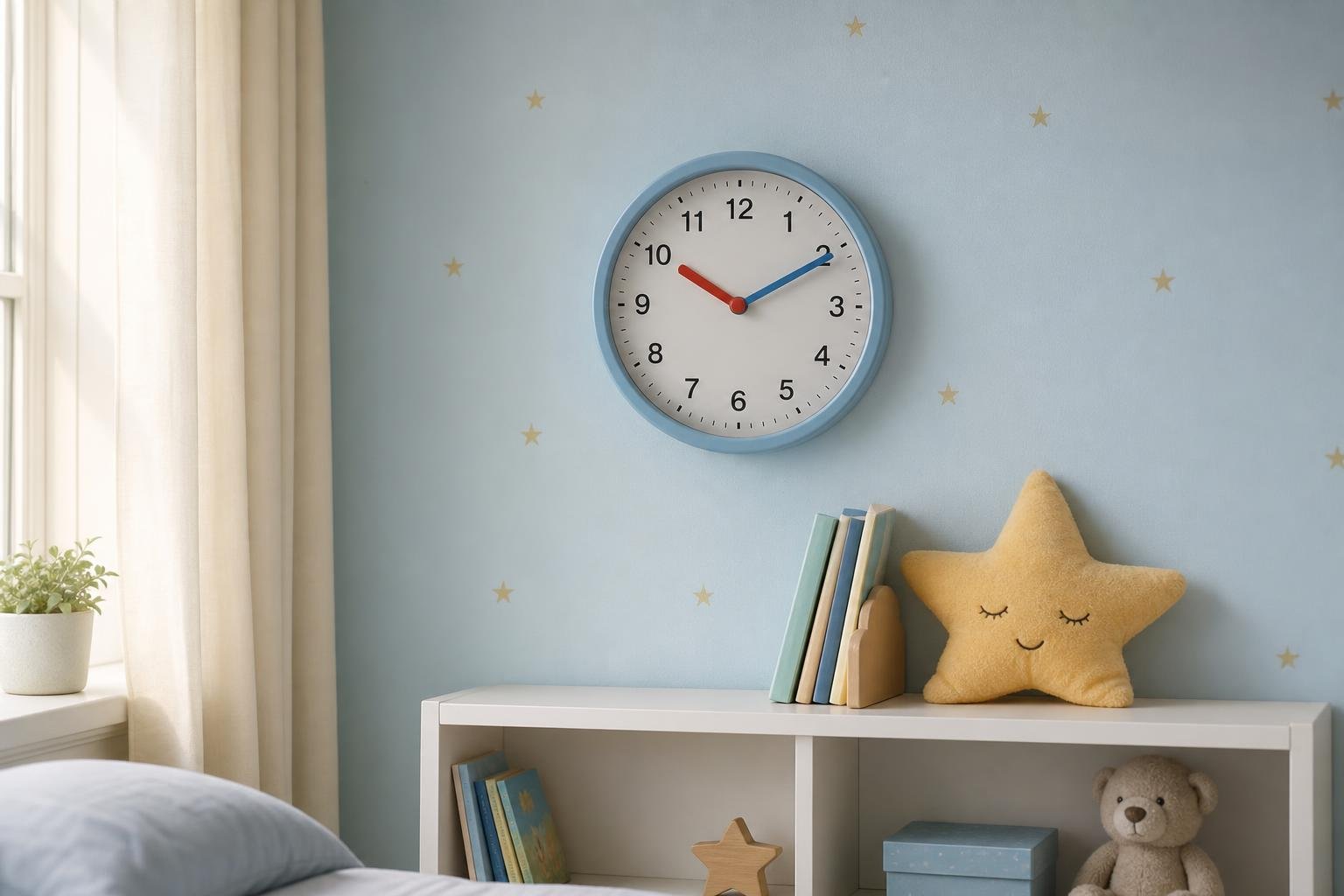
An analog clock remains an effective tool for learning to tell time as a kid because a clock shows time as movement. As children watch the minute hand travel around the dial, they build an intuitive sense of duration that static numerals cannot provide.
Teaching clocks made for the classroom and bedroom often emphasize five-minute increments, label both clock hands clearly, and use colored quarter segments. These features connect hand positions with phrases such as “quarter past” and “half past,” while reinforcing skip-counting by fives and introducing early fraction concepts. A clear analog clock also makes telling time less intimidating for children encountering the format for the first time.
When a digital clock helps
Choosing the best children's clock may mean combining formats rather than selecting only one. A digital clock presents time as numerals, so children who recognize digits before they can interpret analog time can use it independently. You can explore the best kids alarm clock with nightlight guide to compare display formats and nightlight features across leading models.
Pairing a digital display with an analog face lets children check their answer while observing how the clock hands move. This supports teaching at home or in the classroom and helps children connect digital numbers with analog time. A child can check a digital answer against the moving hands of an analog face.
- Large, clear display, Numbers and hands should be easy to read from a distance, whether the clock is mounted on a wall or placed on a bedside table.
- Labeled hands, A clock that distinguishes the hour hand from the minute hand through labels or colors can make learning easier for young readers.
- Quiet mechanism, A silent or non-ticking clock limits distraction in a bedroom or classroom, supporting concentration and restful sleep.
- Color-coded segments, Quarter markings and five-minute increments help children connect a visual position with a time phrase before they can read every number independently.
A good educational clock develops with your child's understanding. Start with whole hours and basic vocabulary, then introduce quarter-hour intervals and, finally, precise minute-by-minute telling time. Presenting analog and digital formats together gives children a fuller understanding of how time is represented and measured.
A clock for younger kids
For toddlers and children under three, a standard numerical display communicates very little. A time such as “6:30” is an abstract symbol without a clear meaning or action attached to it. Many families therefore choose a clock based on visual cues rather than digits, allowing a toddler to understand sleep status without reading a number.
Children begin associating facial expressions with behavior at around age two, which makes face-based signals useful at this stage. Sleep trainer clocks for younger kids generally use bold color changes—red or amber for sleep and green for wake-up—sometimes combined with expressive faces.
The sleep trainer clock guide explains how these systems work for different age groups and which features matter as toddlers begin developing independent sleep habits. An optional amber transition signal, set between five and thirty minutes before wake time, can make the move from sleep to morning activity gentler.
From learning clock to REMI
A device such as the REMI children's alarm clock combines these functions.
From birth through the baby stage, REMI works as a connected audio monitor. Parents can listen, speak to their child, and receive noise alerts from anywhere through its built-in monitor and app. As children grow, REMI’s expressive face changes from a sleeping expression during rest to an open, alert face at wake time, helping it become part of the nightly routine rather than simply displaying digits.
REMI also includes a sleep tracker with a Night Score feature, a Story Time Player, a Bluetooth speaker, and a conventional alarm clock suitable for children up to age ten and beyond. Parents report gaining approximately 45 additional minutes of sleep per night. Over time, one device can replace the baby monitor, bedroom nightlight, teaching clock, and standard alarm clock as your child's needs change.
Frequently asked questions
At what age can a child learn to read a clock?
Most children begin learning basic clock vocabulary in kindergarten, around age five or six. At this stage, they may recognize the clock face, identify the hour hand, and practice telling time to the nearest hour.
By first and second grade, typically ages six to eight, kids develop more precise time-reading skills and can often read an analog clock independently. Learning usually progresses from whole hours to half-hours, then to quarter-hour intervals.
At home, a clear teaching clock and consistent daily routines can reinforce this learning. Connecting clock times with meals, school, bedtime, and other familiar activities gives numbers practical meaning.
What is the difference between a teaching clock and a regular kids clock?
A regular kids clock, whether a wall clock or a bedside alarm model, is mainly designed to display the time in a child-friendly format. Bright colors, playful themes, or large digits can make it appealing and easy to recognize.
A teaching clock has a more specific purpose: developing time-reading skills. It may include labeled clock hands, color-coded quarter segments, clearly marked five-minute increments, and references such as “o’clock,” “quarter past,” and “half past.”
Some interactive teaching clock models include movable hands for guided practice. Both types can complement each other in a child's room.
Is REMI suitable as a first clock for a baby or toddler?
Yes. REMI is designed for children from birth through age ten, adapting its functions as they grow. For a baby, it works as a connected audio monitor with nightlight and lullaby functions.
As the child reaches toddler age, REMI’s expressive face provides a visual cue before a child can read digital or analog clock displays. It shows a sleeping face during rest hours and an open, analog time-aware face at wake time.
From ages six onward, REMI adds a standard audible alarm and Bluetooth speaker. This long-term use makes it a practical choice for families seeking one device that grows with their child, rather than replacing a clock every few years.
Discover REMI today and give your child a sleep companion built to last.
Share this article: