Baby sleep monitors: how to choose a safe baby Monitor


Choosing among baby sleep monitors means comparing audio, video, Wi-Fi and breathing-tracking options, then installing the one you pick safely. This guide explains what each type shows you, what health alerts can and cannot establish, how to place and test the equipment, and what ownership involves over time. REMI, the app-controlled audio monitor from Urban Hello, serves as an example along the way.
Which type of baby monitor fits your needs?
Start with the information you need at night: sound, an image, sleep history or physiological measurements. Adding sensors does not make sleep safer on its own. Each type of monitor answers one of these needs, and the right choice depends on how you care for your child at night.
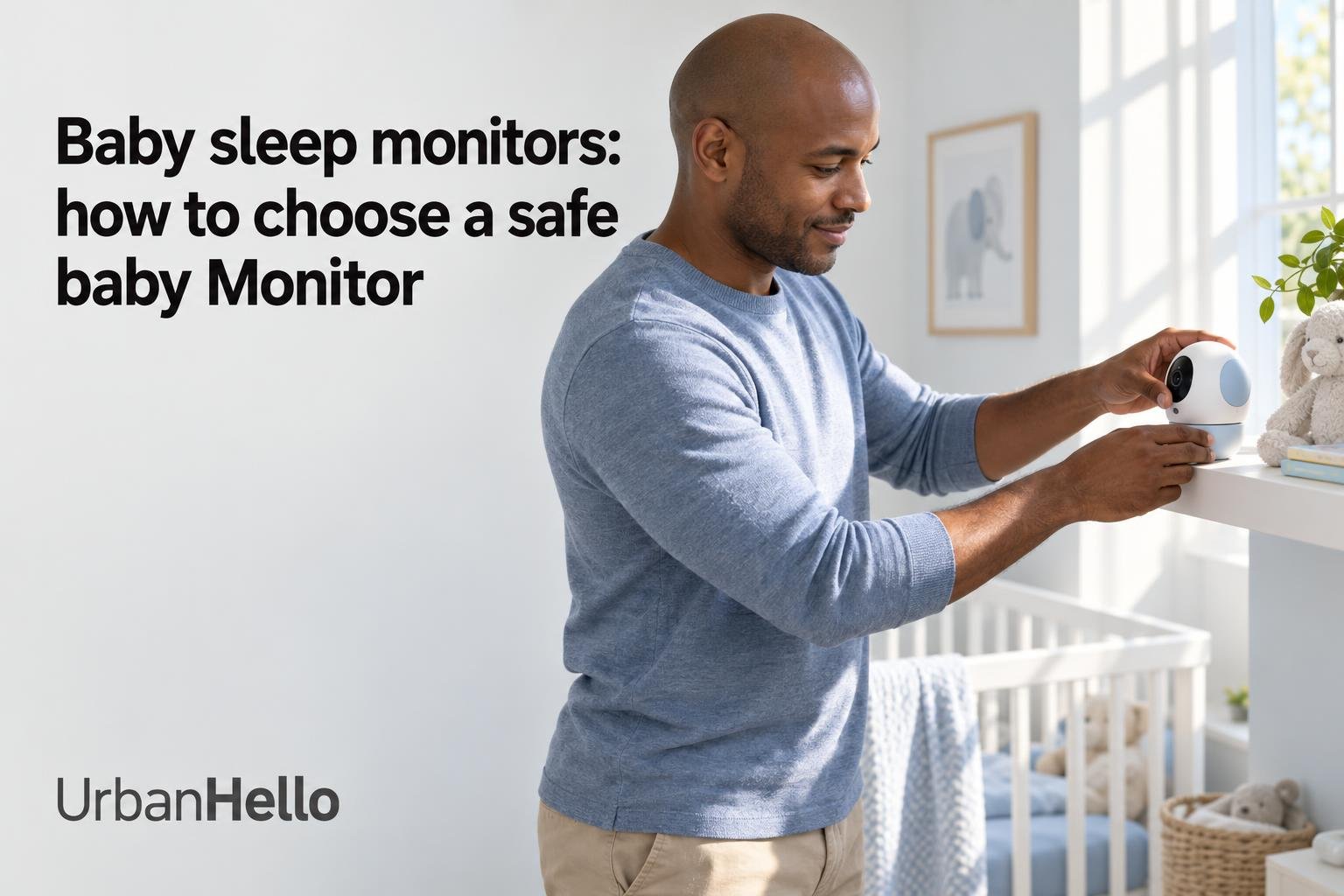
Audio monitors for hearing your baby
An audio baby monitor carries sound from the nursery to a parent receiver, but it does not show the baby. When you are out of hearing distance, it may be all you need, provided your child already sleeps in a safe setup. Before buying, it helps to know how its sound alerts behave.
- Noise threshold: sound-activated reception reacts once noise passes a set level, not to crying specifically.
- Background noise: noise in the room can trigger an alert even when your baby is calm.
- Quiet sounds: a very soft vocalization may stay below the threshold and send no alert.
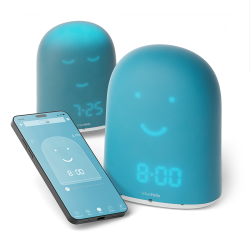
REMI is Urban Hello's Wi-Fi audio monitor controlled from a smartphone. With it, you can listen to your baby and talk back from anywhere, receive noise notifications, and set the thresholds that trigger them.
Video monitors for checking the sleep space
A video baby monitor combines sound with a live image. Night vision, zoom and remote pan or tilt depend on the model. Unlike audio alone, a camera lets you see your baby's position and whether anything is in the sleep space.
The right baby sleep monitors are the ones that match the information you actually need, as described above. A video model suits parents who want to see the sleep space. A connected audio companion such as REMI, which adds sleep tracking, suits parents who mainly want to hear their baby and follow their nights.
| Need | Monitor type | What it gives you | Limit |
| Hearing your baby | Audio (e.g. REMI) | Sound, noise notifications, two-way talk on some models | No image |
| Seeing the sleep space | Video | Sound plus a live image; night vision and zoom on some models | Depends on camera angle |
| Following nights | Sleep-tracking monitor | Sleep history | Not a safety measure in itself |
| Physiological readings | Sensor-based monitor | Movement or vital-sign estimates | Does not prevent SIDS |
Wi-Fi access versus a local receiver
Wi-Fi monitors send a feed or alerts to your phone when you are away from home. That remote access works only while the network and the app are running.
Conventional non-Wi-Fi monitors send their signal to a dedicated receiver over a local radio link and work without home internet. Their range limits reception. Some use DECT 6.0, a digital cordless-radio technology, or FHSS, which switches radio channels in a synchronized pattern.
REMI needs Wi-Fi for setup and app control, and its free app runs on iOS and Android. Its VOX mode sends sound to your phone only when your baby makes noise.
Do breathing alerts make infant sleep safer?
Breathing-tracking monitors promise reassurance, but their alerts have clear limits. Knowing what each sensor measures helps you read a notification calmly and react to what you see, not just what the app says.
What an alert can establish
The American Academy of Pediatrics advises against using home cardiorespiratory monitors to reduce SIDS risk. Current evidence does not show that commercial vital-sign monitoring lowers sleep-related deaths, and the FDA has not cleared any baby product to prevent SIDS. In its September 16, 2025 safety communication, the FDA warned that unauthorized vital-sign monitors can give inaccurate readings, miss changes or lead to unnecessary medical visits, and that they do not replace supervision or safe sleep.
A breathing or movement alert means you should check your baby and the equipment. It is not a diagnosis, and silence does not prove your baby is fine. If an infant is unresponsive, breathes abnormally or looks blue or gray, seek emergency help right away.
How movement and breathing sensors differ
An under-mattress sensor picks up mechanical movement passing through the mattress, not breathing directly. The mattress design, the pad's position, your baby's posture and outside vibration can all change its signal. Some cameras estimate breathing-related motion from chest movement or a pattern on clothing instead of measuring oxygen. A 2026 study found strong agreement for one camera-and-band system in 33 infants aged 1–22 months, under the conditions studied only.
Radar estimates breathing-related motion from reflected radio signals, but the method alone does not guarantee clinical accuracy. A 2019 neonatal study found that its agreement with conventional respiration measurements weakened as the baby moved more.
What infant sock readings mean
A foot-worn optical sensor estimates pulse rate and blood oxygen saturation (SpO₂) rather than watching the chest. Motion, fit, slipping and placement can affect its readings. A 2024 study of consumer oxygen-saturation monitors in 74 children found large differences between devices, including failures to get a reading. The investigators judged the inexpensive pediatric device they tested poorly suited to infants.
On November 8, 2023, the FDA granted De Novo clearance DEN220091 to one over-the-counter foot-worn pulse and oxygen monitor. It covers healthy infants aged 1–18 months who weigh 6–30 lb. Its out-of-range notifications prompt you to assess your baby; this form of breathing monitoring does not diagnose or prevent SIDS.
How should you install and test a monitor?
Good placement and a trial run matter as much as the model you choose. These steps make sure your monitor supports the sleep setup without adding a hazard, and that it works when you need it.
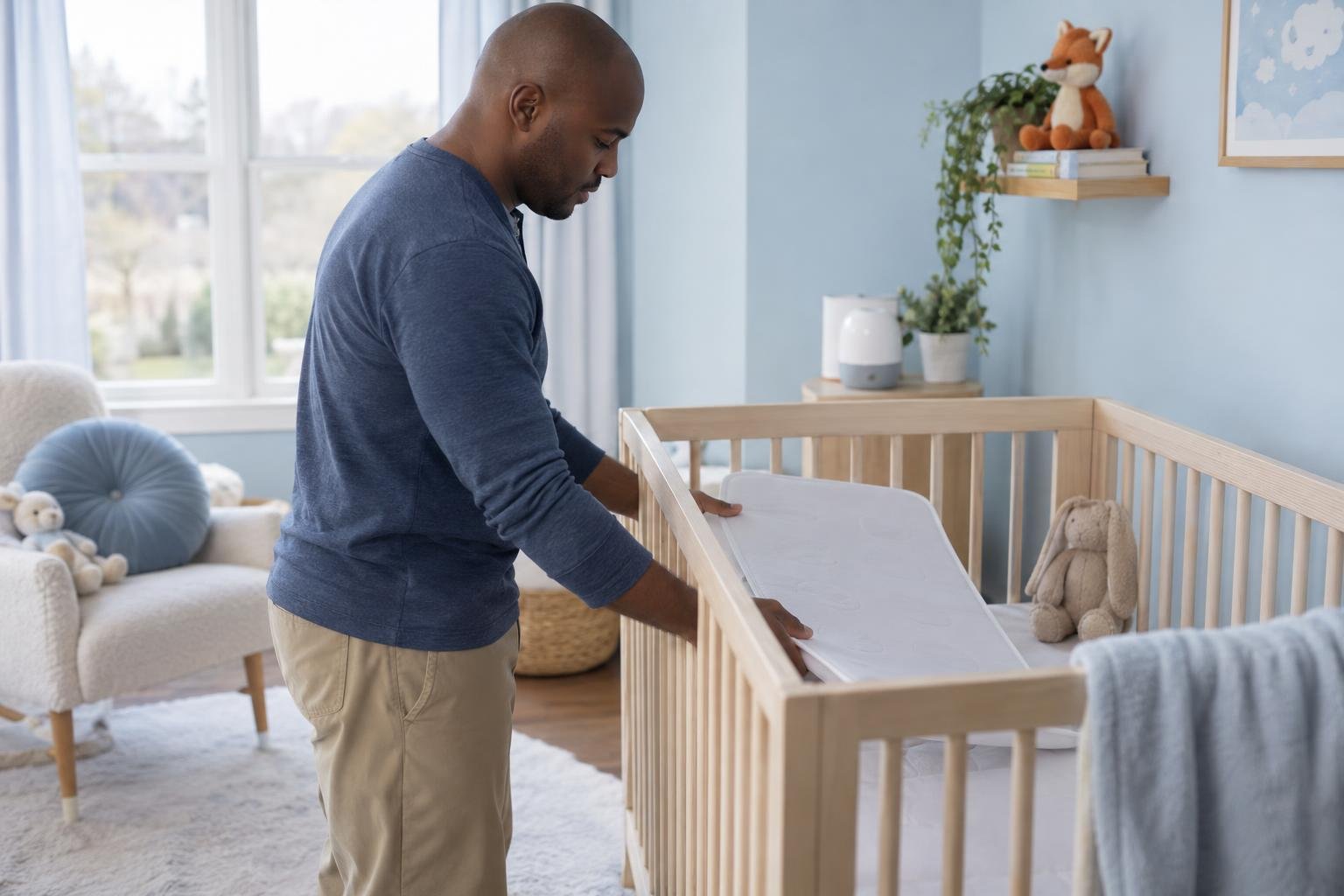
Keep the sleep space safe
A monitor helps you check on your baby, but it cannot make an unsafe sleep arrangement safe. Its role starts once the basics are in place.
- Own sleep space: the American Academy of Pediatrics favors a separate sleep space in the parents' room rather than the parents' bed.
- On the back: the Consumer Product Safety Commission advises laying the baby on their back.
- Bare, firm surface: the CPSC calls for a firm, suitable surface with no pillows, blankets, bumpers or other objects.
Position equipment beyond your baby's reach
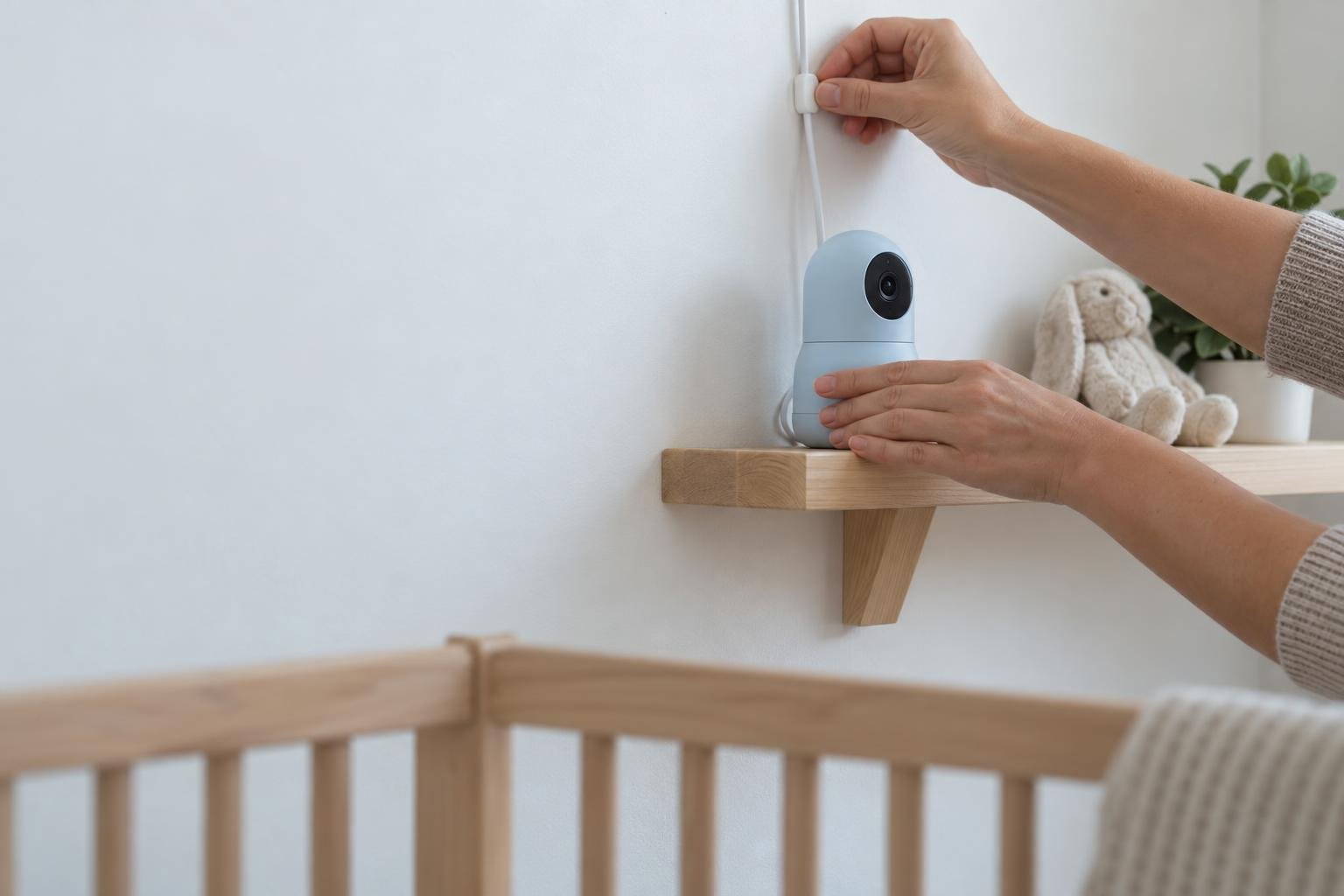
The CPSC says never to place a monitor inside or on the edge of a crib, and to keep cords at least 3 feet from every part of an infant sleep space. On February 11, 2011, a recall of about 1.7 million corded video monitors followed two strangulation deaths.
Wall mounting does not remove the cord hazard if the cable stays within reach. Secure any extra cable and keep power equipment well away from your baby.
With a video model, aim the camera so the whole sleep surface shows without blind spots. Before bedtime, check that the night-vision image still shows that surface clearly.
Test reception, power, and notifications
Advertised range is not guaranteed in your home: walls, floors, building materials, interference and antenna conditions all affect reception. Test the signal wherever you actually spend time, including other floors and outdoors.
- Audio and video: confirm clear sound and good video quality from each spot you use.
- Audible alerts: make sure you can hear notifications where you sleep.
- Phone notifications: check they arrive with the screen locked and on cellular data.
- Network failures: see how the monitor behaves during a router restart or internet outage.
Power matters too. REMI must stay plugged into an outlet to work, so it does not rely on a battery, while your phone still needs charging to receive alerts.
For battery-powered parent units, follow the charging instructions, watch for recalls, and stop using any device with a swollen or damaged lithium battery. On February 26, 2026, the CPSC announced a baby-monitor recall after 11 reports of a parent display overheating or sparking while charging; no injuries were reported.
Recommended products

What affects connected-monitor ownership?
A connected monitor keeps costing attention after purchase: account security, subscriptions and accessories all shape the experience. Looking at these points early helps you pick a device that stays useful as your newborn grows.
Protect access to connected monitoring
A cloud-connected smart video baby monitor may route nursery footage through your router and the maker's servers before it reaches your phone. Find out whether recordings are stored, how long they are kept and how to delete them. A few habits protect your privacy.
- Unique password: use one that serves no other account.
- Secure router: protect the home network the monitor uses.
- Multifactor authentication: turn it on when it is offered, and keep the app and firmware updated.
- Caregiver access: remove accounts that no longer need it.
Security is built into REMI: communication between the device and its app is encrypted. Setup pairs your phone through a secure key exchange, so login credentials alone cannot connect, and only authorized devices can listen or talk.
Check subscriptions and equipment costs
Some subscriptions control sleep analytics, video history or other software features rather than basic camera use. Before buying, find out exactly which functions stop when a plan ends. Then compare the full cost of ownership, including required accessories, mounting equipment and replacements, not just the hardware.
REMI's companion app is free. Through it, you can also follow room temperature in real time and adjust the nightlight's brightness, duration and schedule.
Choose features your child can keep using
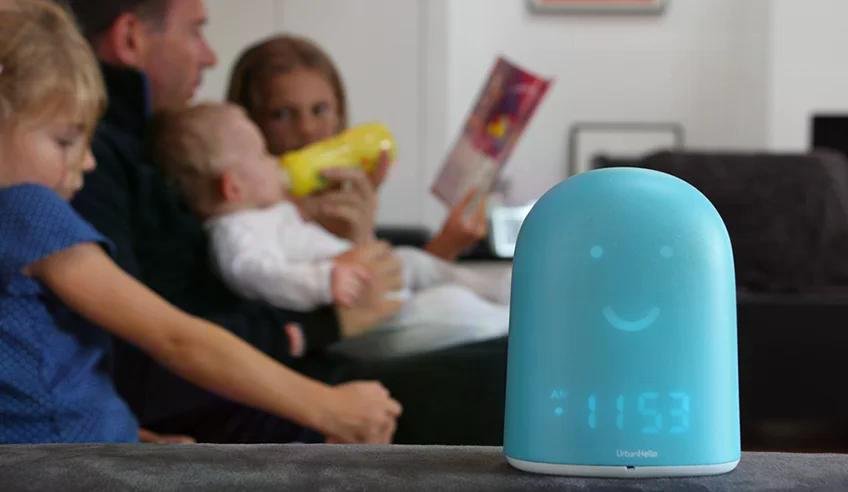
A smart baby monitor earns its place when it outlasts the baby months. REMI records sleep patterns each night, with sleep phases and a morning Night Score in the app. Its sleeping and awake faces show your child when to sleep or get up, on schedules you can set for each day of the week. The REMI sleep companion grows from birth to age 10, later becoming a kids alarm clock and sleep trainer.
Why REMI is a lasting choice for your child's nights
Comparing monitors comes down to the information you need, a safe setup and careful testing. REMI covers the essentials of audio monitoring: you can listen and talk to your baby from anywhere and get noise notifications at thresholds you choose. Its sleeping and awake face then turns it into a trusted companion that watches over your child's nights.
REMI also lasts. Beyond monitoring and sleep training, it works as a sleep tracker, walkie-talkie, story player, Bluetooth speaker and alarm clock, so your child can keep it until age 10. You can order REMI directly from urbanhello.com.
Frequently Asked Questions
Not automatically. A Wi-Fi monitor's security depends on how it is designed and set up, not on the connection itself. A local monitor, for its part, does not let you check on your baby from outside the home.
No. FCC authorization covers radio equipment, while FDA clearance covers medical devices; FCC compliance certifies neither medical effectiveness nor privacy. For a physiological monitor, check the exact model and its FDA-authorized function, since one product's clearance does not extend to the maker's other devices.
A clinician may recommend home cardiorespiratory monitoring for certain infants with specific medical needs. That is not a general SIDS-prevention recommendation, and it does not make a consumer product equivalent to prescribed medical monitoring.
Share this article: